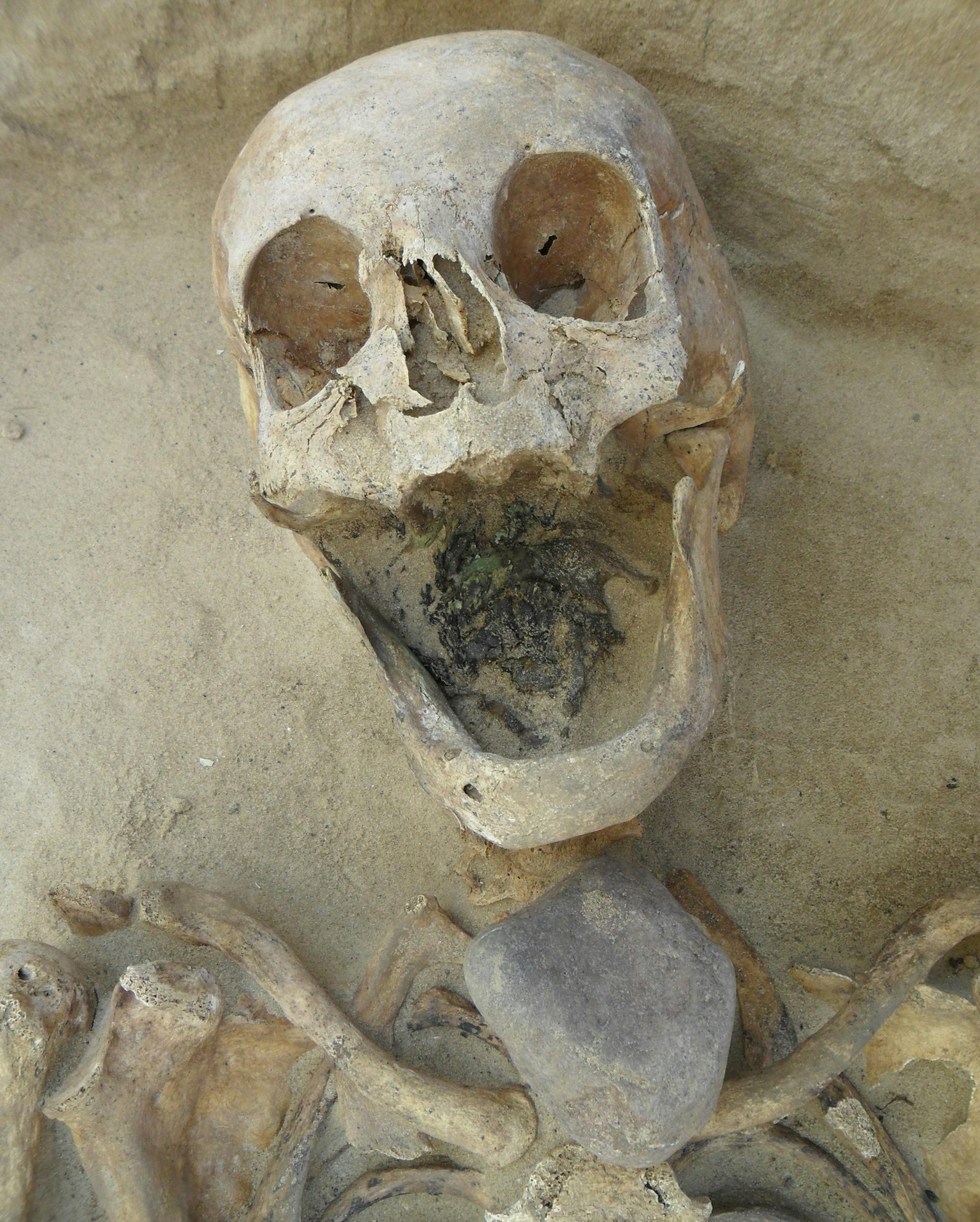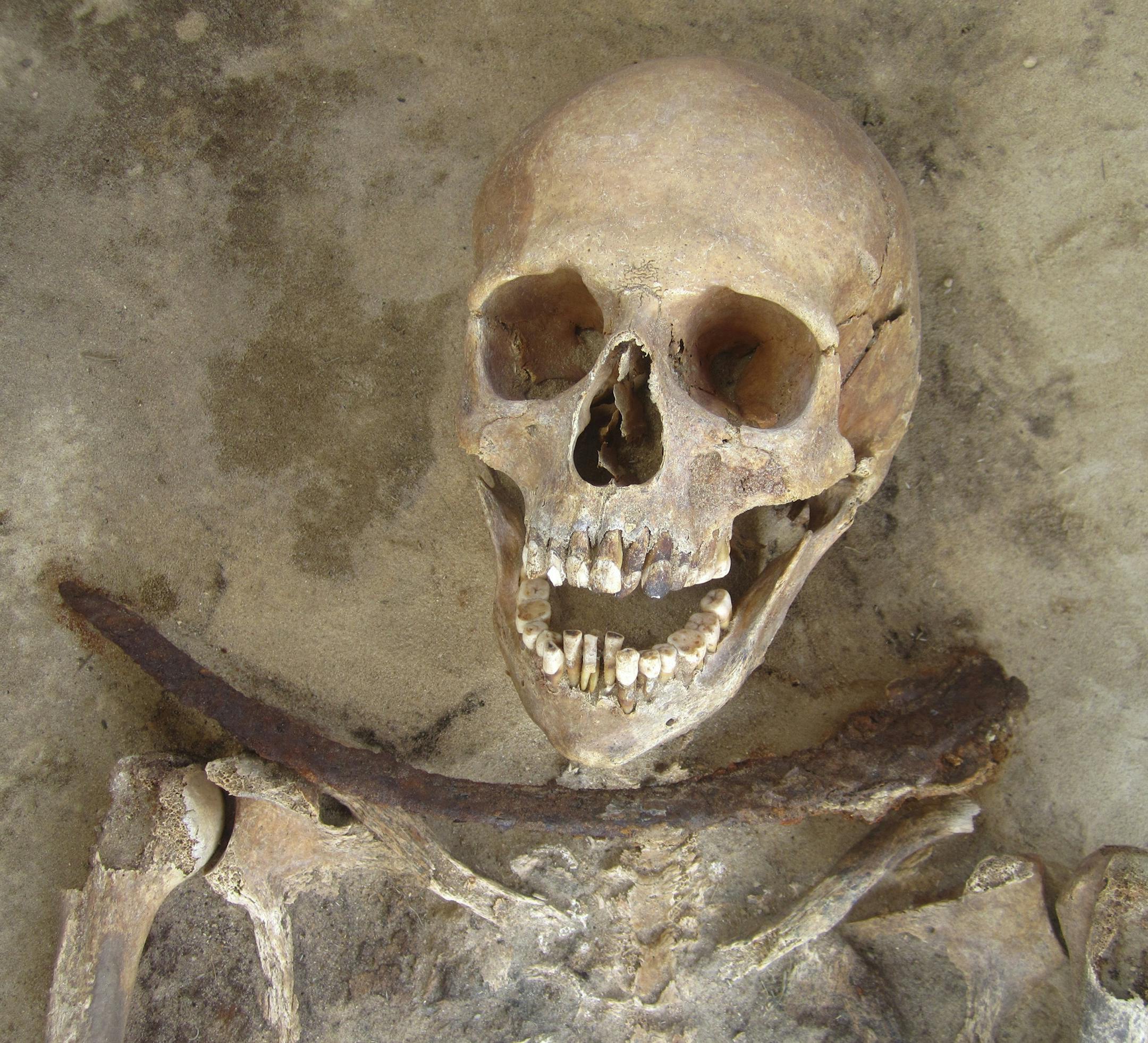
The dead were buried with sharp sickles across their throats meant to sever their heads if they tried to rise as vampires to prey on the living. Rocks were propped beneath their chins to keep them from biting.
This was the fate of at least six people buried sometime in the 17th and 18th centuries outside a farming village in northwestern Poland, said a study published in the online journal PLOS One.
Researchers have been methodically excavating unmarked graves at the mysterious cemetery, on a farm outside the village of Drawsko, for about six years, although the first bones were plowed up by farmers as far back as 1929. So far, experts have examined 285 human skeletons, finding only these six odd burials.
The "deviant" burial practices match historical records of vampire mythologies, which date at least to the 11th century, including written instructions about how to bury one, according to the study. Why these half-dozen unfortunate dead were labeled vampires, however, is lost to history.
"Certain individuals were considered to be of increased risk of turning into a vampire, and so were targeted as they were buried," said Lesley Gregoricka, a bioarchaeologist at the University of South Alabama, in Mobile, who examined the skeletons.
"If you had maybe been accused of practicing witchcraft during your life, if you were unbaptized or didn't have a Christian burial, if you suffered a violent death — there were multiple reasons why you might have been targeted," she said.
Researchers used dental chemistry to rule out the possibility that the six were ostracized in part because they were outsiders. The researchers measured a balance of isotopes of strontium, a natural element found in plants and animals that is processed and stored like calcium in tooth enamel. Those ratios suggest that the vampire suspects ate the same diet as the rest of those buried at the cemetery, and thus probably lived in the village or nearby, the study found.
The six deviant burials involved four females (one late adolescent and three adult), an adult male and a younger person whose gender was not determined, the report said.