

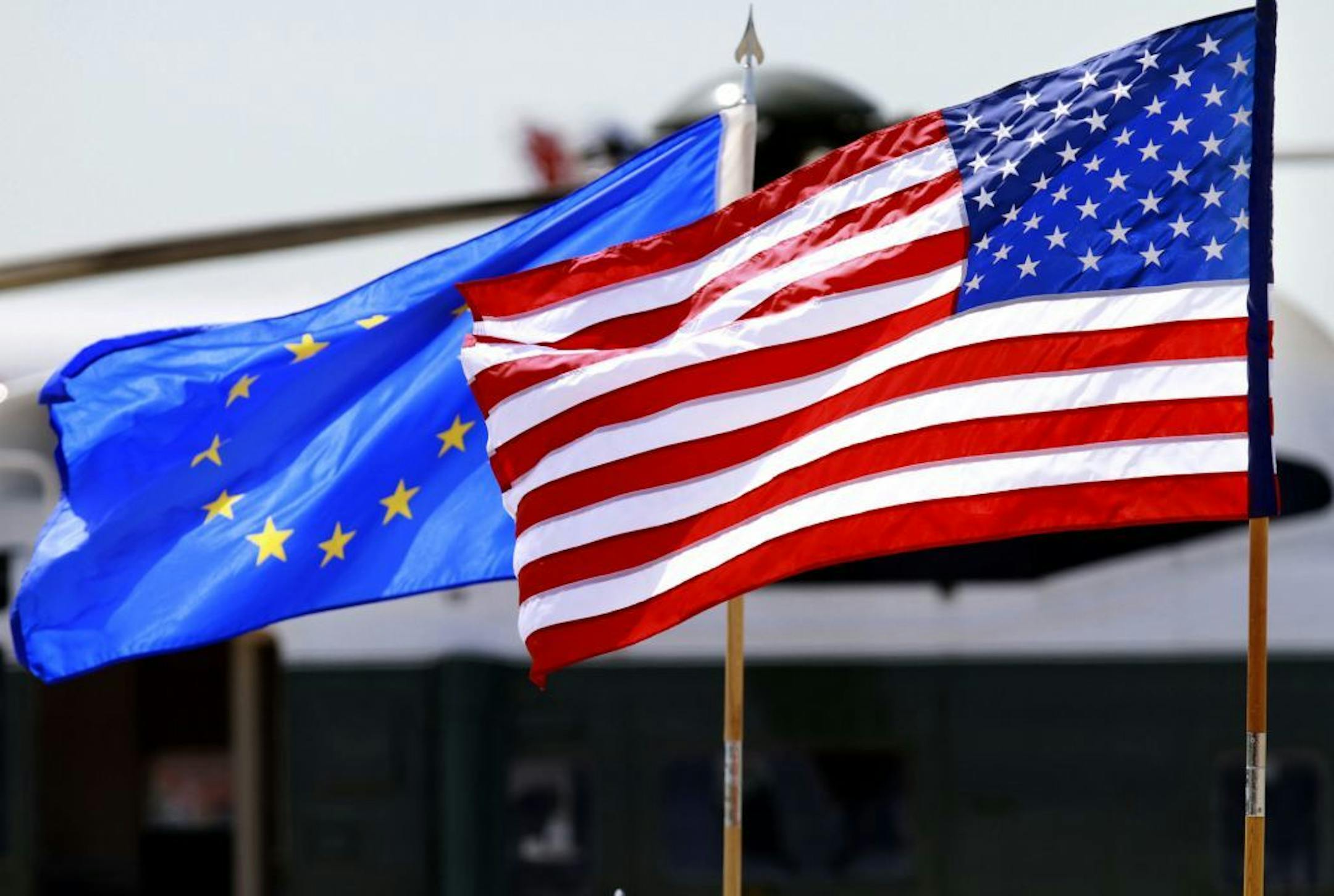
On Thursday, the United States celebrated its independence from the United Kingdom.
On Monday, it will try to codify its interdependence with the European Union by negotiating a transatlantic trade pact.
That chat might be a bit awkward. A recent report published in the German newsmagazine Der Spiegel alleges that the United States spied on its E.U. allies in diplomatic posts in New York, Washington and Brussels. The allegations are just the latest diplomatic damage done by Edward Snowden, the former U.S. intelligence contractor gone rogue.
In private, European politicians are probably not surprised. But in statements, they've reflected public anger.
"If the allegations prove to be true, it would be an extremely serious matter which will have a severe impact on E.U.-U.S. relations," said Martin Schulz, president of the European Union.
"Partners do not spy on each other," said Viviane Reding, the European Union's commissioner for justice.
But apparently they do, and have been for a long time: The practice predates President Obama. "It's unpleasant to learn that your friends are listening to you. But I doubt any of them are shocked," said Frances G. Burwell, director of the program on transatlantic relations at the Washington-based Atlantic Council.
In fact, added Burwell, Europeans may be more surprised by the scope of the NSA's metadata mining methods, which Snowden revealed via London's Guardian newspaper.


