

In what could be its most significant church-state case in decades, the Supreme Court will decide whether official prayers at government meetings that overwhelmingly favor one religion violate the First Amendment. Although the case involves a town in New York, not the federal government, the Obama administration has filed a "friend of the court" brief that is distinctly unfriendly to the separation of church and state.
According to Solicitor General Donald B. Verrilli Jr., the town council of Greece, N.Y., did not engage in an unconstitutional establishment of religion "merely because most prayer-givers are Christian and many or most of their prayers contain sectarian references." Verrilli argued further that "courts should not be in the business of parsing the theological content of or meaning of particular prayers."
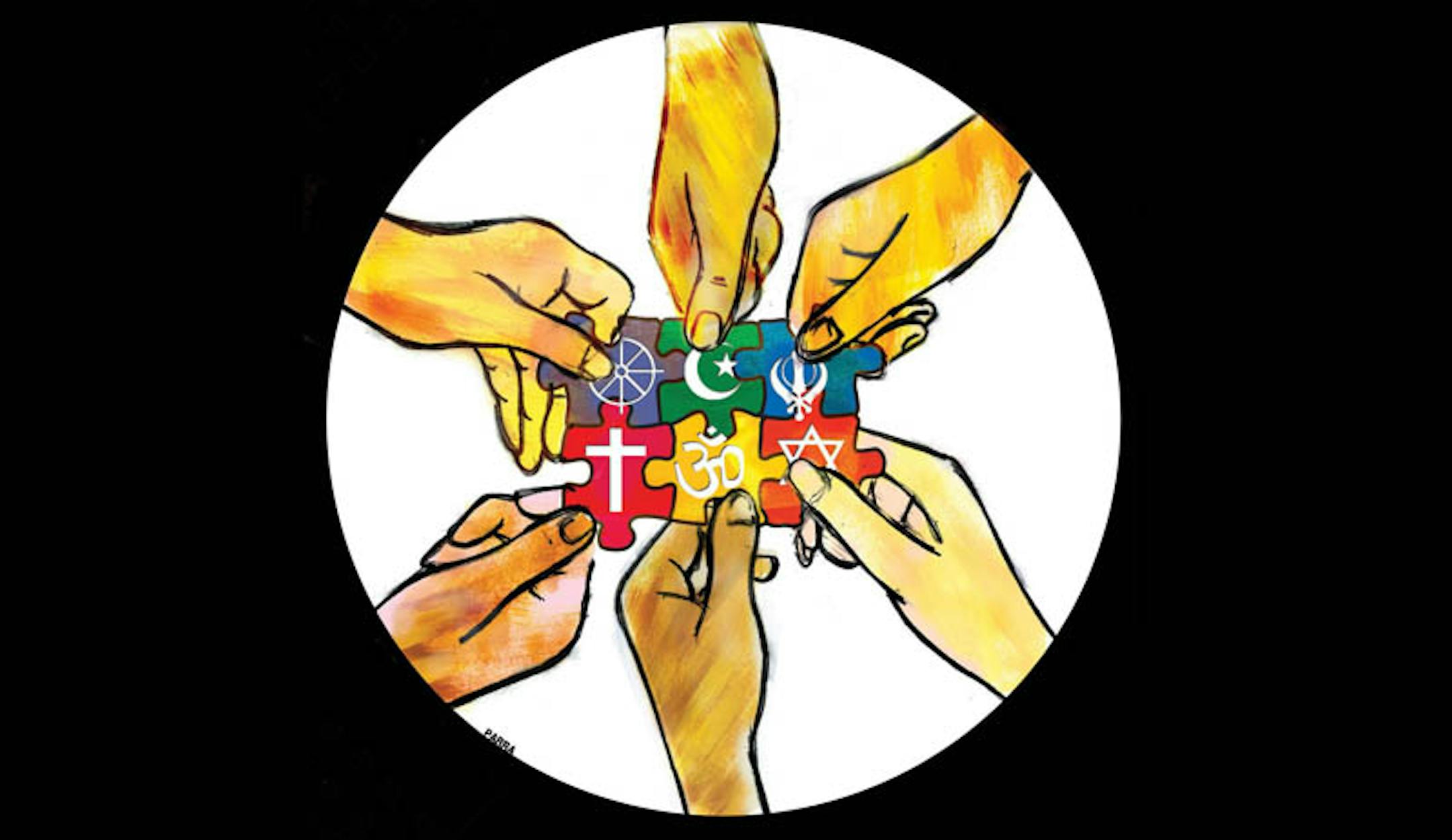
The court should reject that position, which would give governments a blank check to pray in a whole community's name with language drawn from a particular faith. If the First Amendment's ban on the "establishment of religion" by government means anything, it means that a Jewish, Muslim or atheist shouldn't have to endure routine official prayers "in the name of Jesus" as the price of participating in local government.
That is exactly what occurred at meetings of the Greece town council. Of 121 invocations offered between 1999 and the middle of 2010, two-thirds contained references to "Jesus Christ," "Jesus," "Your Son" or the "Holy Spirit." Almost all of the Christian prayers concluded with a statement that the prayer was being offered in Jesus' name. (A few prayers were offered by non-Christian members of the clergy, including, on one occasion, a Wiccan priestess.)
Ruling in a challenge brought by a Jew and an atheist, the U.S. 2nd Circuit Court of Appeals did not say that a public meeting could never begin with a distinctively Christian prayer. But, weighing the "totality of the circumstances," it concluded that "an objective, reasonable person would believe that the town's prayer practice had the effect of affiliating the town with Christianity."
The appeals court didn't spell out a better approach in detail, but it suggested the town could have reached out to nearby non-Christian congregations and could have made it clearer that those offering sectarian prayers didn't represent the town.
The 2nd Circuit's decision is at odds with a ruling by the U.S. 9th Circuit Court of Appeals upholding the prayer policies of the California city of Lancaster, which also had been accused of favoring Christianity.
When it weighs in, the Supreme Court is unlikely to address the question of whether the First Amendment prohibits all prayers at government meetings. That issue was settled in a 1983 case in which the court upheld the Nebraska legislature's practice of opening each legislative day with a prayer by a chaplain paid by the state. The court in that case said that "opening legislative sessions with prayer has become part of the fabric of our society." But in that same decision, then-Chief Justice Warren Burger noted approvingly that the chaplain in Nebraska had removed all references to Jesus from his prayers after a complaint from a Jewish legislator.


