

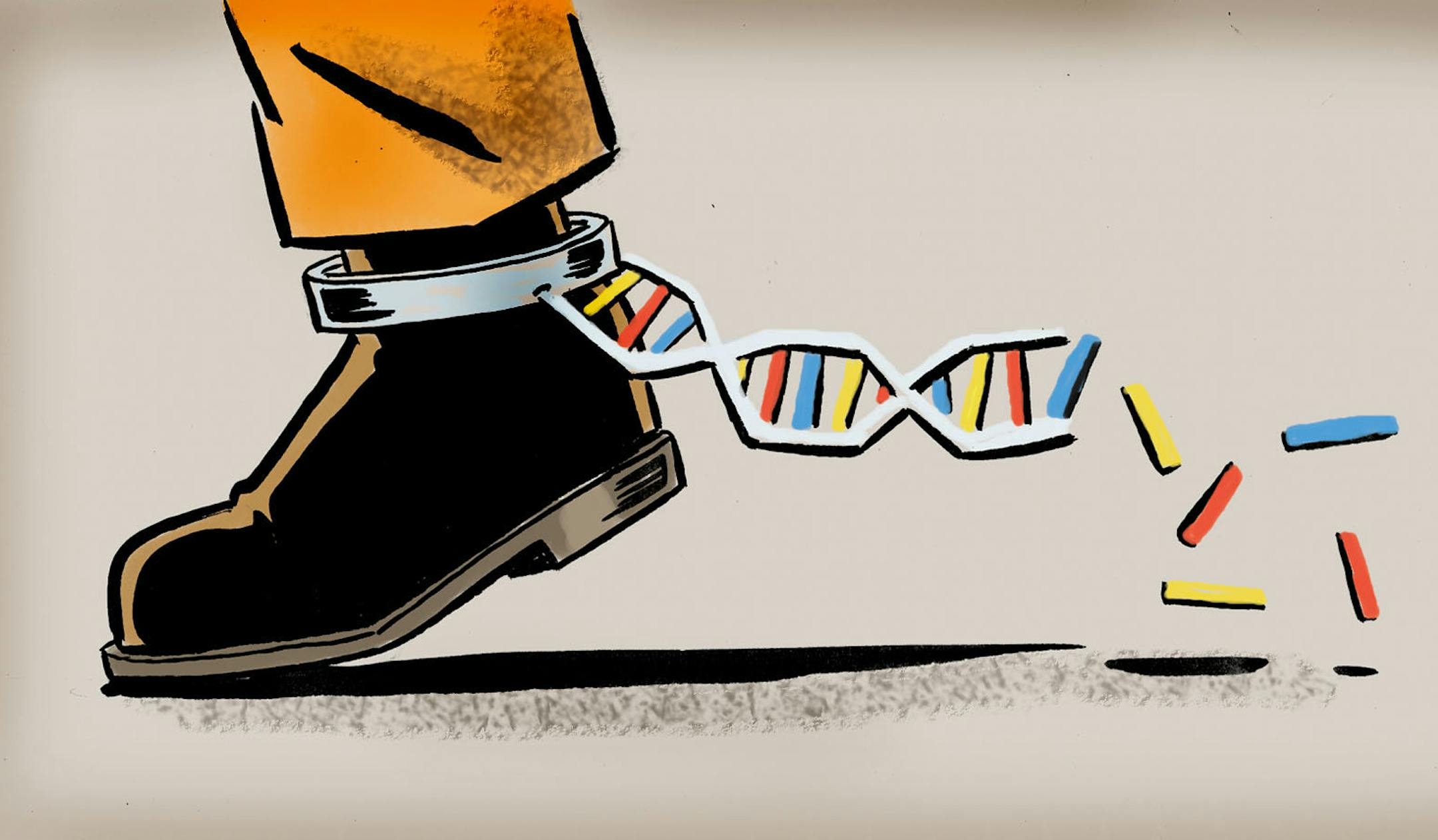
DNA analysis is the major crime-solving advance of our time. It's the science behind many exonerations, and many more guilty pleas. It's far more accurate than fingerprinting or eyewitness identification. So the more DNA collection, the better, right?
Federal prosecutors and 28 states have answered yes by routinely collecting DNA samples from arrestees. On Monday, the Supreme Court approved Maryland's DNA law, ushering in a new era of massive double-helix collection.
There are two oddities about the court's 5-4 ruling. The first is that the majority pretended that this decision had little to do with solving crimes. The second is the lineup of justices.
The dissent is a smoking Antonin Scalia special — and he's joined by Justices Elena Kagan, Ruth Bader Ginsburg and Sonia Sotomayor rather than the court's conservatives. Anthony Kennedy picked off Stephen Breyer (along with Clarence Thomas, Samuel Alito and John Roberts) to eke out a majority.
But it's Scalia who wins the argument.
Here's the background: All 50 states collect DNA from people who have been convicted of crimes; that's not what's at issue here. Instead, we're talking about whether the states can widen their databases of genetic material to include people who have been arrested and not yet found guilty.
Kennedy presents this as merely a basic booking procedure. It's like fingerprinting, he says, and "the legitimate government interest" is "the need for law enforcement officers in a safe and accurate way to process and identify the persons and possessions they must take into custody." It's a simple matter of allowing the police to make sure they know whom they've got.
Kennedy is unconcerned about the level of intrusion. Cheek swabs count as a search under the Fourth Amendment, which protects us all from unreasonable searches and seizures. But since swabbing is minimally intrusive, it's no big deal. The majority also dismisses the privacy concerns that come with DNA collection: "The argument that the testing at issue in this case reveals any private medical information at all is open to dispute," Kennedy says.


