

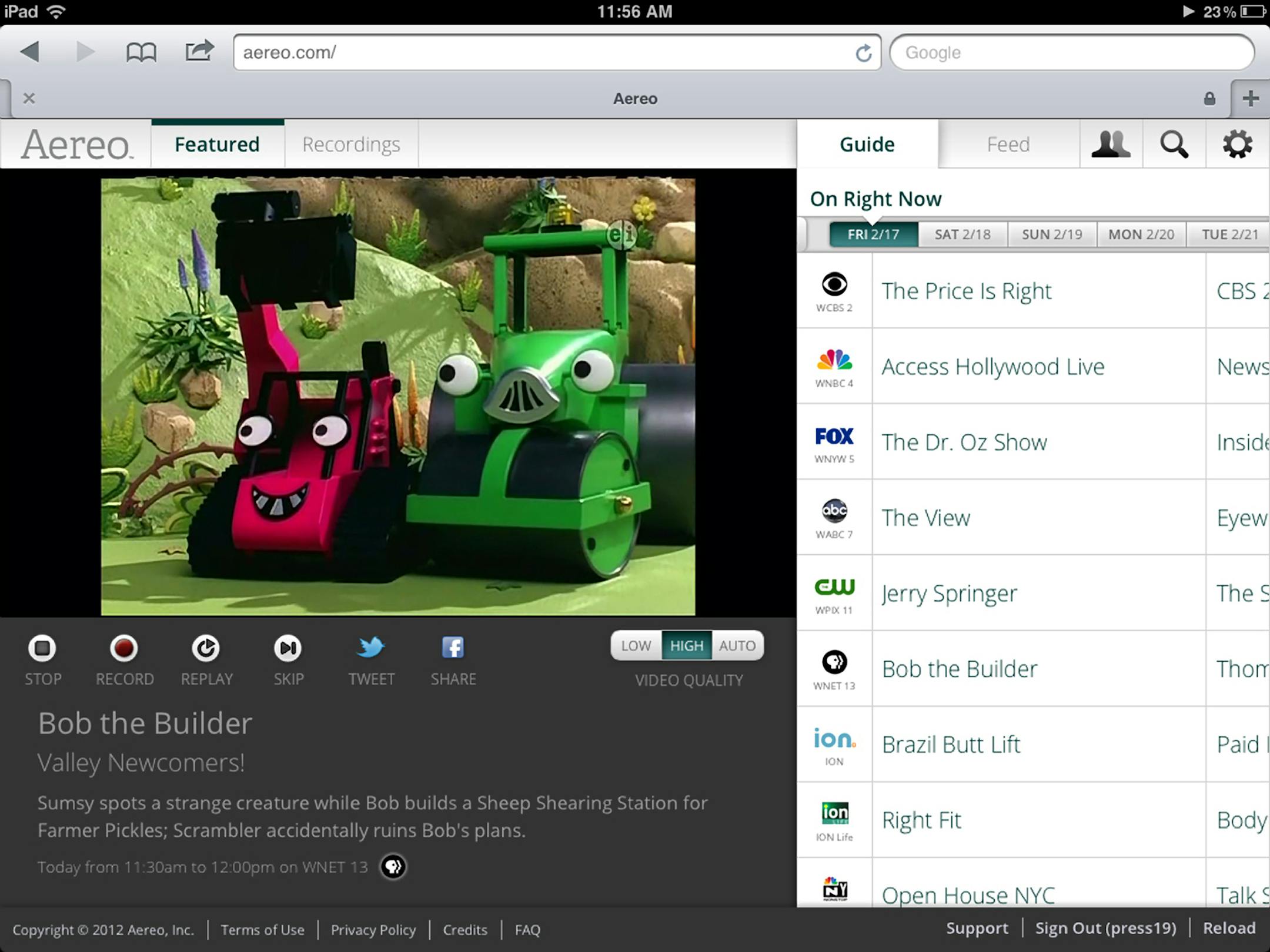
When the Supreme Court effectively outlawed the online TV service Aereo last week, the first temptation was to dismiss the ruling as the confused ravings of a bunch of old people confounded by this newfangled Interweb stuff. Sort of like Larry King's famous confession a few years ago that he'd never been online: "What, do you punch little buttons and things?"
This interpretation was certainly bolstered by a question asked by Justice Sonia Sotomayor during oral arguments on the case about its possible ramifications for "iDrop in the cloud," which might have been an addled reference to the Web data storage site Dropbox, or might have been the consequence of some missed meds the night before.
But the sad fact is the decision to shut down Aereo (which, indeed, suspended service a couple of days after the court's ruling) is just the latest in a long series of protectionist moves by the federal government aimed at preserving monopolies in the TV business at the expense of viewers.
Ironically, for many years the primary target of the government attacks was cable TV, which the FCC forthrightly said it didn't want "siphoning off" viewers from broadcast television. Using everything from restrictions on microwave relays to bans on original content, the government effectively stifled the development of cable for three decades.
Now, ironically, the target is a new approach that uses broadcast technology to rescue consumers from predatory cable operators. Aereo, which started up in 2012, offered itself as an alternative to the loony prices of cable TV: For $8 a month, customers got two dozen or so channels, mostly their local broadcast stations, and the ability to record them to watch at their leisure.
Aereo could provide its service so cheaply because it wasn't paying the exorbitant so-called retransmission fees that the broadcast networks charge cable companies to carry their signal. Aereo is not a cable company; it picks up the broadcast signals from the air, via huge banks of tiny antennas at a central location, one antenna assigned to each customer.
Their signals are then stored on a server and relayed to customers via the Internet — instantly, if they want it; later, if they prefer to time-shift.
Aereo doesn't do anything you couldn't legally do at home by putting an antenna on the roof and hooking it up to a DVR. The company just performs those services for you with little muss, fuss or expense.


