

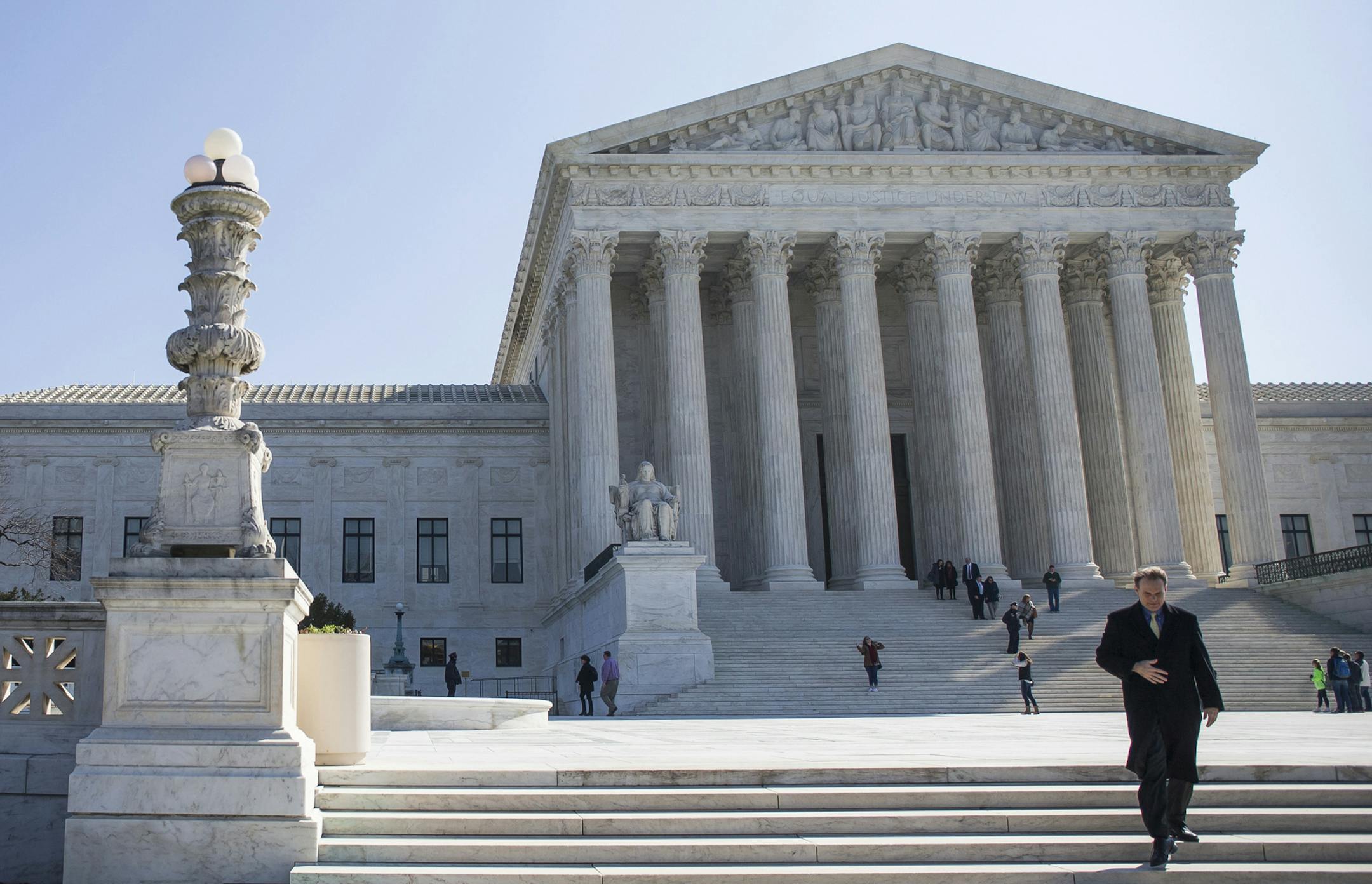
Zubik vs. Burwell is the Supreme Court's name for the set of cases more often identified with the Little Sisters of the Poor, a religious order that is also a party to the case. I filed an amicus brief in Zubik on behalf of the Baptist Joint Committee for Religious Liberty. I had never before filed a brief in support of the government in a case about the free exercise of religion.
The facts in this case, which are scheduled to be argued Wednesday, are complicated. The Affordable Care Act requires insurance plans to cover contraception without imposing deductibles or requiring co-payments. But Catholic institutions object to providing contraception, and many conservatives of other faiths object to providing emergency contraception, which they plausibly view as sometimes causing very early abortions.
The government responded to these concerns in two ways. Churches and their integrated auxiliaries — the religious organizations most closely integrated with the church itself — are exempt. What's more, their insurance companies are exempt. The regulation carefully exempts these employers and, in a second clause, exempts any "health insurance coverage" provided "in connection with" their health plans.
All other conscientious objectors are also exempt, but their insurance companies are not. If an employer refuses for religious reasons to cover contraception, the government instructs the employer's insurance company to provide free contraception separately, with segregated funds and segregated communications to employees, and to explain to the workers that the employer refuses to provide it.
Many religious organizations accepted this solution, but some did not. The remaining objectors make two claims. First, they say they cannot in good conscience provide the government with contact information for their insurers. There is nothing confidential or religious about that information, but they maintain that providing it to the government is a necessary step for the eventual delivery of contraception.
Second, they say that the insurance company will use the "infrastructure" of the employer's insurance plan to deliver contraception. In practical terms, this appears to mean their employees' names and addresses. More conceptually, the objectors say the government is using their insurance plans.
The objectors would make this second objection even if the government had put the obligation on insurers from the beginning, so that no one had to provide it with contact information, and even if employers were not required to provide insurance at all. Even if employers were required to do absolutely nothing, the insurance companies would still use the "infrastructure" of any insurance plan that the employers voluntarily offered to their workers.
So their real objection is to what their secular insurers are required to do. The religious objectors demand a right to control how the government regulates insurance companies.


