
Supreme Court appears set to legalize sports betting nationwide

December 5, 2017 at 2:48AM
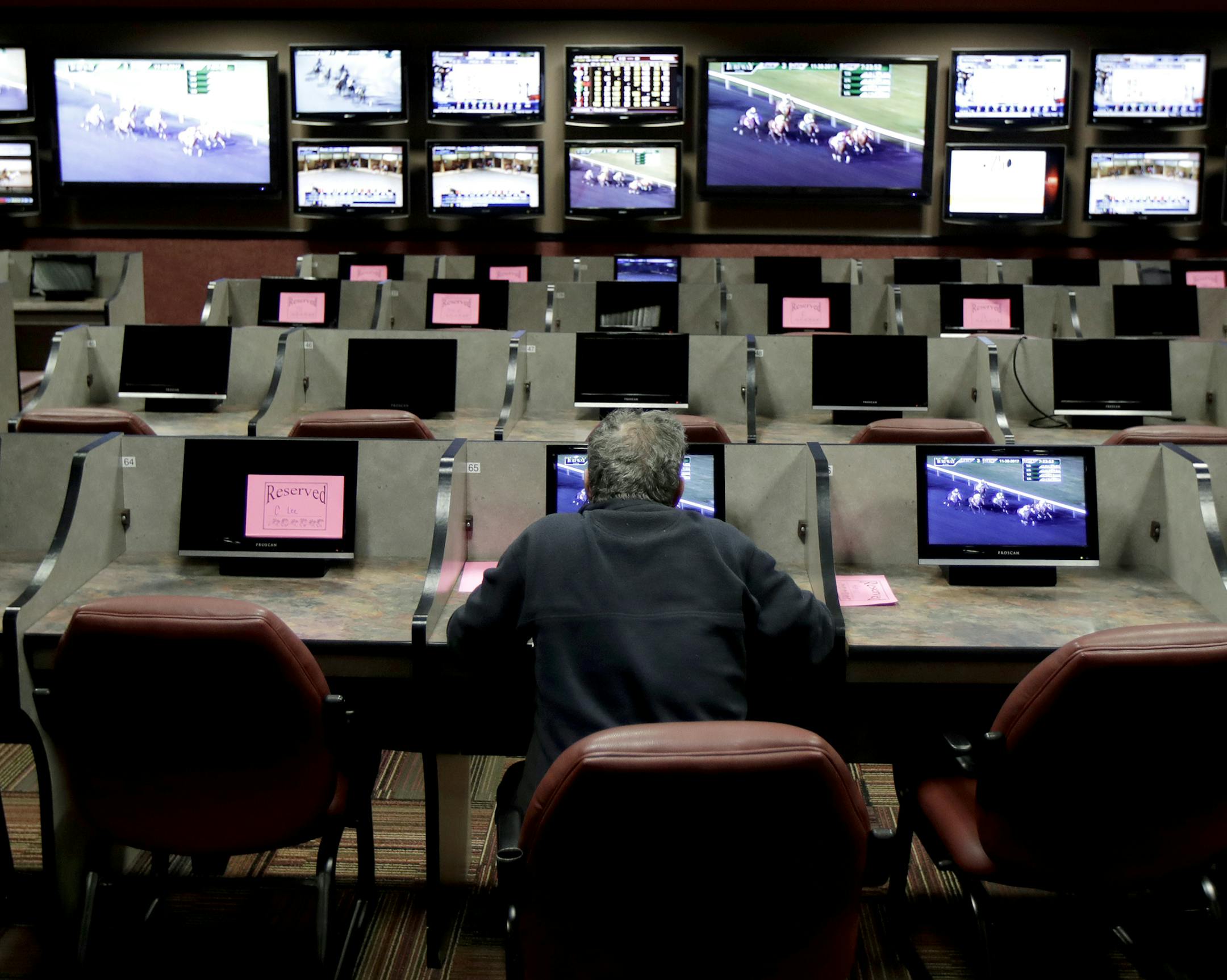
In this Nov. 30, 2017, photo, a man sits at a cubicle watching a simulcast horse race at the Monmouth Park racetrack in West Long Branch, N.J. With banks of TVs tuned to all-sports stations and a spacious bar, the lounge a the racetrack is a sports gamblers’ paradise-in-waiting. All that’s standing in its way: A 25-year-old federal law that bars betting on sports in most states. The high court is weighing On Dec. 4, whether a federal law that prevents states from authorizing sports
A man watched a horse race at the Monmouth Park Racetrack in Oceanport, N.J., a sports gamblers’ paradise-in-waiting. (The Minnesota Star Tribune)

WASHINGTON – The Supreme Court appeared poised Monday to legalize sports betting nationwide by freeing states from a federal anti-gambling law.

The justices gave a friendly hearing to New Jersey's claim that states are free to control their own laws, including in the area of gambling, unless Congress has adopted a federal regulatory policy to prohibit it.

And Congress failed to do that when it passed a 1992 law, the state maintained. The federal law did not actually ban sports wagering, but instead said states may not "authorize by law" such gambling.

That type of command from Washington violates the Constitution's 10th Amendment, which reserves to the states the power to make and enforce their own laws in areas where the federal government has not exerted authority, said former Solicitor General Ted Olson, representing New Jersey.

"This is a direct command to the states," Olson said of the Professional and Amateur Sports Protection Act of 1992. Congress said "we want to put the burden and the expense and the accountability on the states. The federal government is doing nothing," he said.

In their comments and questions, most of the justices sounded the same states' rights theme.

Justice Anthony Kennedy said the federal law seemed to him like "commandeering."

"This is telling the states what to do," said Justice Stephen Breyer.

In 2011, New Jersey's voters by a 2-to-1 margin approved sports betting, but federal courts have repeatedly blocked the state from allowing such gambling at its racetracks and casinos.

New Jersey had been battling in court for years with the National Collegiate Athletic Association and the four major pro sports leagues: the National Football League, National Basketball Association, National Hockey League and Major League Baseball. Their lawyers sued in 2012 shortly after Gov. Chris Christie signed into law the measure to authorize sports betting at racetracks and casinos.

Federal judges agreed with the NCAA that the state law could not stand because it violated the federal law. And the Supreme Court refused to intervene then.

No one doubts Congress has the constitutional power to enforce a federal ban on gambling, or a particular type of gaming. But supporters of New Jersey said Congress stopped short of doing that.

The 1992 federal law included an exception for Nevada that allowed it to continue licensing betting on sports.

Undeterred, New Jersey's lawmakers devised what many saw as a sleight-of-hand move. They repealed the state's laws that made it a crime to wager on sports at racetracks or casinos.

Once again, the NCAA and the pro sports leagues sued and won in federal court. The judges said the state had implicitly authorized sports gambling by repealing its prohibition.

In June, the Supreme Court agreed to hear New Jersey's claim that the 10th Amendment frees the states to refuse to enforce a federal law.

This is the same states' rights principle that has allowed California and other states to permit the use of medical marijuana, even if it remains illegal under federal law. It is also the principle relied on by "sanctuary cities" that say they will not use their own employees to enforce federal immigration laws.

If the state prevails in Christie v. NCAA, the ruling would likely free other states to follow New Jersey's lead. Gaming experts said at least a dozen states would likely authorize wagering on sports, including California, Connecticut, Florida, Illinois, Pennsylvania and New York.

Americans bet as much as $150 billion a year on sports events, according to the American Gaming Association, but only 3 percent of that amount is wagered through legal and regulated gambling, most of it in Nevada.

about the writer

about the writer

David G. Savage, Tribune Washington Bureau

More from No Section

See More
FILE -- A rent deposit slot at an apartment complex in Tucker, Ga., on July 21, 2020. As an eviction crisis has seemed increasingly likely this summer, everyone in the housing market has made the same plea to Washington: Send money — lots of it — that would keep renters in their homes and landlords afloat. (Melissa Golden/The New York Times) ORG XMIT: XNYT58
Melissa Golden/The New York Times

It’s too soon to tell how much the immigration crackdown is to blame.