

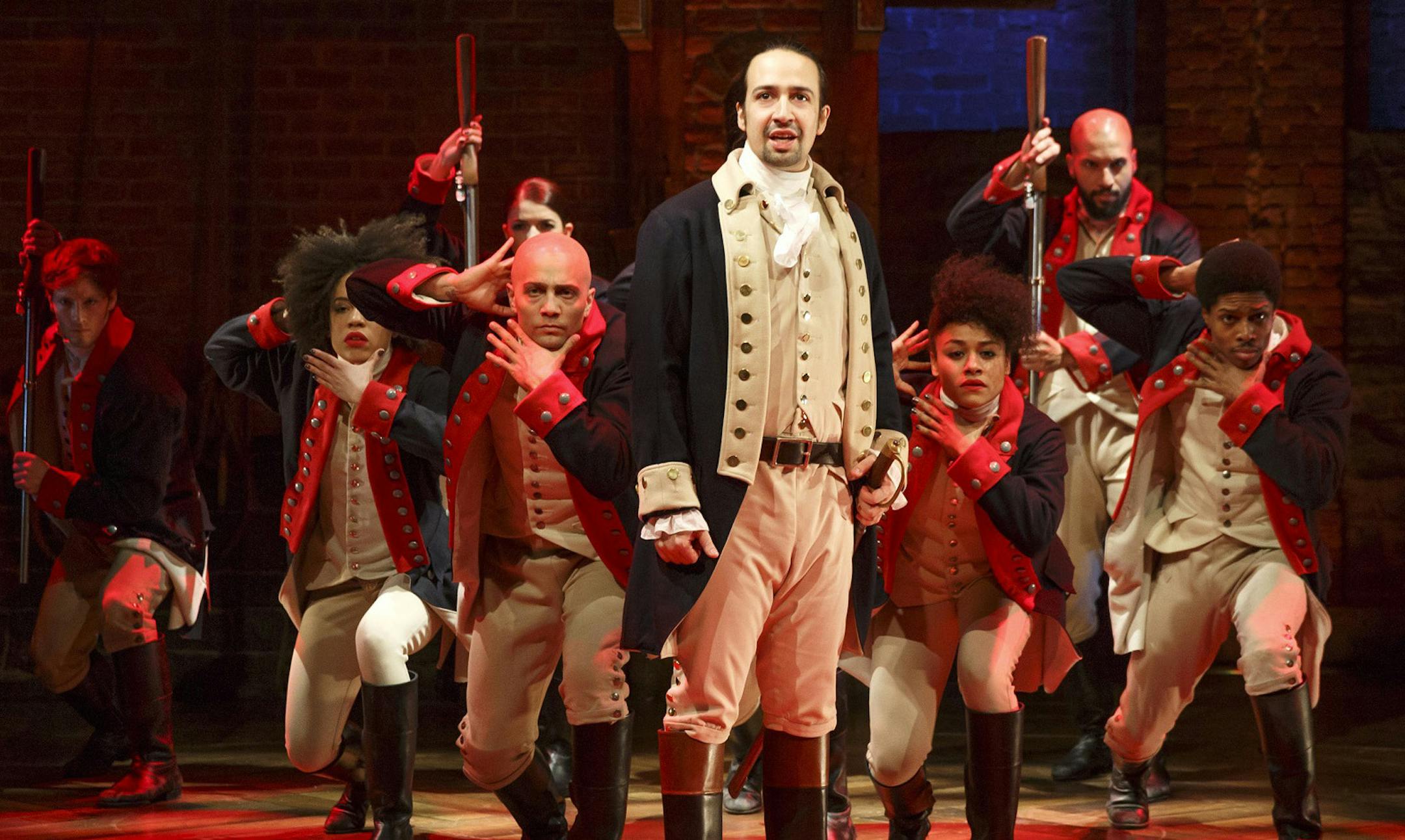
The first to leave was King George.
It was April 2016 when Jonathan Groff, who played King George in the megahit musical "Hamilton," left the show. Three months later, Lin-Manuel Miranda, who created the show, composed the music and starred as Alexander Hamilton, took his final bow. By the end of 2016, virtually the entire cast had been replaced.
With that, I thought the day might finally have arrived when one could buy "Hamilton" tickets at face value. Because of the ease with which ticket brokers have been able to use automated software to scoop up "Hamilton" tickets the millisecond they go on sale, it's been nearly impossible to buy a ticket at the box office. Instead, one had to go to the secondary market, where the brokers have been reselling tickets, at huge markups, that they had mostly bought for less than $200.
"Hamilton" also is now playing in Chicago and San Francisco, with a London version slated in November. I figured maybe that too would ease the pricing pressure since people in those cities wouldn't need to come to New York to see "Hamilton."
So I checked. If I wanted to see the show the following evening six tickets were available from Ticketmaster. The cheapest two cost $900 each, two others cost $1,000 each, and the most expensive cost $1,714.50 each. StubHub's lowest price was $600 and its highest was $3,500. SeatGeek? From $691 to … $9,444. The cast turnover wasn't exactly hurting the secondary market.
But, hey, those were last-minute tickets. What if I wanted to go six months from now? I picked a date in mid-September. There was nothing available at the box office, but plenty of tickets on the secondary market. At Ticketmaster they ranged from $400 and $1,800. SeatGeek had tickets from $360 to $2,593. StubHub didn't have tickets, but it was selling "Hamilton" parking passes for $40. (I kid you not.) In other words, prices were better, but still … .
It doesn't take a degree in economics to understand what is going on here. The Richard Rodgers Theatre, where Hamilton resides, has 1,319 seats. But the demand for tickets vastly exceeds that. The market is saying "Hamilton" tickets are worth much more than the producers are charging.
If you actually do have a degree in economics, the answer probably seems simple: "Hamilton's" producers should raise ticket prices to capture the market price. Last October, the Harvard economist N. Gregory Mankiw wrote in the New York Times that he paid $2,500 for a "Hamilton" ticket and was "happy about it." The tickets, he added, were "vastly underpriced" and his only regret about paying a four-figure sum was that the money was going to scalpers instead of the show's producers, actors and investors. "I would much rather give that money to Lin-Manuel so he can put on more shows and make the theater healthier," he told me.


