
Supervalu: No more 'pink slime' beef at Cub Foods

The parent of Cub Foods said it won't sell any more ground beef that includes the beef filler, which is the target of consumer outrage.

March 22, 2012 at 4:17AM
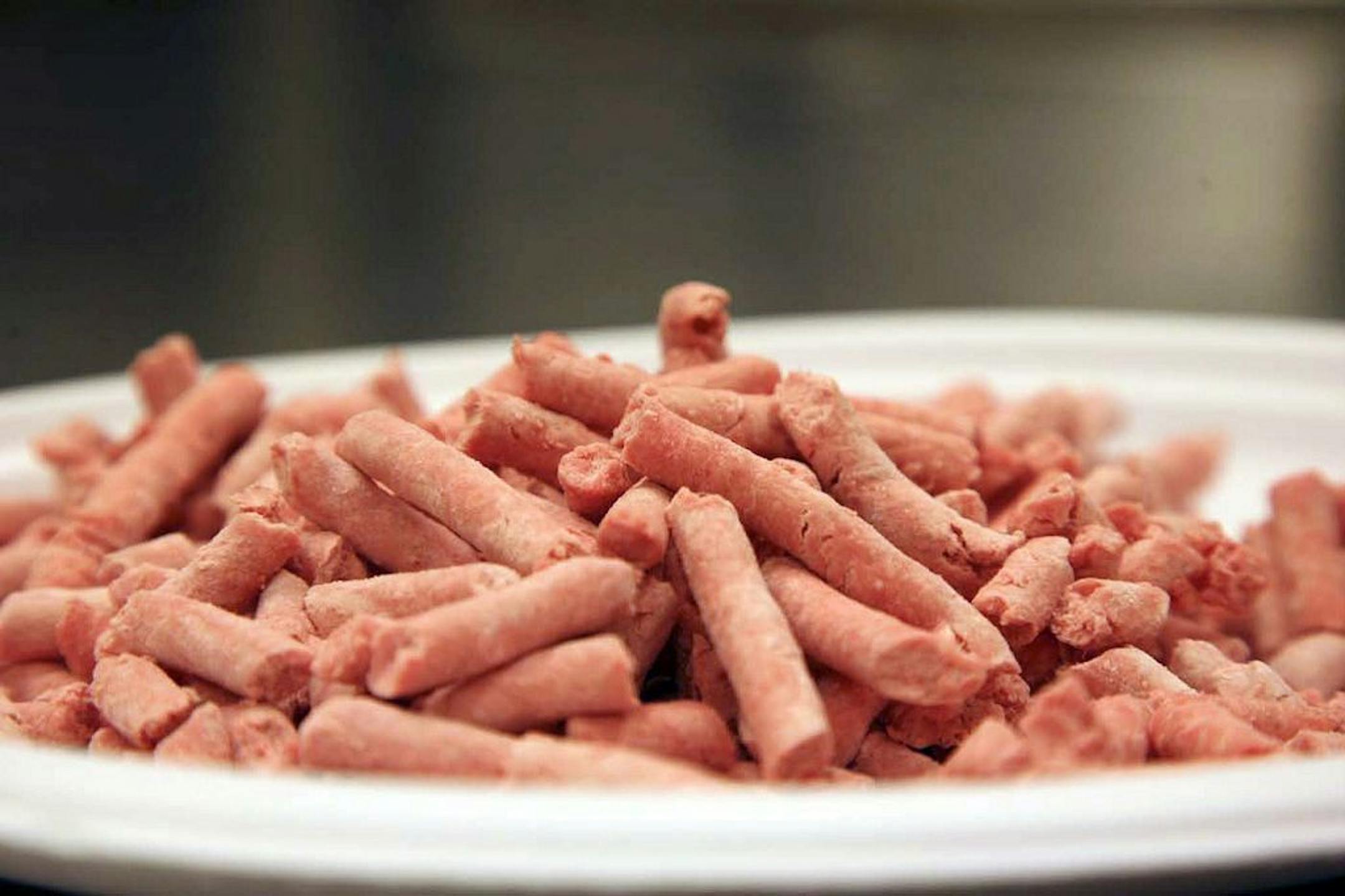
In this undated image released by Beef Products Inc., boneless lean beef trimmings are shown before packaging. The debate over �pink slime� in chopped beef is hitting critical mass. The term, adopted by opponents of �lean finely textured beef,� describes the processed trimmings cleansed with ammonia and commonly mixed into ground meat. Federal regulators say it meets standards for food safety. Critics liken it to pet food _ and their battle has suddenly gone viral amid new media attention and a
In this undated image released by Beef Products Inc., boneless lean beef trimmings, also known as "pink slime," are shown before packaging. (Associated Press - Ap/The Minnesota Star Tribune)

Supervalu Inc., one of the nation's largest grocery chains, will no longer sell hamburger containing an ammonia-treated beef filler dubbed "pink slime" by some food critics and a growing chorus of consumers.

The Eden Prairie-based company, which owns local supermarket leader Cub Foods, on Wednesday joined several fast-food chains and other major grocery operators in removing the controversial beef filler from hamburger sold in its outlets.

"This decision was due to ongoing customer concerns about these products," said Mike Siemienas, a Supervalu spokesman.

While ammonia-treated hamburger filler has gotten most of the popular attention, Supervalu also said its ban on so-called "finely textured beef" includes meat treated with citric acid, which is made by Minnetonka-based Cargill Inc.

California-based Safeway Inc., another national grocery chain, also Wednesday said it nixed sales of both ammonia-treated and citric acid-treated ground beef fillers. Cargill spokesman Mike Martin acknowledged that some of its grocery industry customers have eliminated finely textured beef.

"There have been customers who have contacted us because they have been contacted by consumers who are interested and concerned," Martin said.

Both types of ground beef fillers have been used for several years, with ammonia or citric acid serving to kill pathogens. The fillers are the product of food technology that allows for tissue that would otherwise be wasted -- or made into pet food -- to be turned into grist for hamburger.

Food companies say the issue is not food safety. Indeed, finely textured beef has the safety imprimatur of the U.S. Department of Agriculture. "Consumers have been consuming this for 20 years without any concerns or consequences," said Cargill's Martin.

But a tide of negative publicity around finely textured beef has led to a wave of consumer complaints and angst.

Finely textured beef primarily has been used in prepackaged hamburger in Supervalu stores, not hamburger ground on site, Siemienas said. Supervalu-owned chains include Chicago's leading grocer, Jewel; major East Coast supermarkets Shaw's and Acme, and Albertsons, a major Western chain.

Ammonia-treated beef, which is made by South Dakota-based Beef Products Inc., has been particularly targeted as "pink slime," said Doug Powell, a food safety expert at Kansas State University.

Bad publicity gathered momentum earlier this month with an ABC News investigation on ground beef filler. Also, there's been an Internet campaign by a Texas food columnist aimed at persuading the U.S. Department of Agriculture to drop ammonia-treated beef filler from school lunches.

Last week, the USDA said that starting next fall, school lunch programs can opt out of using the product.

Part of the tempest around pink slime, fairly or not, is an "ick" factor of sorts. "But there's an ick factor to almost all food," Powell said.

"I think people should know more about their food -- that's great," he said. But supermarkets are going down a slippery slope by banning ground beef fillers or making them optional based on public relations -- not safety, he said. "I think retailers are creating a huge can of worms here." Ditto for the USDA, he added.

"What about genetically modified food ingredients?" Powell said. Much of the corn, soybeans, canola and sugar beets in this country are grown from genetically modified seeds.

Food safety experts like Powell generally think genetically modified seeds are safe, but they are still controversial -- just like beef fillers.

"Are you going to yank all those out [of stores] too?" Powell asked.

Mike Hughlett • 612-673-7003

about the writer

about the writer

Mike Hughlett

Reporter

Mike Hughlett covers energy and other topics for the Minnesota Star Tribune, where he has worked since 2010. Before that he was a reporter at newspapers in Chicago, St. Paul, New Orleans and Duluth.

See Moreicon