Super Bowl spectacle had simple beginnings in 1967

With this being Super Bowl 50 and seeing all of the enormous coverage and celebrations surrounding it, it serves as a stark contrast to Super Bowl I, then called the AFL-NFL Championship Game.

February 7, 2016 at 3:08PM
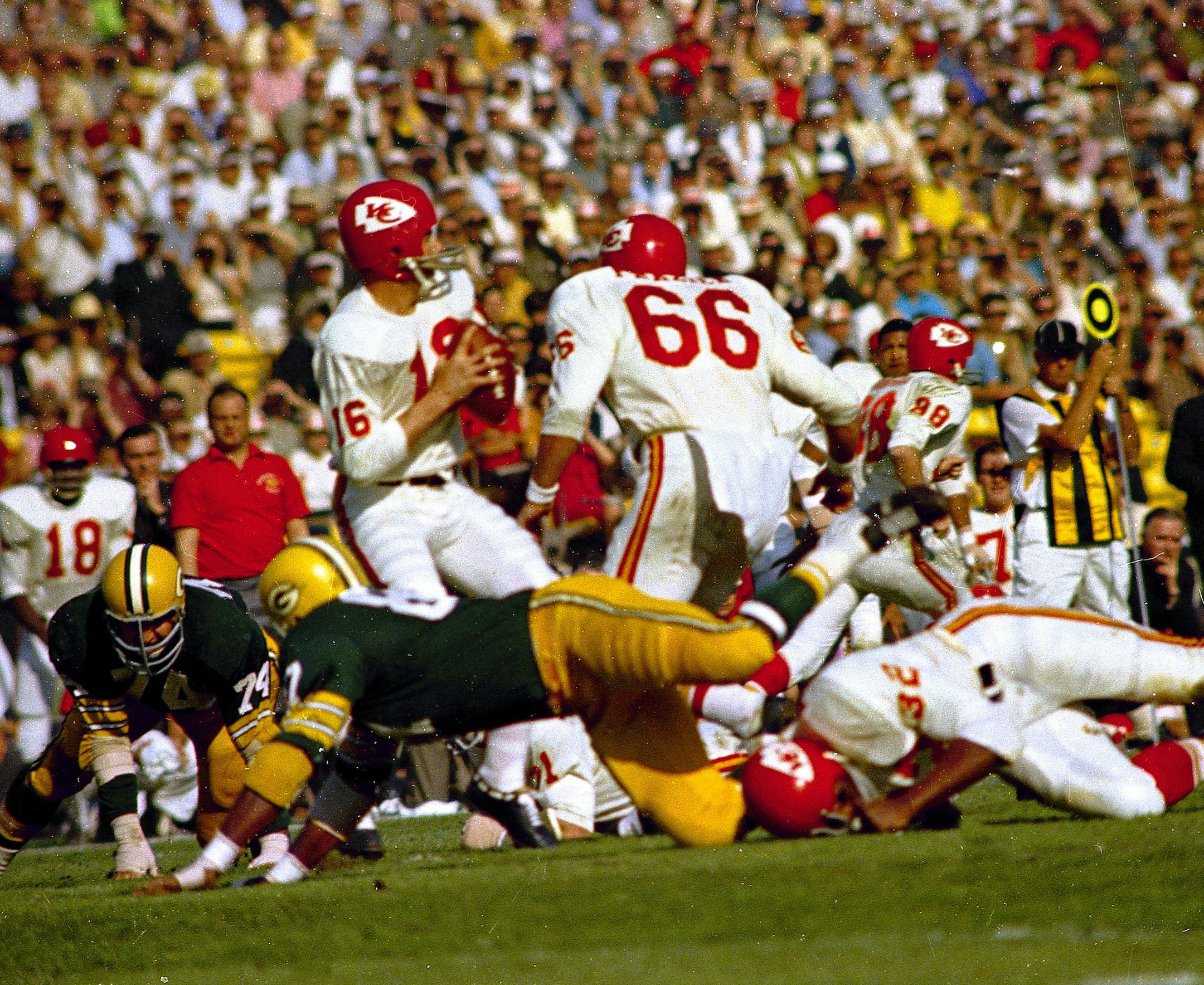
Kansas City Chiefs' quarterback Len Dawson (16) gets ready to release the ball during the first Super Bowl, Jan. 15, 1967, against the Green Bay Packers at the Los Angeles Coliseum in Los Angeles, California. The Green Bay Packers won the game. (AP Photo) ORG XMIT: APHS112614
Eluding Packers defenders, Chiefs quarterback Len Dawson looked downfield for a receiver during the first Super Bowl, in January 1967. Played at the enormous Los Angeles Coliseum, it was the only Super Bowl not to sell out. (The Minnesota Star Tribune)

With this being Super Bowl 50 and seeing all of the enormous coverage and celebrations surrounding it, I was reminded of attending Super Bowl I, then called the AFL-NFL Championship Game, on Jan. 15, 1967, at the Los Angeles Coliseum.

That game featured the first time the AFL played against the NFL to determine not only the best team but also the best league. It featured the NFL's Green Bay Packers against the AFL's Kansas City Chiefs, but the game was simply nowhere near as big of a spectacle as it is today.

In fact I was at a bar in Los Angeles with a couple other writers the night before the game and who should we bump into but Packers player Max McGee.

I had known him, as he had connections in Minneapolis. I got to know him a lot better later in life. He was drinking heavily that night.

The next day, he didn't start, which wasn't a surprise. But the 34-year-old ended up being arguably the most important player on the field. Coach Vince Lombardi likely wouldn't have played McGee at all, but Boyd Dowler reinjured his right shoulder on the Packers' sixth offensive play.

The Hank Stram-coached Chiefs, who were heavy underdogs, came out and kept the game close in the first half. McGee scored the first touchdown of the game on a 37-yard pass from Bart Starr. But the teams traded scores the rest of the half, and Green Bay led only 14-10 at halftime.

Speaking of halftime, the spectacle was not quite similar to what fans are used to these days with gigantic stage setups and pop stars from all over the field.

The halftime entertainment in L.A. was trumpeter Al Hirt and also featured marching bands from the University of Arizona and Grambling State University.
But after halftime, the Packers completely took control as they scored 21 unanswered points. The biggest score, and the one that put the game away, was McGee catching another touchdown pass from Starr, this one for 13 yards with just under a minute left in the third quarter to make it 28-10.

McGee finished the game with seven receptions for 138 yards and the two scores. During the entire 1966 regular season he had caught only four passes for 91 yards and one score.

Different spectacle

Yes, in 1967, the game was it. There were maybe 20 media members in attendance. Today there are more than 5,000 covering the event. The game is televised all over the world. There wasn't a party like the league puts on these days, one attended by all the VIPs in town for the game, not to mention all the other various events being held during Super Bowl week.

In fact, many of the events for Super Bowl 50 lasted for more than two weeks in the San Francisco Bay Area. There's a Pro Football Hall of Fame exhibition, the NFL Experience event, daily concerts, an NFL Foundation golf tournament, the Super Bowl media day and many more.

There is simply no comparing that first Super Bowl with what fans will see today. In fact, the game between the Chiefs and Packers has the dubious distinction of being the only Super Bowl that was not sold out, with some 30,000 seats left unsold at the Coliseum, which has a capacity of more than 90,000. Tickets ranged from $6 to $12.

The face value for Super Bowl 50 is between $850 and $1,800, with club seats costing as much as $3,000. Meanwhile, the secondary market for tickets currently has an average sale price of $4,672 per ticket, making it the most expensive sporting event in the history of the United States.

Players for the Chiefs and Packers were paid Super Bowl bonuses. The winning Packers players got $15,000 while the losing Chiefs earned $7,500.

For this year's Super Bowl, the winners will receive $102,000 while the losers will earn $51,000.

Two networks

The first Super Bowl was also the only one to be broadcast by two networks. During the regular season NBC had the rights to televise AFL games while CBS had the right to broadcast NFL games. So the two networks simulcast the game with their own announcing crews.

The game reached 51.2 million viewers, and viewership decreased the next season when it went to one broadcast, with 39 million viewers for Super Bowl II.

The cost for a 30-second advertisement on CBS was $42,500 A 30-second ad on NBC went for $37,500.

Meanwhile, last year's Super Bowl was watched by 114 million people and a 30-second ad on NBC cost $4.5 million. It is expected to cost $5 million for Sunday's game on CBS.

There's no doubt that the popularity of football in this country today began with that first game between the NFL and AFL champions in 1967. No one could have predicted the spectacle it would create all these years later.


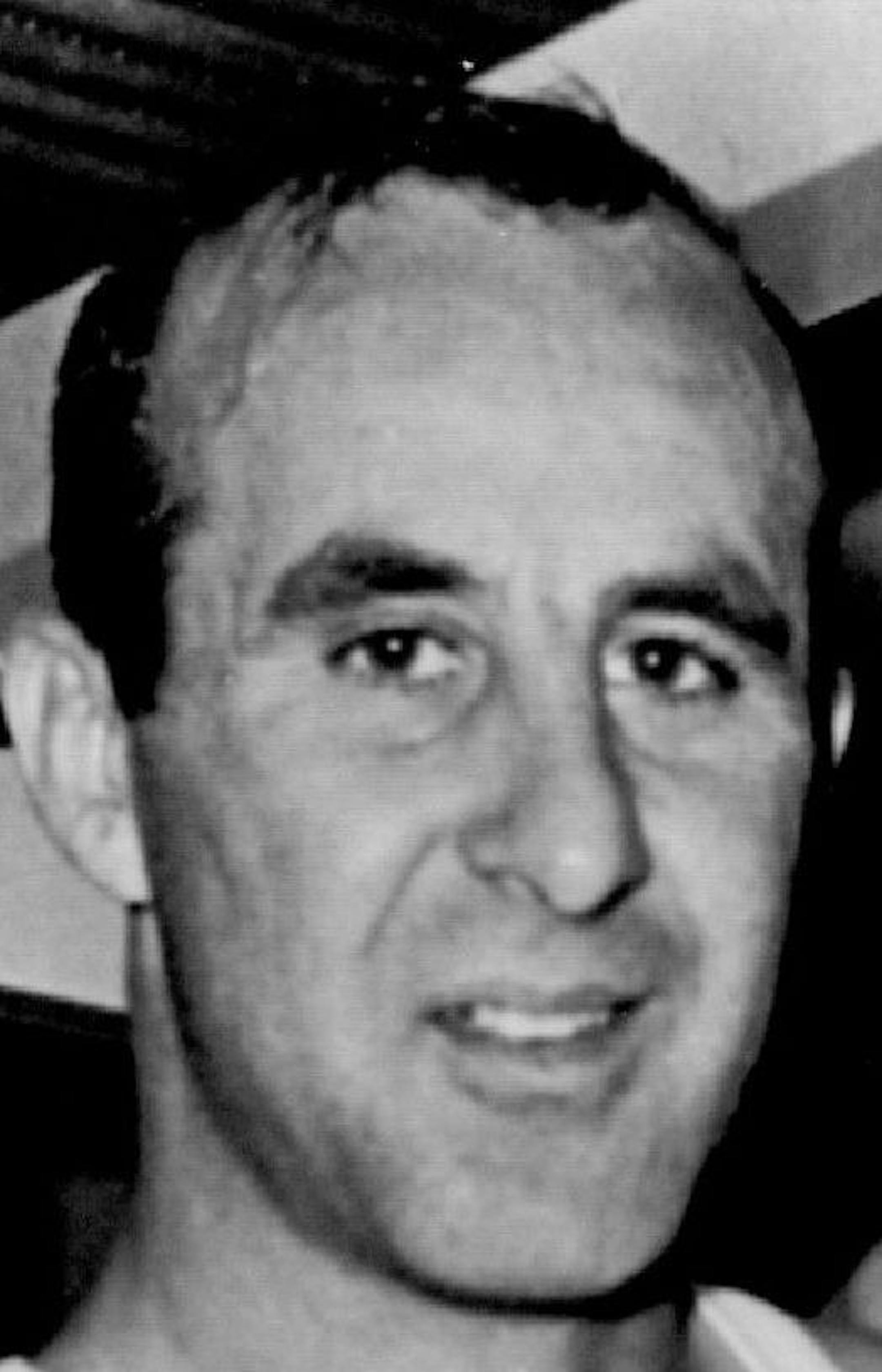
Three professional football coaches who have the distinction of winning the super bowl championship during their careers get together at the meeting of football coaches at the hotel Americana in New York on May 25, 1970. They are, left to right, Vince Lombardi, of the national conference whose Green Bay Packers Team won the Super Bowl in 1967-?68; Hank Stram, American Conference, whose Kansas City chiefs won in 1970; and Weeb Ewbank, American Conference, whose New York Jets won the 1969 Super Bo
Stram (The Minnesota Star Tribune)
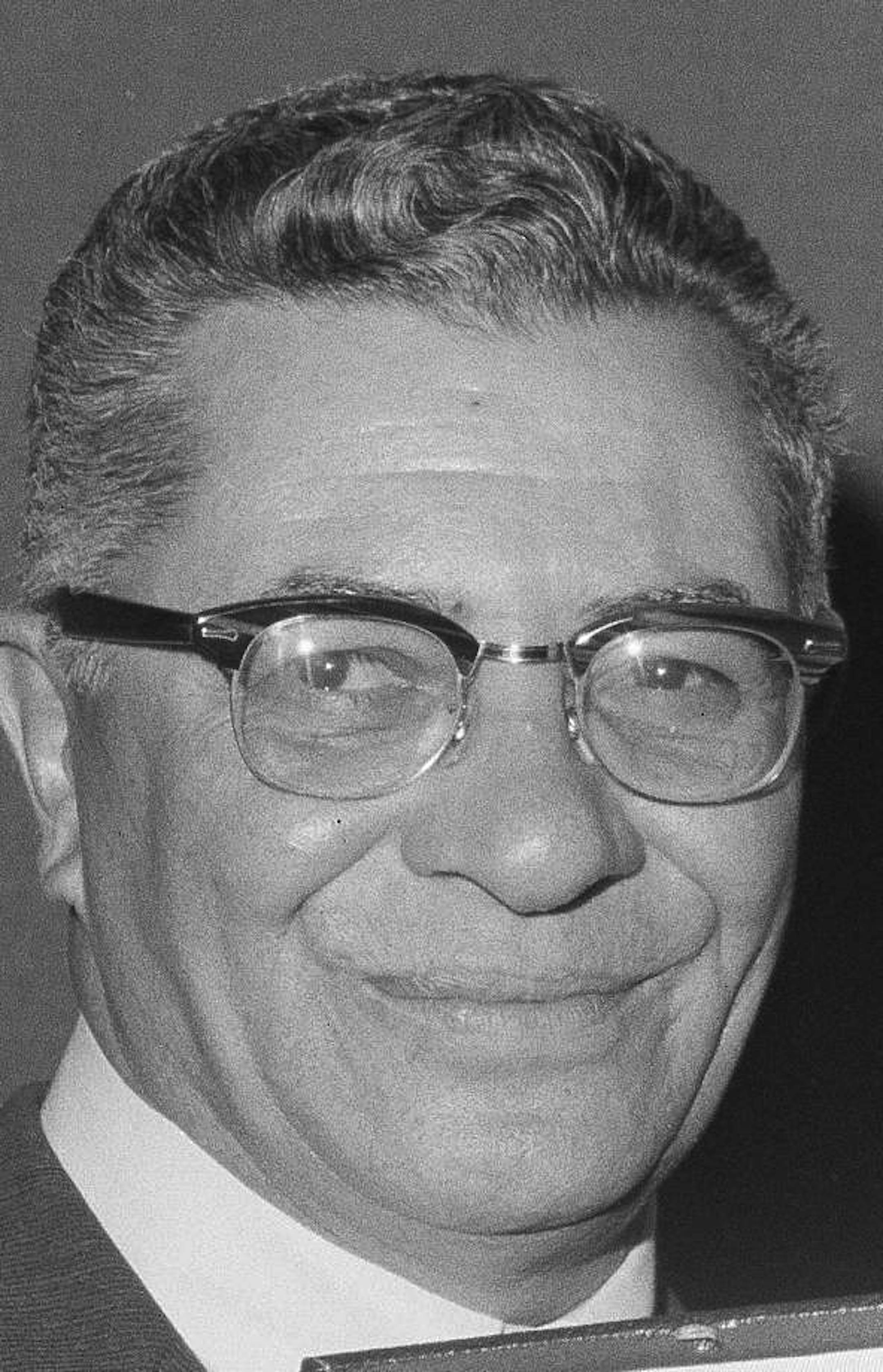
Green Bay Packers coach Vince Lombardi, left, is awarded the Insignis Medal by the Reverend Leo McLaughlin, president of Fordham University, Lombardi's alma mater, in New York, May 8, 1967. the Insinis medal is a symbol of dedication to precepts of St. Ignatius Loyola, founder of the Jesuits. An equivalent of the Latin word "Insignis" is "Outstanding." (AP Photo/John Lindsay) ORG XMIT: APHS234676
Lombardi (The Minnesota Star Tribune)
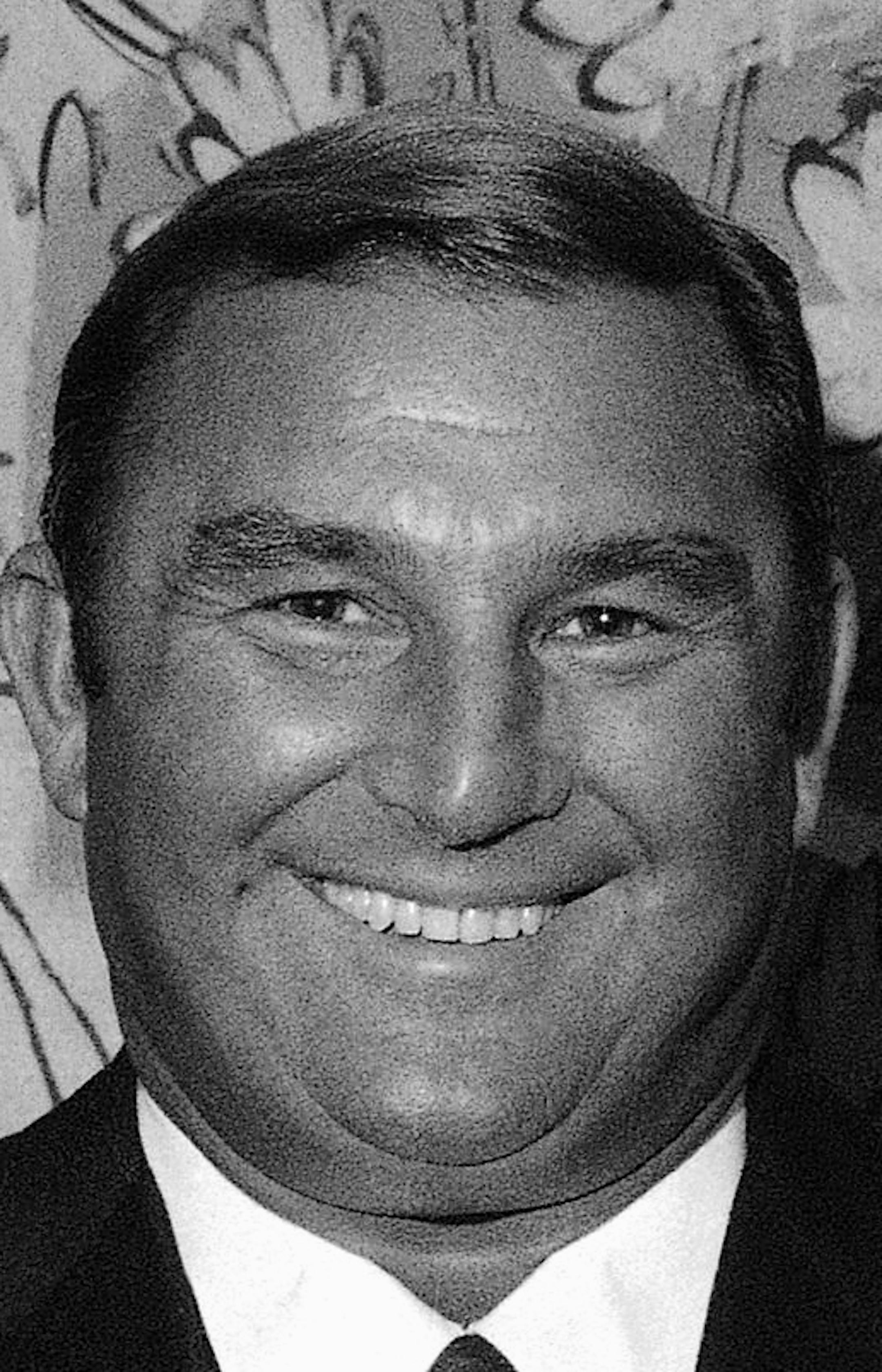
October 30, 1961 SCORED IN WIN - The four Packers who scored touchdowns in beating the Minnesota Vikings, 28-10, are pictured in the dressing room after the game yesterday. The quartet, from left-are: Jim Taylor, fullback; Max McGee, end; Paul Hornung, half back and Ron Kramer, end. AP Wirephoto ORG XMIT: MIN2016020523572457
McGee (The Minnesota Star Tribune)
about the writer

about the writer

Sid Hartman

Columnist

Former sports columnist Sid Hartman.

See Moreicon