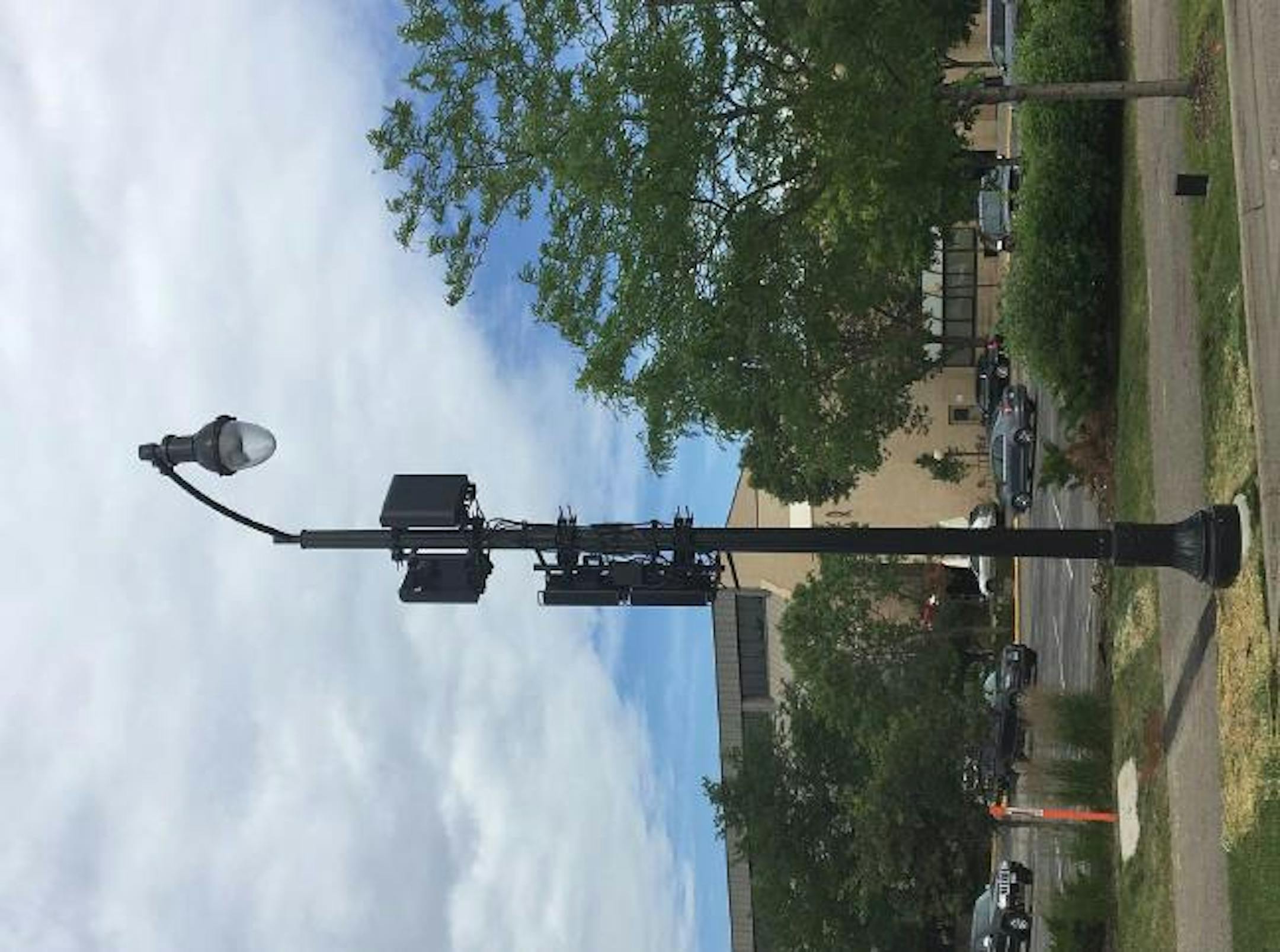
Super Bowl visitors to Minneapolis in 2018 will be able to call, tweet and post with no problem, thanks to crews installing new cellphone equipment on streetlights near U.S. Bank Stadium.
The same was done recently on streetlights near restaurants and shops at West End in St. Louis Park. It could happen next on a popular Wayzata street off Lake Minnetonka.
It's part of a new wave of "small-cell" wireless technology, which uses nodes attached to streetlights and flagpoles in areas where there's a high demand for data.
A bill approved by the Legislature this session regulates small-cell technology, one of about a dozen similar bills passed across the country. The bill caps the amount of rent a city can charge a company to install cells on any city-owned infrastructure in the public right of way and prohibits cities from an outright ban on it.
"Our customers are demanding this, whether they're in Hudson, Stillwater, Minneapolis or Eden Prairie," said Paul Weirtz, president of AT&T Minnesota, adding that the company spent $40 million in upgrades before this year's Super Bowl in Houston. "… Many times, you don't even know they're there."
Across the metro area, cities are anticipating more requests for the equipment, which is designed to be placed in clusters as opposed to the tall communication towers people most often notice. While less obtrusive, the equipment isn't a substitute for those towers.
In Bloomington, the technology has been installed by Hyland Lake, and AT&T wants to install more by hotels and the Mall of America for the Super Bowl. In St. Paul, three dozen units have gone in near downtown and on Grand Avenue.
Minneapolis has approved more than 200 of the small-cell units since 2015, mostly near downtown spots like City Hall. Both temporary and permanent units have been installed outside U.S. Bank Stadium and the convention center by companies such as T-Mobile, Verizon and AT&T.