

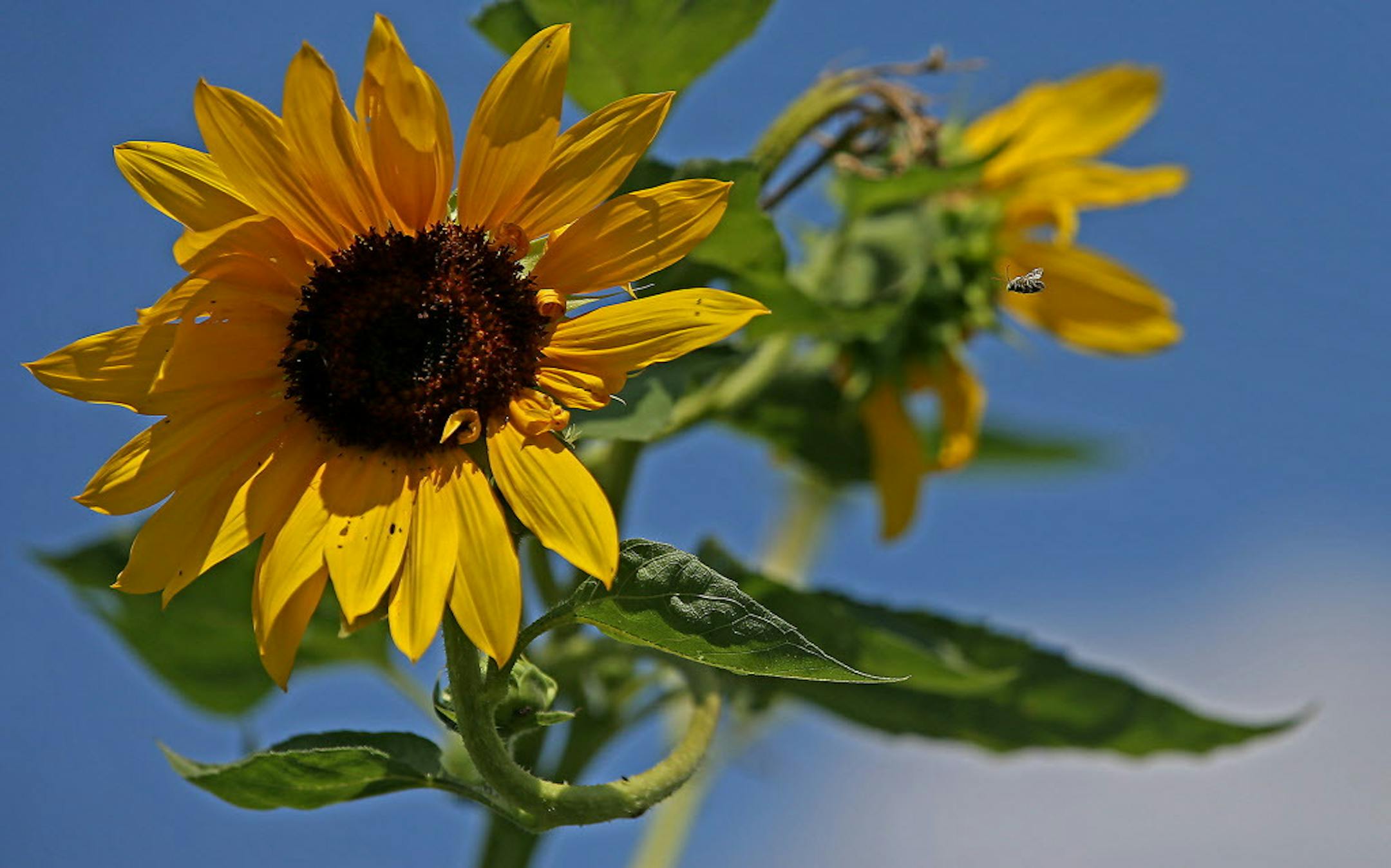
I grow a lot of cool plants in my garden. Yet the one that never fails to make me stop and take notice is the sunflower. Whether I sow the seeds or the plants simply show up (as they sometimes do), the stalks quickly soar to the sky and erupt into 1,000 flowers of pure solar-powered joy.
A thousand flowers, you say? Curiously, the large center is composed of very small florets that make up the actual flower head, while the distinctive outer petals are called ray flowers or false flowers. Those brightly colored petals lure in pollinating bees; after their work is done, each floret produces the protein-rich seed we like to snack on.
While you chew on that, I'll remind you that it's not too late to plant annual sunflowers. The recommended planting time for our cold climate is May through June. Although home gardeners encounter few pests or diseases with sunflowers, a June sowing is said to cut down on problems. There are some short-season varieties you could even sow in succession for an extended flowering period of these big, blooming beauties.
Your only trouble may be in choosing which one to grow. There are many versions of the iconic yellow flower, but you can also consider white, buttercream, chocolate, orange, rust, red, purple and pink, not to mention flared or flamed versions of all those colors, as well. The centers can be brown, black or even green. Pick between standard size, dwarf or giant, then single or multi-stem. And don't forget, there are pollen-less plants, too.
Find a sunny spot (of course), and loosen the soil. Sow the seeds according to package directions, and thin young plants to allow for adequate growing space. Apply fertilizer at this time, and water regularly to ensure a strong root system so winds don't topple the plants. Some taller plants may need staking for support. Single-stem plants can be grown in sheltered narrow spots along fences (picture their heads peeking over) and driveways, and they make attractive temporary screens as well. Smaller sunflower varieties can be grown in containers.
Let seeds germinate, and stand back. While they're growing, you can find time to appreciate this fascinating native plant of North America. Three thousand years ago Native American tribes used sunflowers for food, medicine, fiber, oil and dye. Today millions of acres of sunflowers are grown around the world for food and oils. The plants can also be used in soil remediation to remove dangerous heavy metals like lead and arsenic from the ground.
Some fun things to think about:
• The tallest sunflower on record was grown in Germany in 2014 and came in at 30 feet, 1 inch.

