

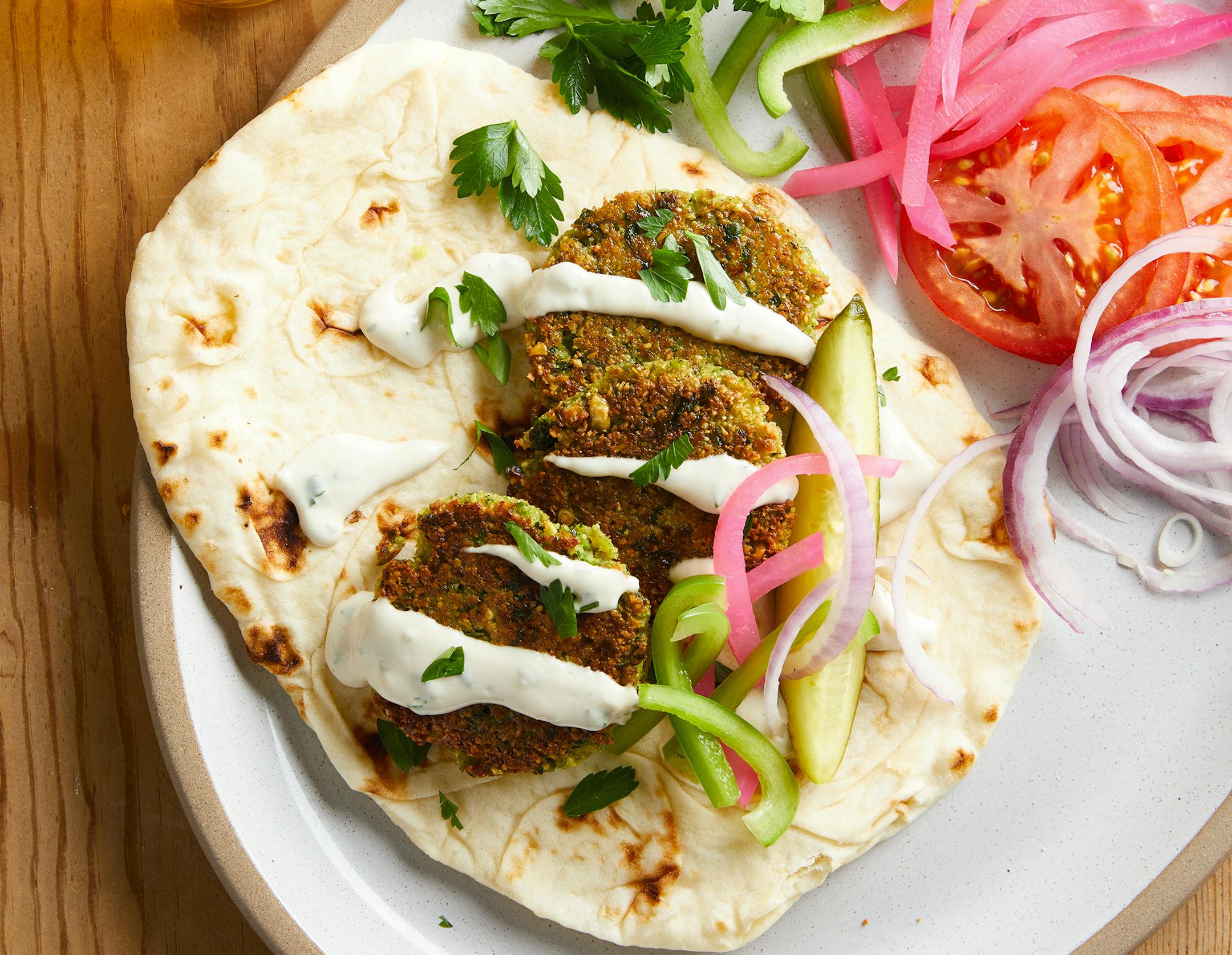
Falafel
Serves 4.
Southeast Michigan is home to the country's largest Arab American population. The first influx of immigrants began in the early 1900s, when — according to local legend — there was a chance encounter between a Yemeni sailor and Henry Ford, who told the sailor that his automobile factory was paying $5 a day. The sailor took word back to Yemen, where it spread. For decades, as people fled conflicts in the Middle East, many sought economic opportunities near Dearborn, bringing their food traditions with them. This recipe comes from Patty Darwish of Dearborn, whose great-grandfather immigrated from Lebanon in the late 1800s. Note: You want the texture to be somewhere between couscous and a paste. If you don't grind the chickpeas enough, the falafel won't hold together, but if you overgrind, you will wind up with hummus. This recipe must be made in advance. From "Smithsonian American Table," by Lisa Kingsley in collaboration with the Smithsonian Institution (Harvest, 2023).
For the falafel:
• 2 c. dried chickpeas
• 1 c. coarsely chopped fresh parsley
• 1 c. coarsely chopped fresh cilantro
• 1 small onion, coarsely chopped
• 1/4 of a green bell pepper


