

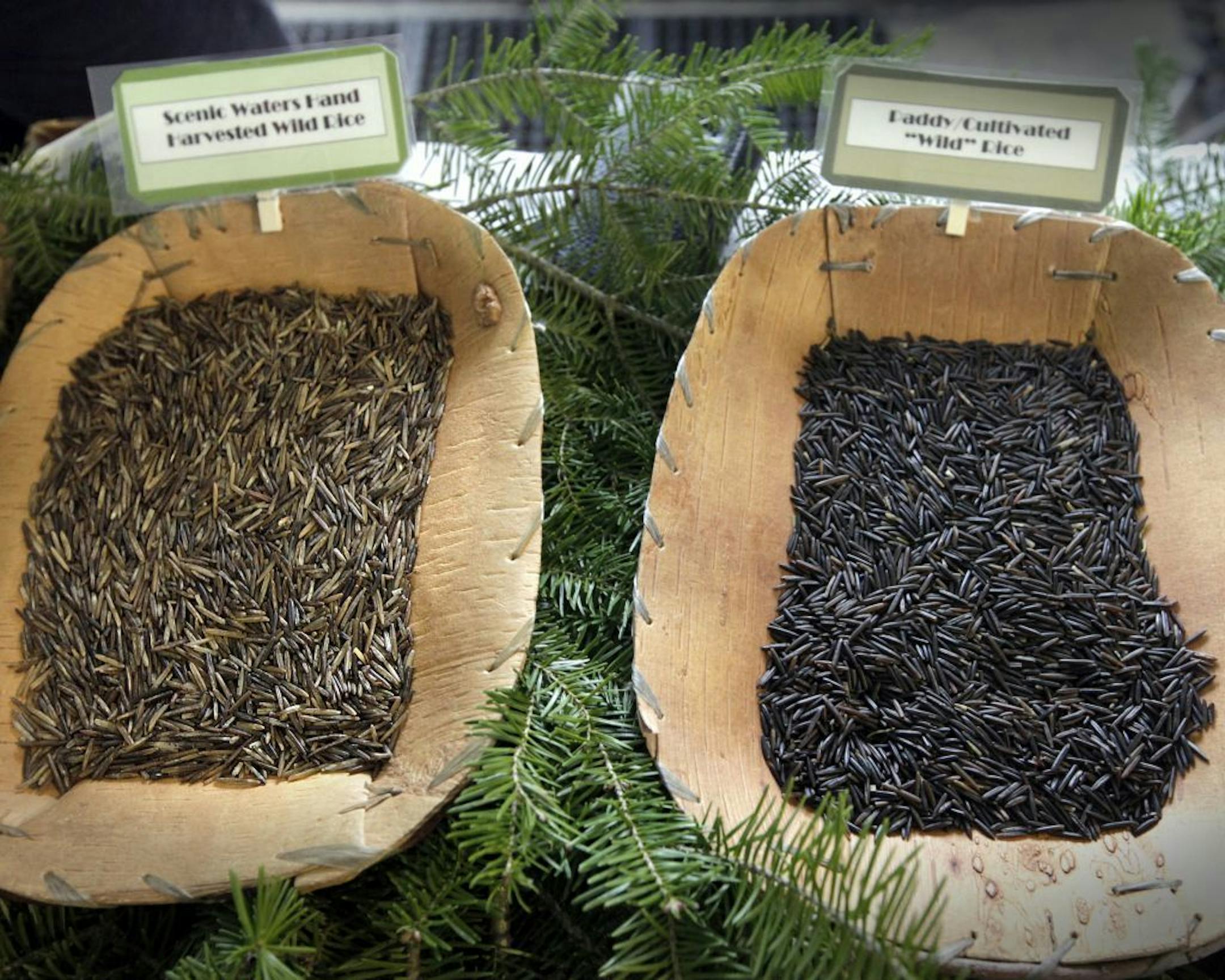
Diners who prefer their Minnesota wild rice harvested by hand may find it in short supply in the coming months.
Heavy rain early this summer nearly wiped out the natural crop in eastern Minnesota, and wild rice in other historically productive areas to the west hasn't thrived.
"It's highly variable, but I'd have to say that on average, it's been a poor year for us," said Jeff Lightfoot, Grand Rapids-based regional wildlife manager for the Department of Natural Resources, which manages the by-hand harvest of wild rice in Minnesota. The DNR issues licenses for hand harvesting, while Indians can harvest independently on tribal waters.
Most of the wild rice grown in Minnesota is not hand harvested but cultivated -- farmed, in a way -- and harvested by machine. Thanks to improvements made by the University of Minnesota, cultivated rice is able to withstand wind, floods and other calamities, said Scott Goehring, owner of Baxter, Minn.-based Christmas Point Wild Rice Co., which sells several kinds of wild rice.
Processors have developed a backlog of cultivated rice this year, Goehring said.
Many diners prefer truly wild and hand-harvested rice for its smoky taste and traditional appeal. But much of what grows in shallow lakes and streams of northern Minnesota, particularly in north central Minnesota, was uprooted as water rose after the record rains of June 19-20.
That downpour created flash floods tore up roads and parks in the Duluth area and swelled the Mississippi River, flooding numerous homes and roads in Aitkin County in particular.
Ken Bruns, a rice processor in Cass Lake, said he's been getting a lot of hand-harvested rice from the Leech Lake and White Earth Indian Reservation areas. But he received virtually none from the areas around Brainerd and Big Sandy Lake near Aitkin, which usually produce thousands of pounds.

