

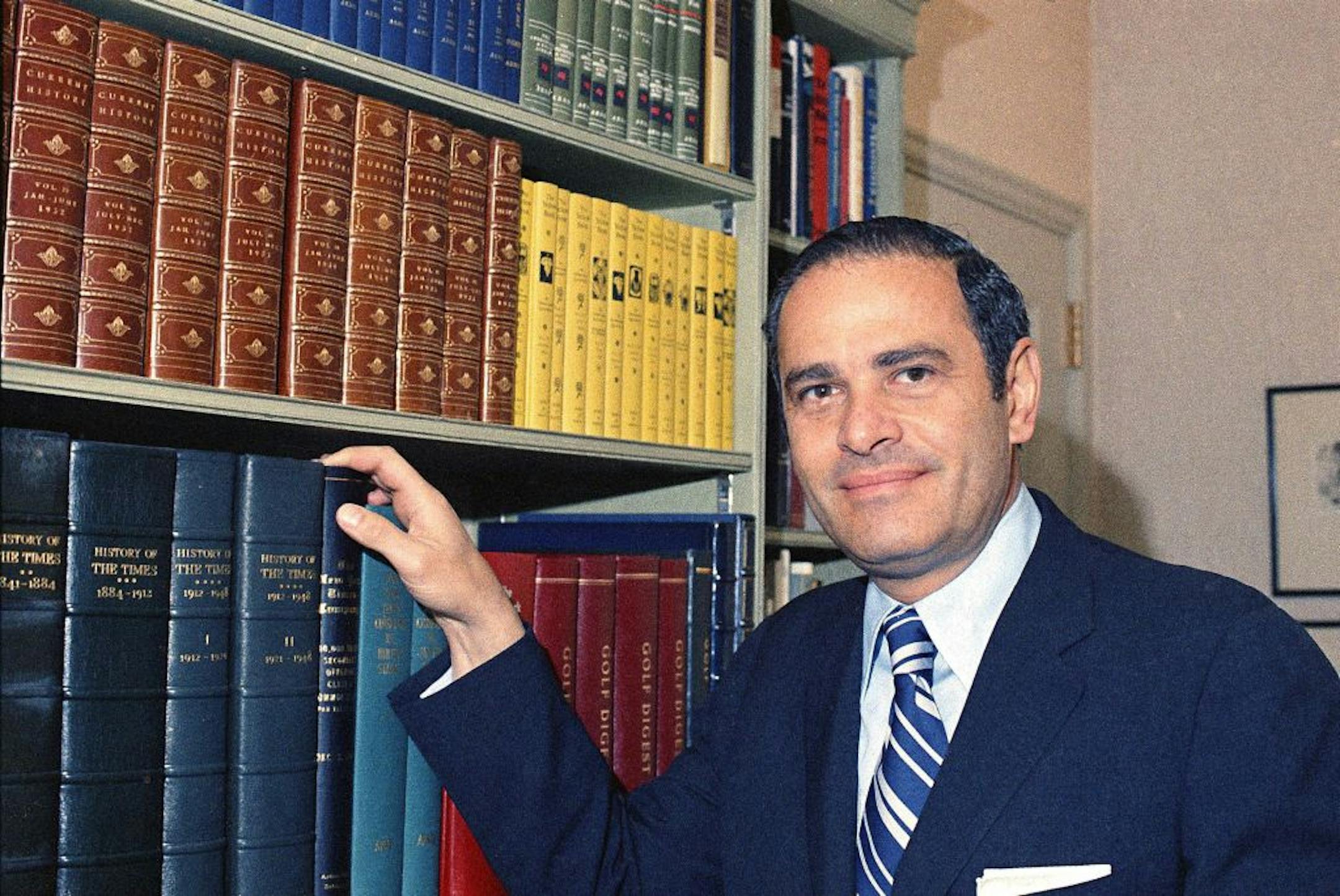
Arthur Ochs Sulzberger, who as publisher and chairman of the New York Times Co. guided his family-controlled newspaper through epochal moments in American journalism, died Saturday at his home in Southampton, N.Y. He was 86.
The family said he died after a long illness.
Sulzberger, a scion of one the nation's great publishing families, and father of the current publisher, Arthur O. Sulzberger Jr., stood up to government pressure over the paper's critical coverage of the Vietnam War, published the Pentagon's own secret history of the war, oversaw the transformation of the enterprise to a publicly traded company and played an incalculable role in shaping the Times for generations of readers.
As publisher from 1963 to 1992, he is credited with upholding what many journalists consider the highest standards of the profession and challenging powerful interests in all corners of society. The paper won 31 Pulitzer Prizes under his stewardship.
Authors Susan E. Tifft and Alex S. Jones, in their unofficial history of the newspaper, "The Trust," called him "arguably the greatest" Times publisher since Adolph Ochs purchased the paper in 1896.
An enduring imprint
Sulzberger's imprint was felt in many enduring ways. He made the paper available nationally via satellite printing plants and, in 1970, introduced the op-ed (opposite-editorial) page, which showcases columnists and outside writers whose opinions sometimes differ from the paper's institutional voice.
He broadened the paper's appeal by increasing coverage of science, sports, religion, arts and lifestyle news -- changes dismissed by critics. But the sections -- SportsMonday, Science Times, Living, Home and Weekend -- were an instant success. He made crucial appointments throughout the newsroom, elevating the Pulitzer Prize-winning journalist A.M. Rosenthal to managing editor and later to executive editor, and adding columnist William Safire.


