

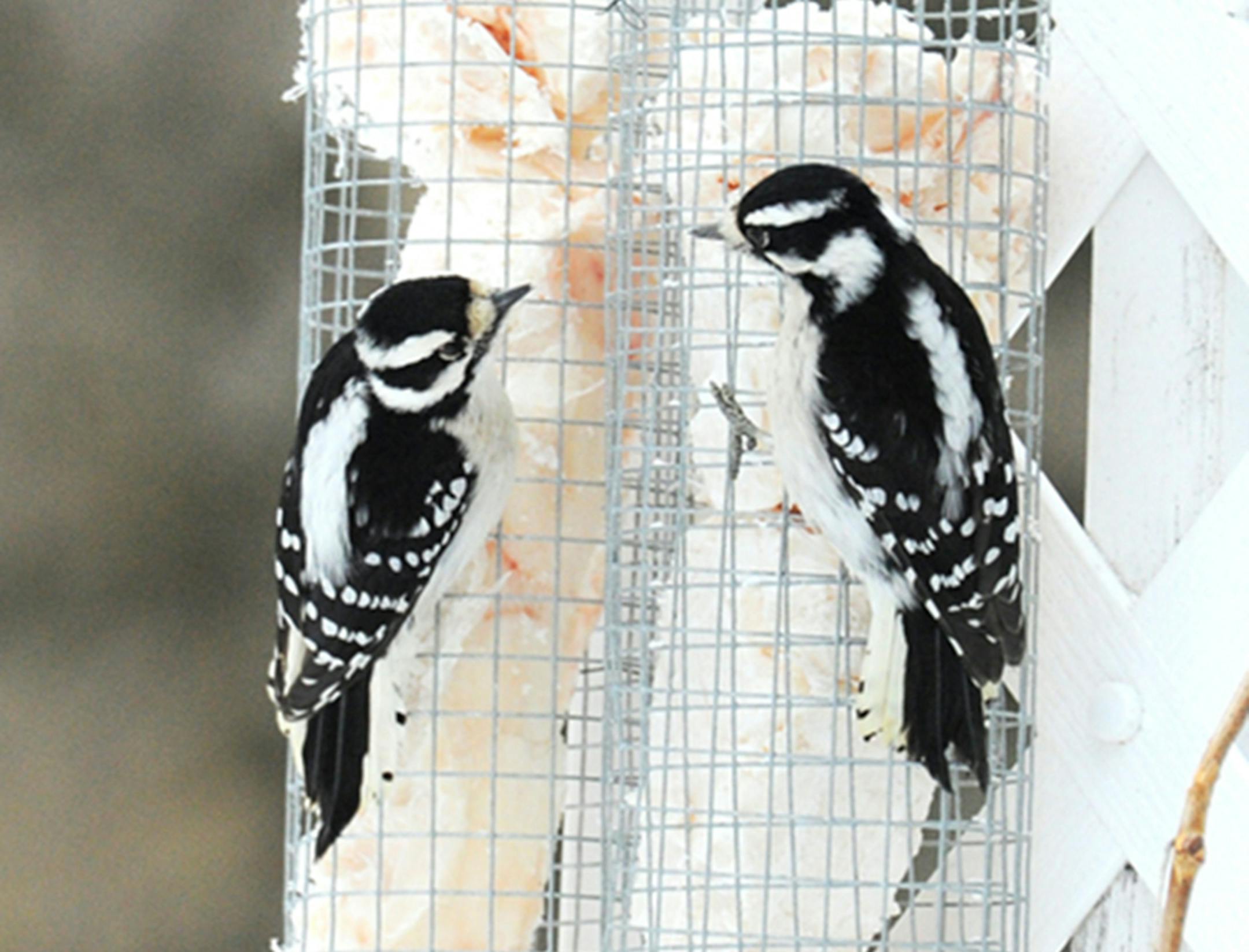
Winters, whether mild or harsh, are challenging times for birds. Food is in shorter supply just when birds need lots of energy to help them survive the cold.
That's where suet feeders come in. Birds eat suet — cow fat — for its caloric content. Chickadees and cows use suet in exactly the same way. The hard white fat you feed to birds is energy.
Cows save their suet for energy emergencies. Those were more likely to happen when cattle were wild beasts as opposed to feedlot residents (where they face only one emergency, and suet is of no help).
Cow suet surrounds the animal's kidneys. A butchered cow provides 20 to 30 pounds of suet. That large quantity is the result of a fattening diet that goes beyond the needs of well-marbled steak.
My suet feeder, homemade and large, attracts chickadees, nuthatches, blue jays, the occasional brown creeper and four species of woodpeckers — downy, hairy, red-bellied and pileated. We get crows, too (pigs with wings).
Why don't we put out suet year-round? Suet melts at 112 degrees. There are summer days when it dribbles if touched by the sun. That's messy. Suet is best used in winter.
Finding a supplier
Once upon a time the butcher, asked politely, would reach over the counter to hand you a small package, a chunk of suet wrapped in white butcher paper. The butcher would scribble NC on it — no charge.
Not so today. Checking the Internet for suet pricing information I came upon a quote from a man named Dan. "That guy paying $4.95 a pound — bud, they seen him coming," Dan wrote.

