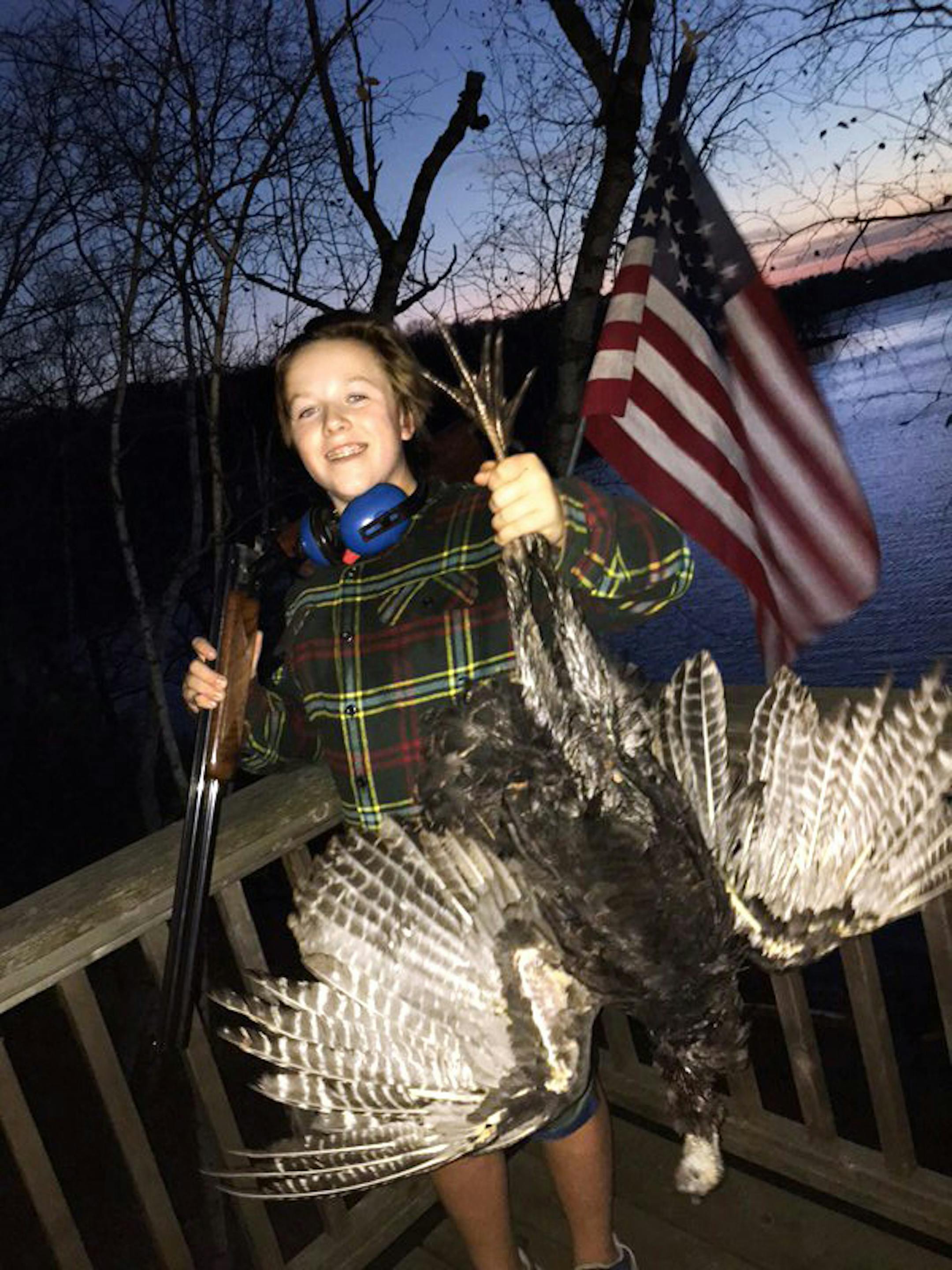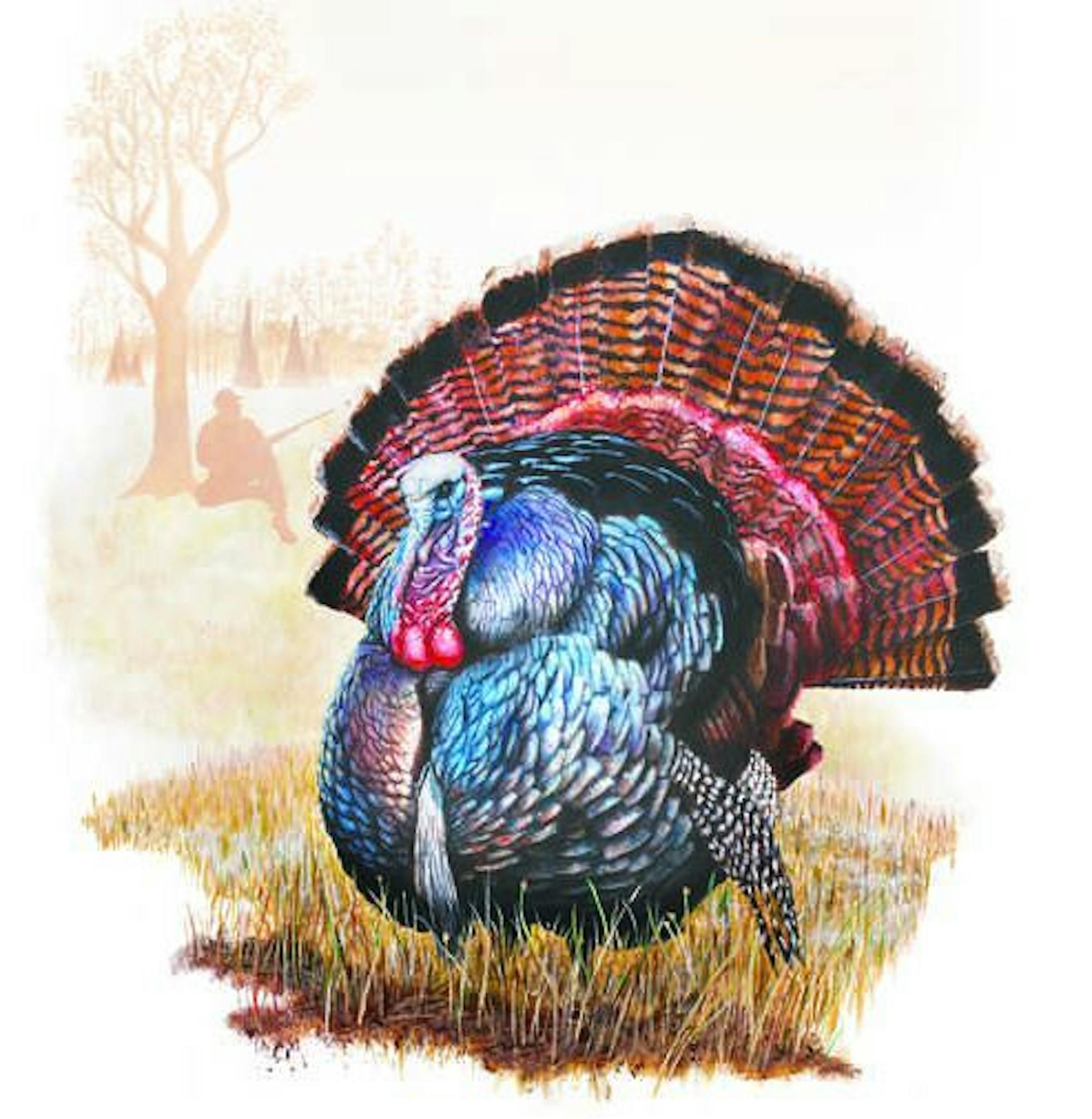
For years, I didn't see the allure of turkey hunting — or, to be honest, of any dogless hunting. If I couldn't have my Labrador retriever out there with me flushing a pheasant or retrieving a duck, I wondered, what's the point? But over time I softened because, as many hunting addicts know, you take what you can get. And in the spring, all you can get is a turkey license.
This year, the spring turkey season opens April 18, and runs through the end of May. The season is broken into six roughly weeklong periods, from A to F. Hunting permits in periods A and B are determined by lottery; anyone with a license can hunt during the subsequent periods. Each hunter is allowed one bird, and you've got to register your tag if you're successful.
In late February, I received a postcard informing me that I'd gotten a tag for period B, and if I don't get a bird then I can try again during period F.
As a neophyte turkey hunter five years ago, I looked for help. I attended a class in South St. Paul put on by the National Wild Turkey Federation and the Minnesota Department of Natural Resources. I scoured websites and read books. I practiced my turkey call, both the kind where you drag a stick across a piece of slate and the diaphragm call. The latter is pressed by the tongue on the roof of the mouth, and I've found that it results in lots of slobbering.
Then a veteran turkey hunter and friend of a friend, Mark Arcand, invited me to join him. Several times over the course of three years, Mark took me hunting on his family land outside of St. Paul — and I never shot a turkey. We saw turkeys, but only females (hens). In the spring, hunters are only allowed to shoot males, aka toms. In turkey hunting parlance, toms are either gobblers (old males) or jakes (young males). We heard males — only the males gobble — but couldn't call one into range.
More recently, I've hunted our family land in Crow Wing County. Again and again, I've been skunked. Every spring, I faithfully scout, get dolled up in camouflage gear, put out a couple decoys, and sit under a tree at the border between an aspen grove and a cornfield. And every year I hear far off turkeys gobbling, mocking my efforts to shoot them.
I'll be back on our family land this year, trying for a tom. And this year the stakes are higher than ever.
Last October, I was out East on college visits with my oldest child. Sitting in a cheap hotel in the middle of Vermont one night, my phone rang. It was my youngest child, Aidan, 13, who was breathless on the other end of the line. Because the boats and docks had been put up for the season, he'd gone bass fishing in a kayak (that's how crazy he is about bass fishing).