

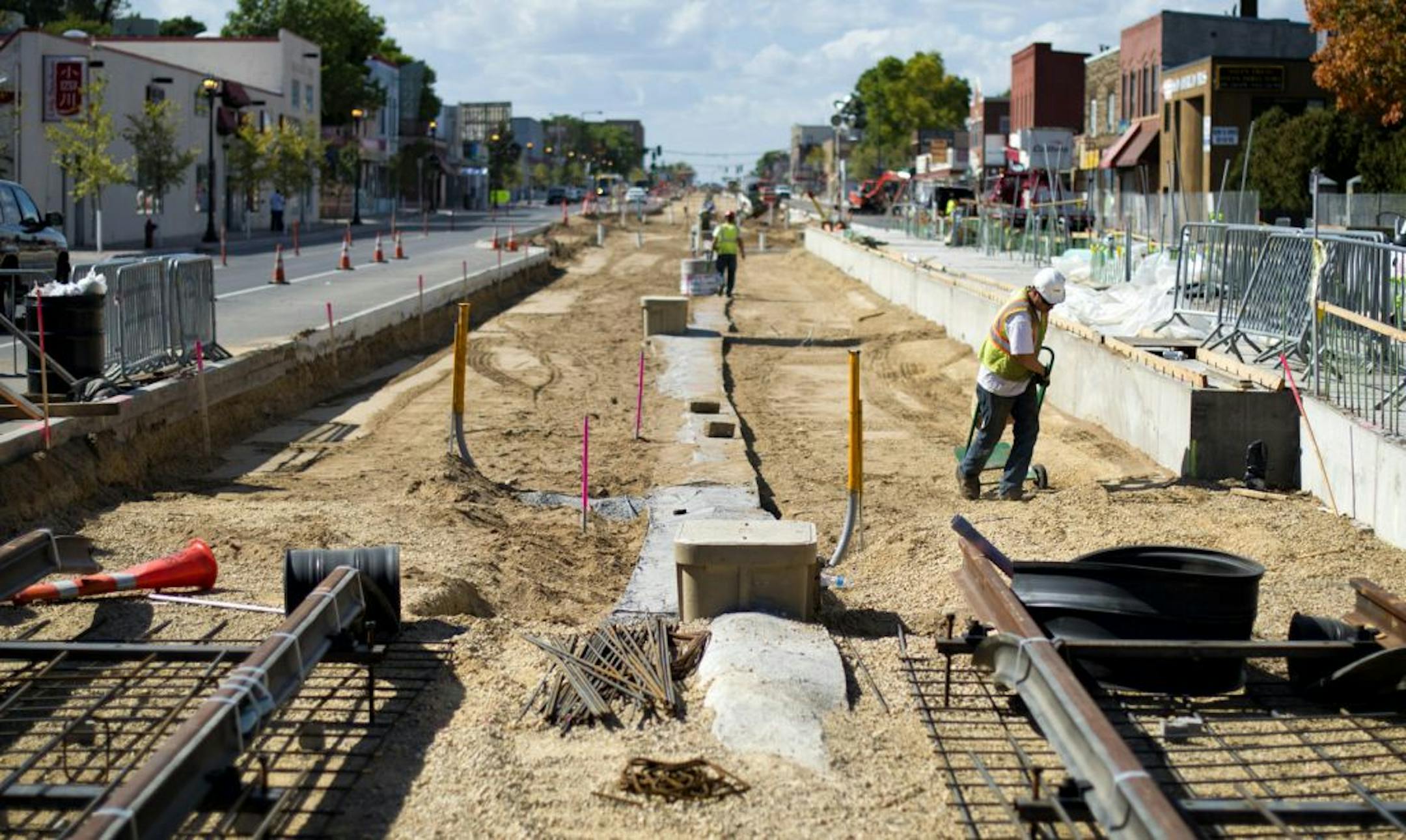
Chipped chests-of-drawers, dusty bowling trophies and used mattresses are crammed into Marty's Second Hand Store, a rickety institution on a boarded stretch of St. Paul's University Avenue where the Central Corridor light-rail line is taking shape.Marty's is one of nearly a hundred businesses on University -- mostly small operators -- getting chunks of $4.8 million in public subsidies to survive the disruption of light-rail construction. They include 11 hair salons, a couple of liquor stores, several used furniture and clothing shops, taverns, a hookah parlor and a sex novelty shop.
"It's so critical that we support the businesses that are here," St. Paul Mayor Chris Coleman said in defending the interest-free loans forgiven if the businesses remain after the light rail opens.
But efforts to save them obscure ambitious plans -- costing millions more in public subsidies -- to draw new business and housing to areas that have been plagued by poverty or blight.
"It will transform the neighborhood, capitalize on light-rail transit, energize residents and create a thriving community asset," boasts one proposal for moderate-income apartments, offices and shops on University in St. Paul. Farther west in Minneapolis, a project calls for creating an "arts-centered cultural district."
Competing interests
The dueling subsidies aim to satisfy the competing interests of the $957 million Central Corridor project that is due to open in 2014 between downtown St. Paul and downtown Minneapolis.
Supporters of the light-rail project have long sold it as spurring economic development as well as moving people.
The Metropolitan Council has spent $26 million in property taxes and federal funds during the past decade to stimulate housing and business development along the entire Central Corridor. About $9 million of it was awarded in the past two years on University, mostly to entice private financing for apartment buildings, stores and small offices near the Prospect Park station in Minneapolis and the Fairview, Hamline and Victoria stations in St. Paul.


