

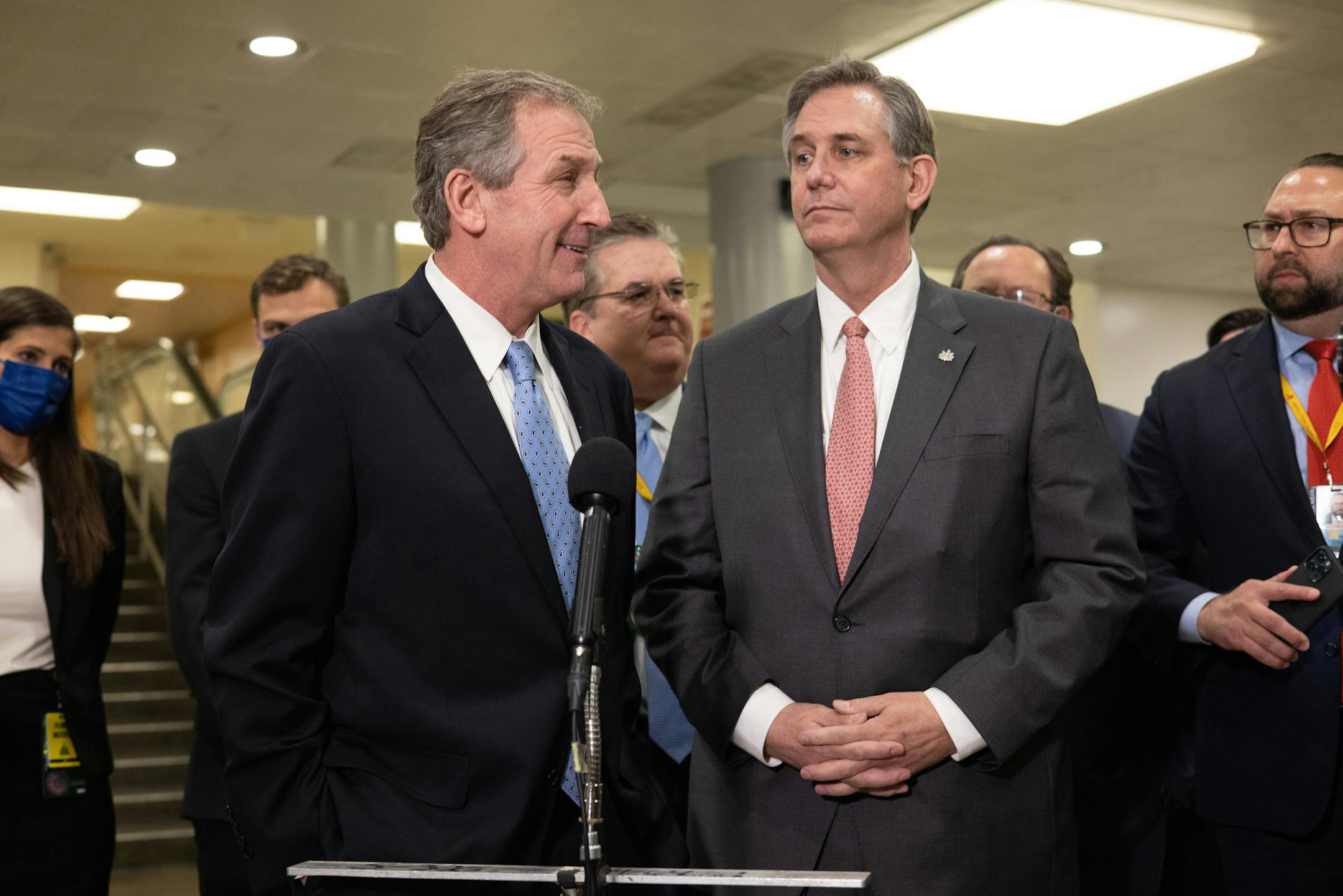
On the afternoon of Feb. 10, when former President Donald Trump's legal team gathered in a conference room in a special suite at the Trump hotel in Washington, longtime Trump adviser Justin Clark had an announcement to make.
Clark told one of the lawyers, Bruce Castor, that after his widely panned performance a day earlier, Trump did not want him appearing on television any more during the impeachment trial.
Castor rose from his chair, and began angrily shouting at Clark, arguing that Trump was wrong to demote him. The back and forth became so heated that Castor left the conference room in a huff.
He later apologized to Clark. But the tense exchange was just one example of how Trump's hastily assembled legal team — a mash-up of political hands, a personal-injury lawyer, a former prosecutor and a longtime defense lawyer, most of whom did not particularly like or trust one another — clashed, stumbled and regrouped throughout the impeachment proceeding under the watchful and sometimes wrathful eye of its client.
The result was an airplane held together with duct tape as it tried to land.
This article is based on interviews with a half-dozen members of the legal team and others involved in the process, which ultimately led to Trump's acquittal.
"You have to remember that we had literally one week and one day to prepare the defense and we were all people who never had met each other before," one of the lawyers, David Schoen, said in a statement after he was approached for this article.
In the days after the House impeached Trump for his role in inciting the Jan. 6 riot, Trump and his aides tried to assemble a legal team. Several lawyers who had represented him in his past impeachment made clear they would not be involved this time. Other high-end white-collar defense lawyers were afraid to work for him because of the political backlash and fears that Trump would refuse to pay his legal bills.


