

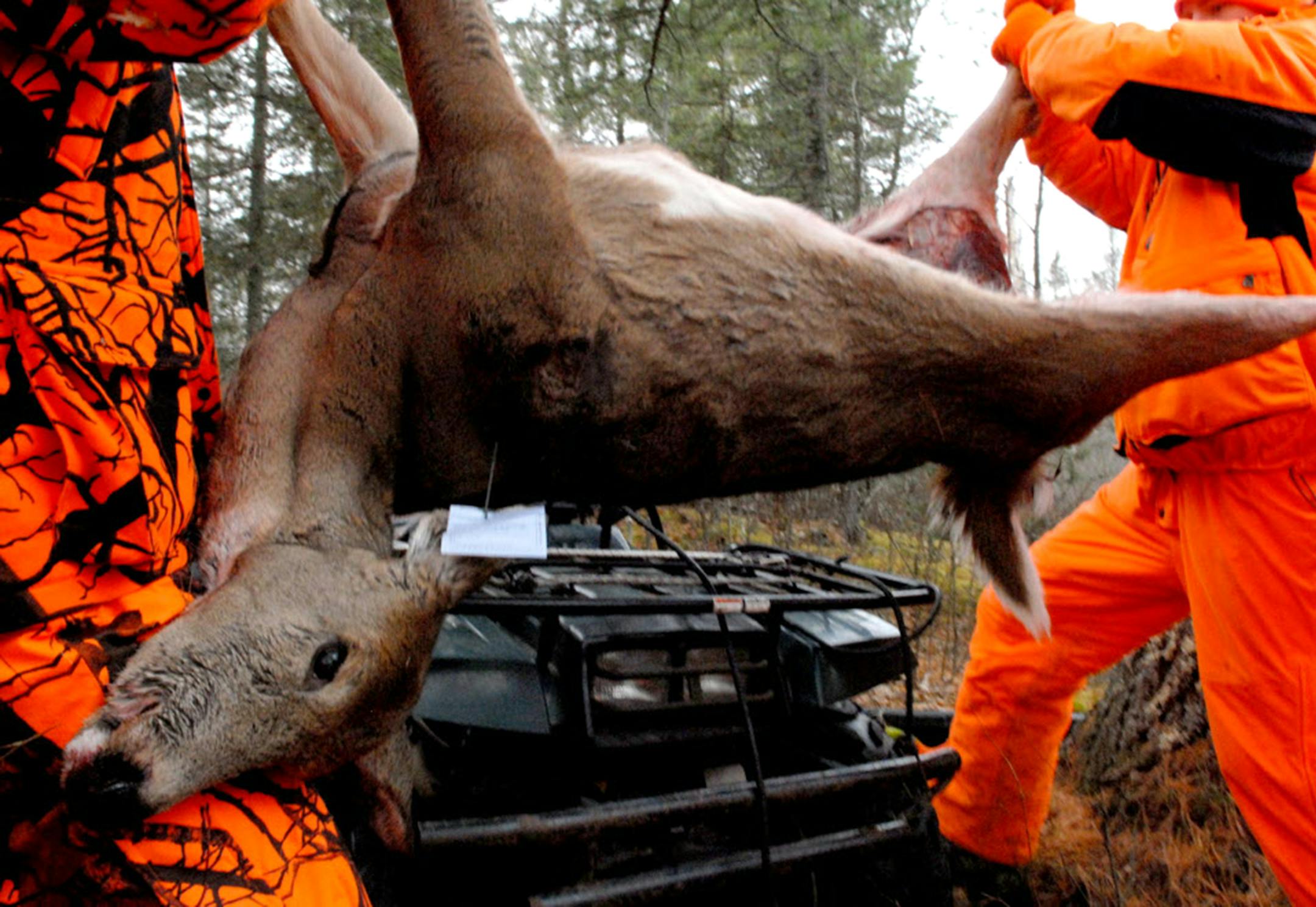
The question of how much "intelligence" white-tailed deer possess is one that hunters ask themselves often, as do deer researchers. Or maybe intelligence is the wrong word. Perhaps whatever smarts a deer has — and most seem to have plenty — should more accurately be described as instincts.
Case in point: Last weekend during the opening of Wisconsin's deer season, our bunch of 16 hunters saw far more deer on Saturday, the first day of hunting, than on Sunday, the second day.
OK, you might say, what's unexpected about that? When hundreds of thousands of hunters enter a state's woods and fields, and shooting commences, wouldn't an animal's reasonable response be to flee, hide or travel only at nighttime?
Clint McCoy is among hunters who have long been intrigued by these and other white-tailed deer behaviors. A deer biologist with the Ohio Department of Natural Resources, McCoy in 2014 undertook a deer research project when he was a graduate student at Auburn University, the results of which suggest a whitetail's survival instincts and, yes, perhaps, intelligence, can't be overestimated.
McCoy's study area was a 6,000-acre parcel in South Carolina's low country managed for timber and hunting. On it are more than 100 deer stands.
The project began with the capture of 37 white-tailed bucks. Some were caught in trap nets, others with dart guns. The bucks represented four age groups about equally: yearlings, 2½-year-olds, 3½-year-olds and bucks older than 4½ years.
The bucks were fitted with GPS collars that transmitted location beacons every 30 minutes between Aug. 24 and Nov. 24, a period that included the rut, the peak of which, in that region of South Carolina, occurs between Sept. 20 and Oct. 30.
Primary among McCoy's multiple goals in conducting the research was to determine whether a relationship existed between the amount of time a stand was occupied by a hunter and the bucks' movements.


