

Dakota County may be one of the most populous counties in Minnesota, but a study released Wednesday indicates it lacks a public transportation system that operates with any sense of cohesiveness.
Large employers and the Dakota County Regional Chamber of Commerce took note. They say it's difficult to attract and retain workers without reliable transit. And most residents have few dependable public transportation options to get to work, run errands or go to school.
The privately funded review, conducted by the Dallas-based consulting firm Huitt-Zollars and local transit advocates East Metro Strong, calls on the county to redesign current routes to better target employment, educational, retail and medical hubs.
"The county's biggest employers made this happen because it's important to them," said Maureen Scallen Failor, president of the Dakota County chamber. "There's also a lot of interest among our small businesses."
Christof Spieler, vice president and director of planning at Huitt-Zollars, noted that Dakota County's population is spread out but "employment hubs are concentrated."
Spieler, a former board member of Houston's Metropolitan Transit Authority, was a key player when the sprawling Texas city overhauled its outdated transit system five years ago.
In some ways, Spieler said, Dakota County is similar to Houston because it's remarkably diverse — there are suburbs, exurbs, small cities such as Hastings and cities like West St. Paul laid out on an urban grid.
Current transit options in Dakota County tend to focus on ferrying 9-to-5 commuters to and from Minneapolis and St. Paul. More limited are reverse commuting opportunities for workers employed in the county, those working nontraditional hours and students attending school.
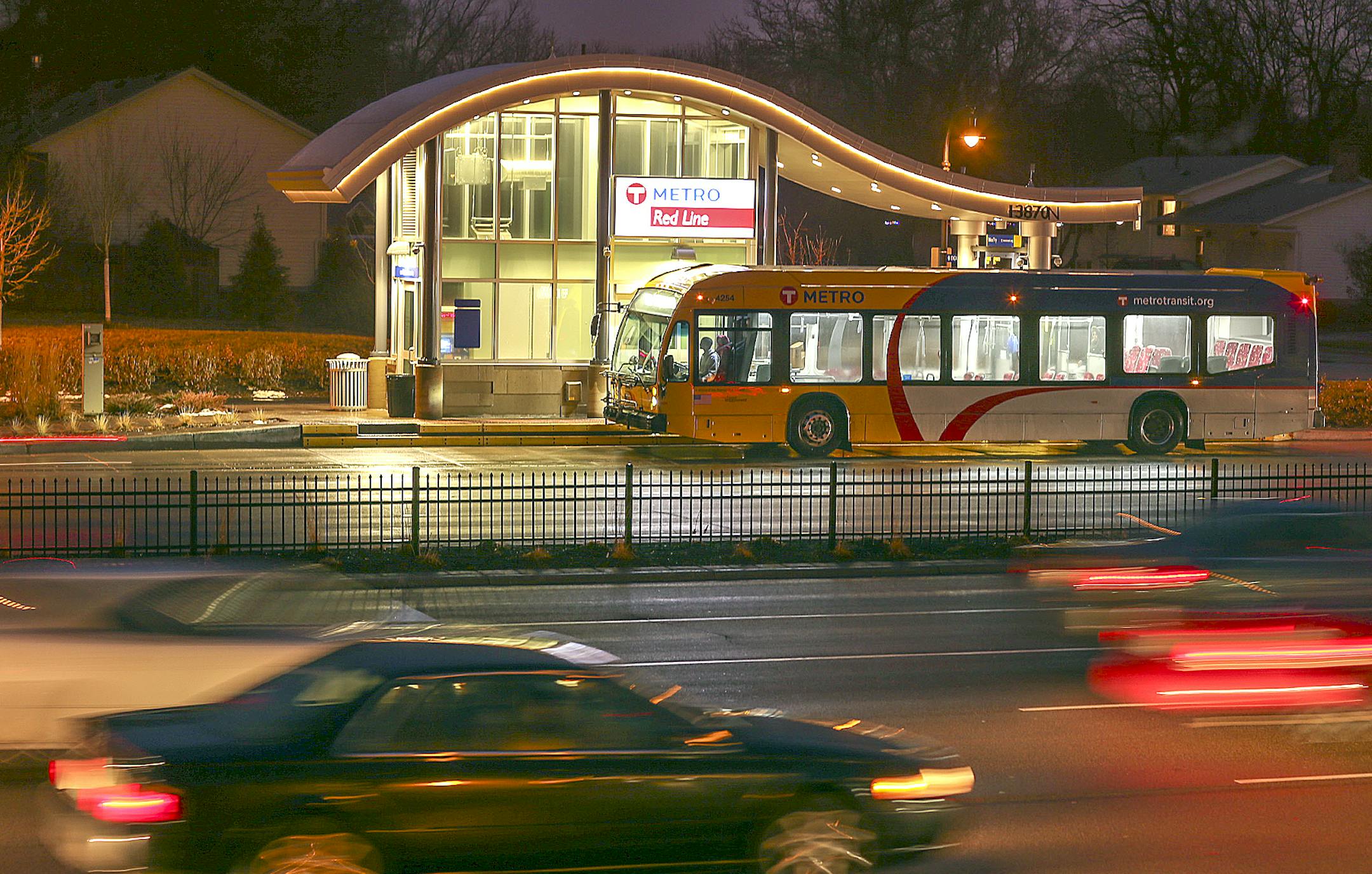
![The planned Orange Line, a $150 million bus-rapid transit project along I-35W, will likely get a much nicer response from state lawmakers than either light-rail project currently in the works. The line, linking Burnsville with downtown Minneapolis, is slated to begin service in 2017 and will be using the station at 46th St. and I-35W. ]Richard Tsong-Taatarii/rtsong-taatarii@startribune.com ORG XMIT: MIN1509210947420002](https://arc.stimg.co/startribunemedia/NSQYLQIRBCW5OR4OIENQUWJLCY.jpg?&w=1080)


