
Study: Gay men eager to donate blood, at times ignoring federal policy

July 21, 2017 at 4:42AM
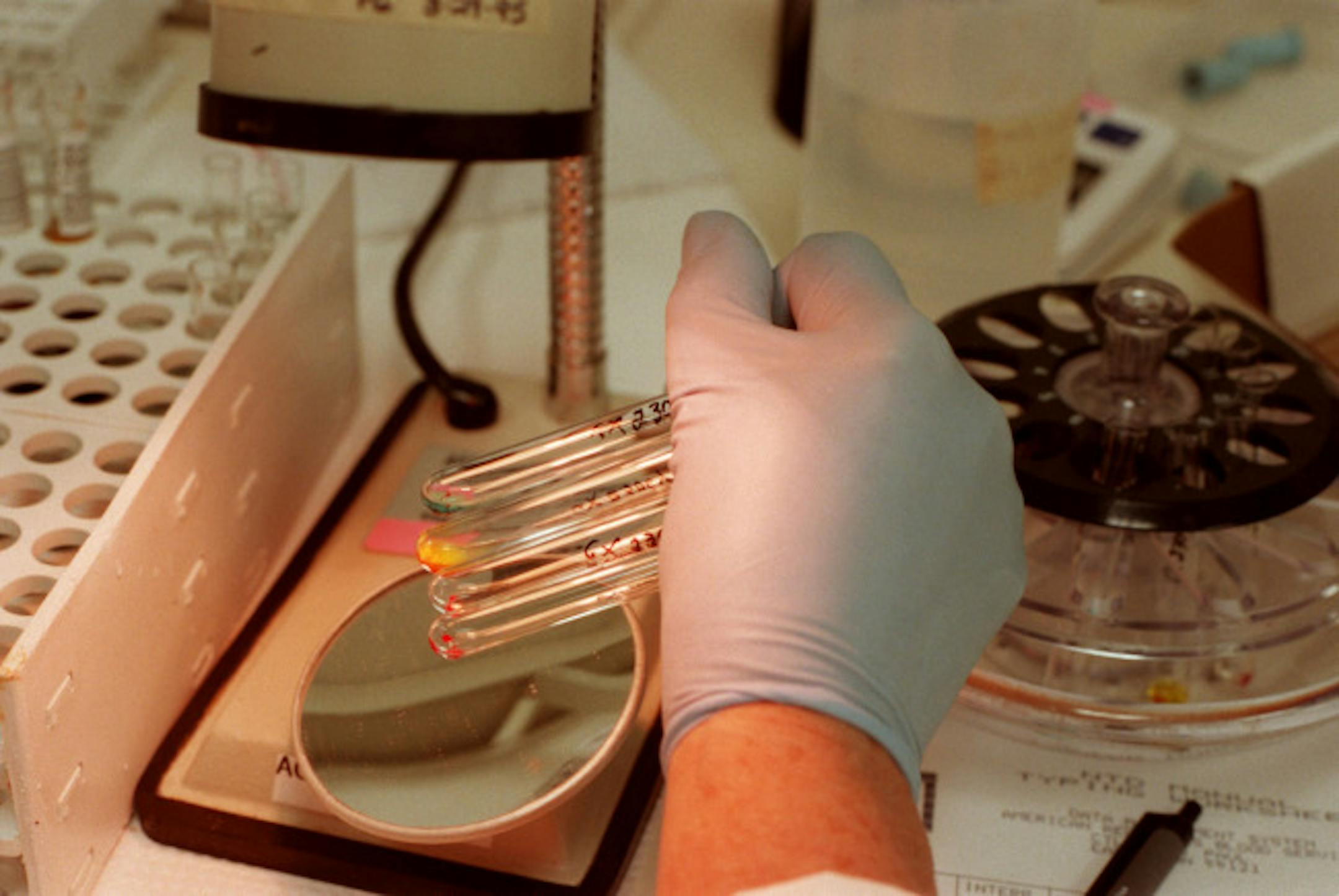
Arlene Wood, a medical lab technician at the new American Red Cross National Testing Laboratory in Eagan, tested blood types and Rh factors of various samples with the use of an agglutination viewer. The new lab, which is testing blood collected from the region, is the eighth of nine such testing centers being started by the Red Cross to test all of the blood collected in the U.S. for HIV, hepatitis, syphilis and other diseases.
An American Red Cross National Testing Laboratory in Eagan, where blood was tested for HIV among other things. HIV infections can be undetectable in the first two to three weeks after the virus has been transmitted through unprotected sex or the shared use of intravenous drug needles. (Elliott Polk (Clickability Client Services) — Star Tribune/The Minnesota Star Tribune)

Most gay men are enthusiastic about giving blood — that's the good news in a new University of Minnesota-led study on attitudes toward blood donation. But some are disregarding a federal policy that prevents them from doing so if they have been sexually active within the prior year.

And that's bad news, said lead author Dr. Walter Liszewski, who designed the study so health leaders could have reliable data when setting donor policies for high-risk populations such as men who have sex with other men (MSM).

Liszewski said the current policy is discriminatory to some — preventing a man in a monogamous relationship with another man from giving blood, but not a man with numerous female partners. But he said its purpose is to prevent donors from giving blood when they might be infected with HIV but don't know it yet.

Risk of HIV transmission has spread to broader demographic groups, but remains highest in the MSM population, which accounted for 139 of the 287 reported infections in Minnesota last year.

Liszewski, a dermatology resident at the U's School of Medicine, and colleagues used social media to obtain survey replies from 764 men who have sex with other men. Ninety percent were eager to donate, and 57.9 percent said they would do so without abstaining from sex for a year, the study found. Also, 26.7 percent said they had donated blood under a policy in effect before 2016, which prohibited their donations entirely.

HIV infections can be undetectable in the first two to three weeks after the virus has been transmitted through unprotected sex or the shared use of intravenous drug needles, but many surveyed men seemed unaware of that fact, Liszewski said. "I was surprised by how many men would tell me, 'I don't know why there's a deferral anyway. They screen the blood. Surely they can detect it.' "

The U.S. Food and Drug Administration enacted the one-year deferral policy in December 2015. Liszewski said that's overkill if the goal is preventing HIV from entering the donor blood stream.

A four-week deferral period would be adequate, he said, because it would ensure that HIV transmissions are detectable, while providing a more reasonable abstinence requirement.

The adequacy of the nation's blood supply is a topic of dispute. As hospitals have developed policies to conserve blood, demand has eased. But episodic shortages occur. Earlier this month, the Red Cross announced a dip in donations that forced the organization to "draw down" significantly on its blood supply to support surgeries and other treatments at U.S. medical facilities.

Perception of a blood shortage also influenced men in the survey study, which was published in the journal Transfusion. Nine out of 10 survey respondents said they believed the nation has a shortage, which could have compelled them to ignore federal deferral rules.

Jeremy Olson • 612-673-7744

about the writer

about the writer

Jeremy Olson

Reporter

Jeremy Olson is a Pulitzer Prize-winning reporter covering health care for the Star Tribune. Trained in investigative and computer-assisted reporting, Olson has covered politics, social services, and family issues.

See Moreicon

More from No Section

See More
FILE -- A rent deposit slot at an apartment complex in Tucker, Ga., on July 21, 2020. As an eviction crisis has seemed increasingly likely this summer, everyone in the housing market has made the same plea to Washington: Send money — lots of it — that would keep renters in their homes and landlords afloat. (Melissa Golden/The New York Times) ORG XMIT: XNYT58
Melissa Golden/The New York Times

It’s too soon to tell how much the immigration crackdown is to blame.