

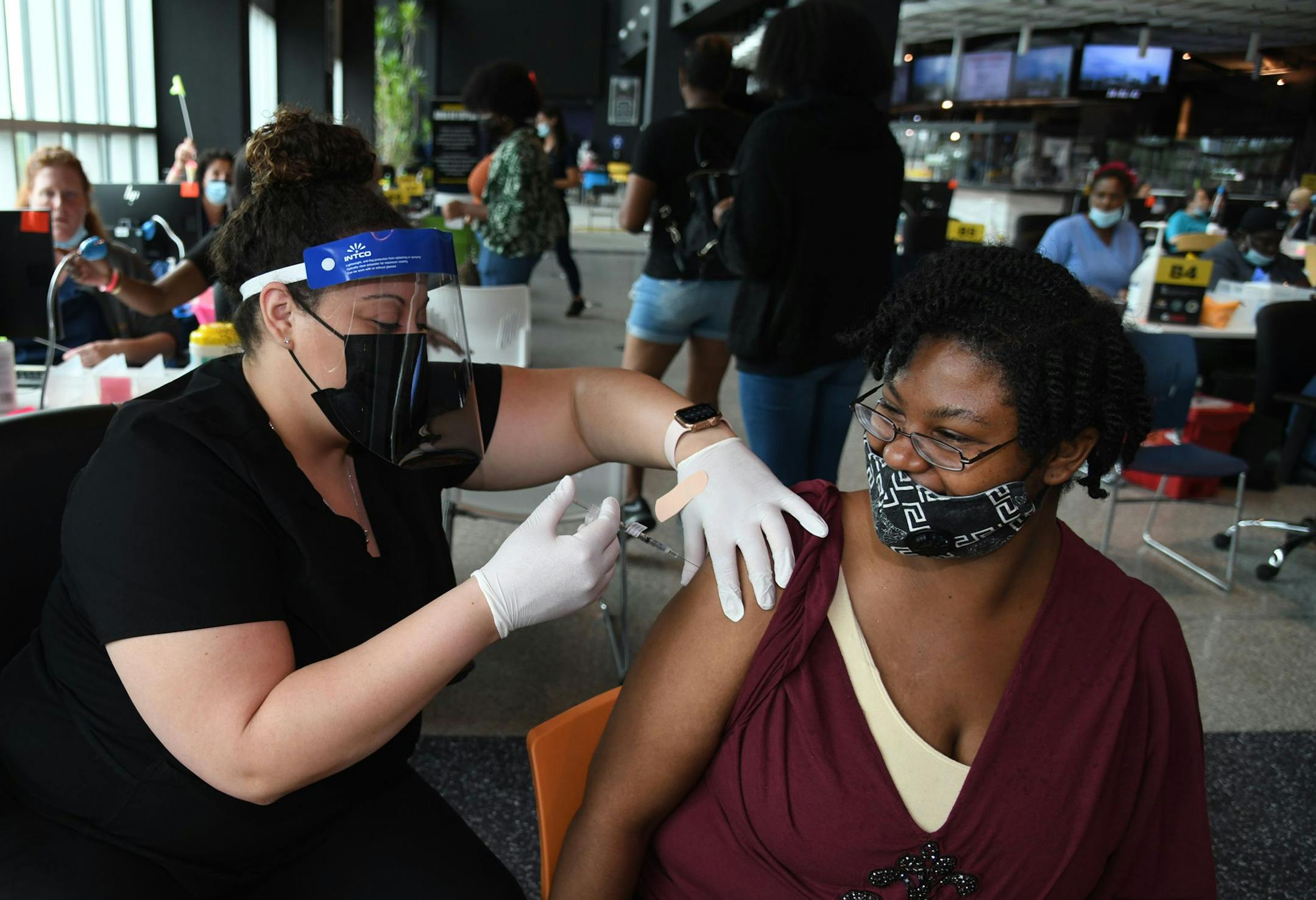
As the delta variant sweeps the world, researchers are tracking how well vaccines protect against it — and getting different answers.
In Britain, researchers reported in May that two doses of the Pfizer-BioNTech vaccine had an effectiveness of 88% protecting against symptomatic disease from delta. A June study from Scotland concluded the vaccine was 79% effective against the variant. On Saturday, a team of researchers in Canada pegged its effectiveness at 87%.
And on Monday, Israel's Ministry of Health announced that the effectiveness of the Pfizer-BioNTech vaccine was 64% against all coronavirus infections, down from about 95% in May, before the delta variant began its climb to near-total dominance in Israel.
Although the range of these numbers may seem confusing, vaccine experts say it should be expected because it's hard for a single study to accurately pinpoint the effectiveness of a vaccine.
"We just have to take everything together as little pieces of a puzzle, and not put too much weight on any one number," said Natalie Dean, a biostatistician at Emory University.
In clinical trials, it's relatively easy to measure how well vaccines work. Researchers randomly assign thousands of volunteers to get either a vaccine or a placebo. If the vaccinated group has a lower risk of getting sick, scientists can be confident that it's the vaccine that protected them.
But once vaccines hit the real world, it becomes much harder to measure their effectiveness. Scientists can no longer control who receives a vaccine and who does not. If they compare a group of vaccinated people to a group of unvaccinated people, there could be other differences between the two groups that influence their risks of getting sick.
It's possible, for example, that people who choose not to get vaccinated may be more likely to put themselves in situations where they could get exposed to the virus. On the other hand, older people may be more likely to be vaccinated, but also have a harder time fending off an aggressive variant. Or an outbreak may hit part of a country where most people are vaccinated, leaving under-vaccinated regions unharmed.


