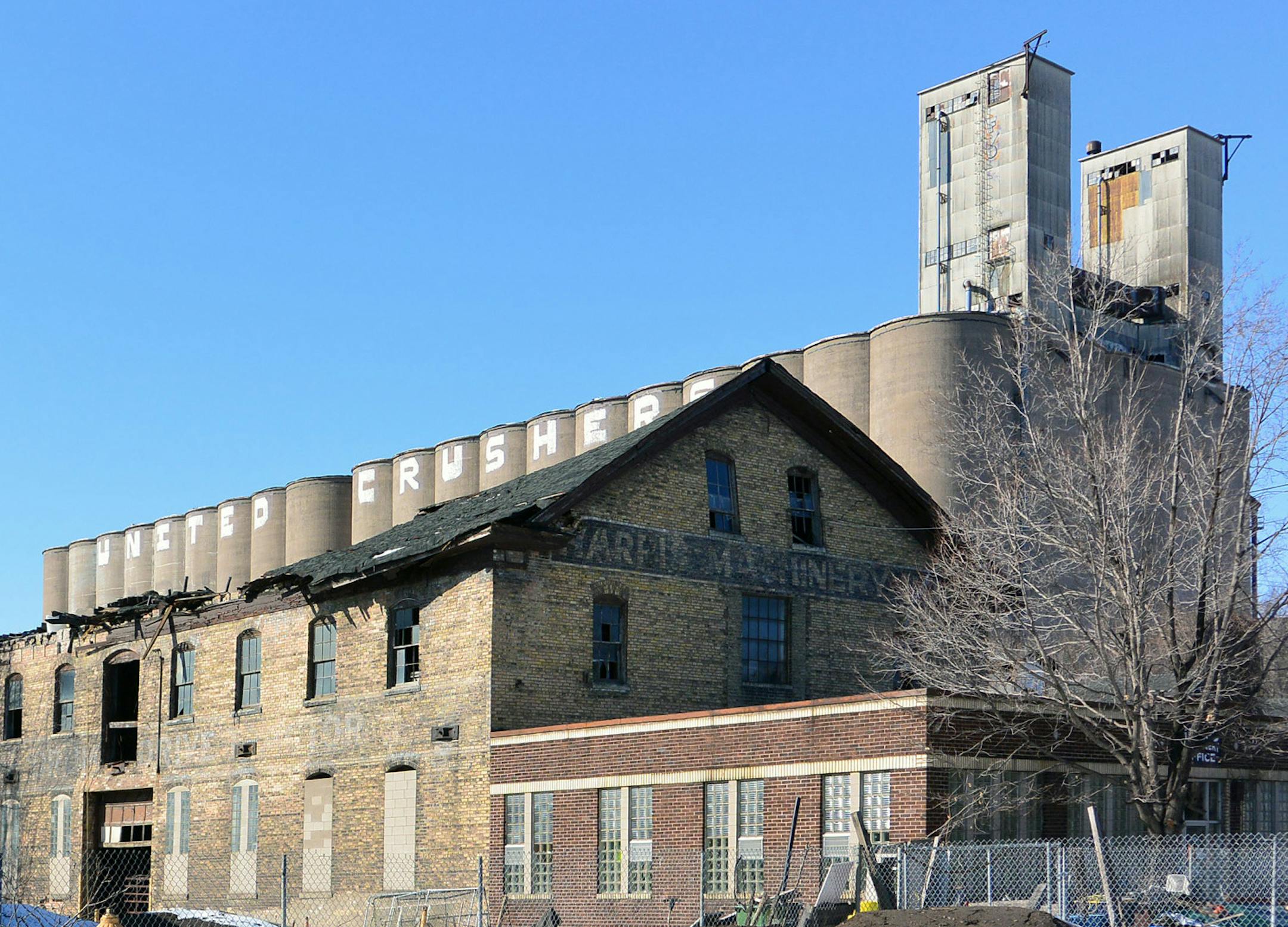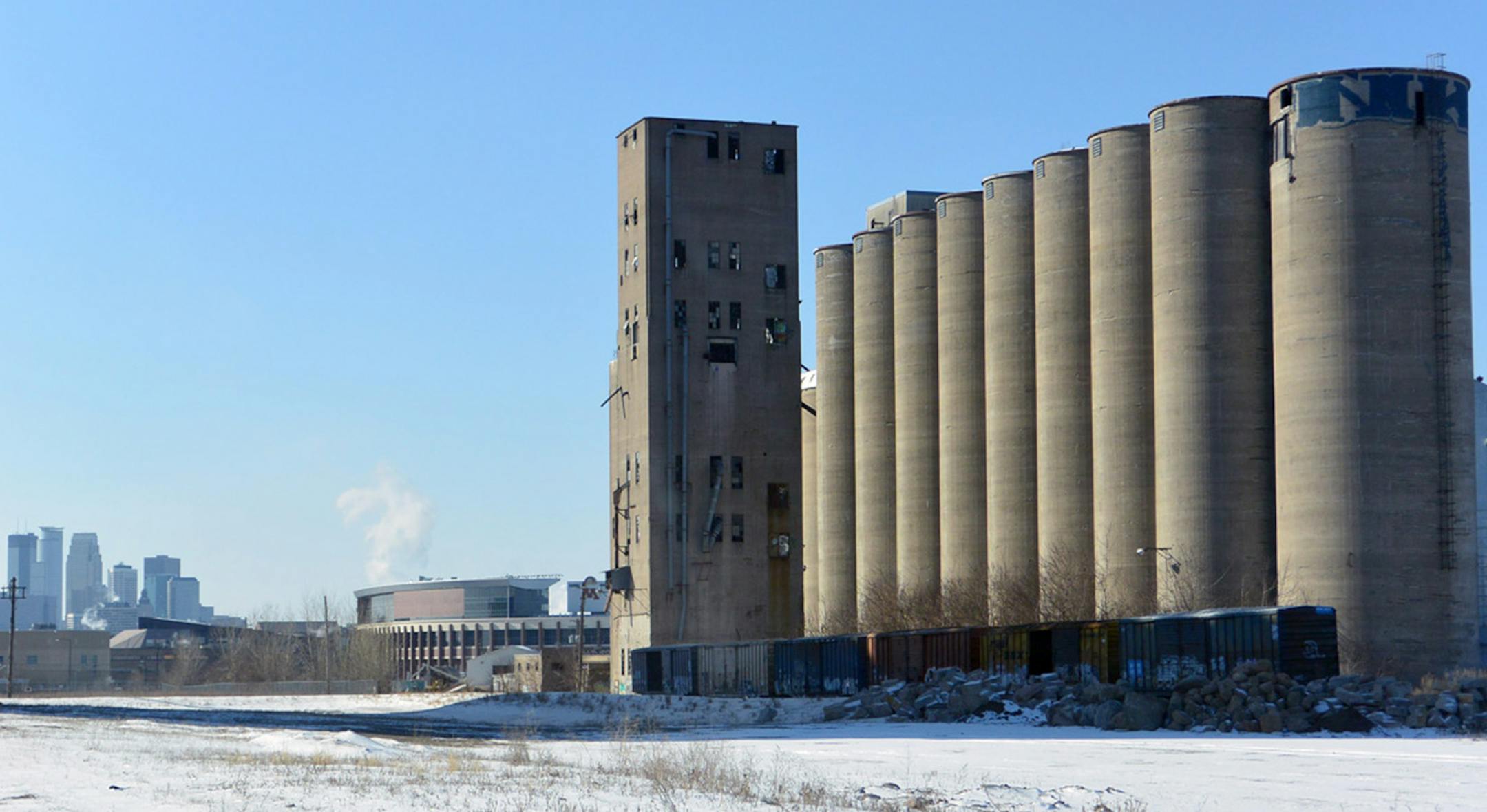
Last month an investor bought the old Harvest State grain elevator off Hiawatha Avenue for $23,000. He says he'll turn it into housing.
Possible obstacles, according to a Star Tribune story: "atmospheric conditions like oxygen deficiency and poisonous gases." Assuming the remodeled building can boast, "Now with less asphyxiation!" when it opens, its proximity to light rail might be a draw.
It would seem cheaper to knock it down. It's not as if the Hiawatha structure is the only abandoned reminder of the Mill City's past.
The area around the University of Minnesota has a collection of enormous elevators, spattered with graffiti, surrounded by weedy lots. A featureless slab of brick six stories tall with a long tin shed perched on top. Undulating walls of gray concrete daubed with paint to cover the vandals' scribbles. Rusty streaks where the elements have pecked a hole and revealed some iron that bleeds when it rains. Bricked-up doors, boarded-up windows.
You can imagine them as cliffs crafted by a million years of graceful erosion, or remnants of an early civilization that loom over the modern streets like the pyramids. They weren't built to be beautiful. They were built to be useful. But now many stand abandoned.
Are they all doomed? Should we care? It's not as if these structures can't be re-purposed. You've probably seen one of the most prominent and important examples as you drove Hwy. 100 by Excelsior Avenue. The tall tower that says "Nordic Ware" — that's a grain elevator, repurposed as a sign. It was the first round concrete elevator built in the United States, finished in 1900. Grain magnate Frank Peavey commissioned the structure to see if concrete could bear the weight; Charles Haglin, architect of City Hall, designed it.
The poetically named Peavey-Hamlin Experimental Concrete Grain Elevator was never used after the experiments, but its fame spread: The Minnesota Historical Society's website on the structure notes that Le Corbusier himself hailed the great gray pylon as the "magnificent First Fruits of the new age."
St. Louis Park had other elevators along its railroad tracks, some as massive as the ones by the U. The Commander Larrabee complex was demolished in 1989, and apartment buildings rose on the spot. The St. Louis Park history pages note that the complex has "a rounded shape to pay homage to the monolith they replaced." A nice gesture — but you wouldn't know unless they told you.