

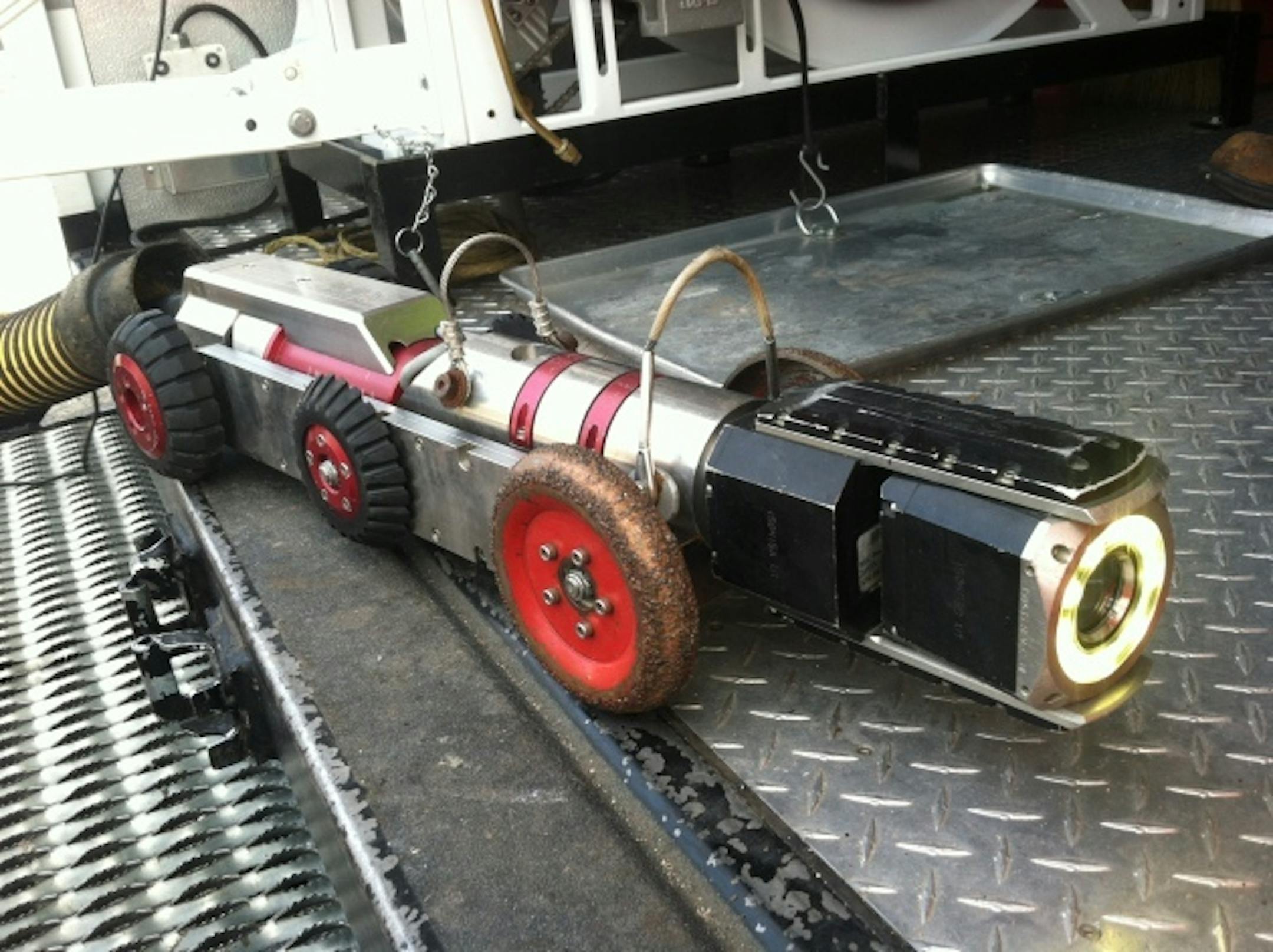
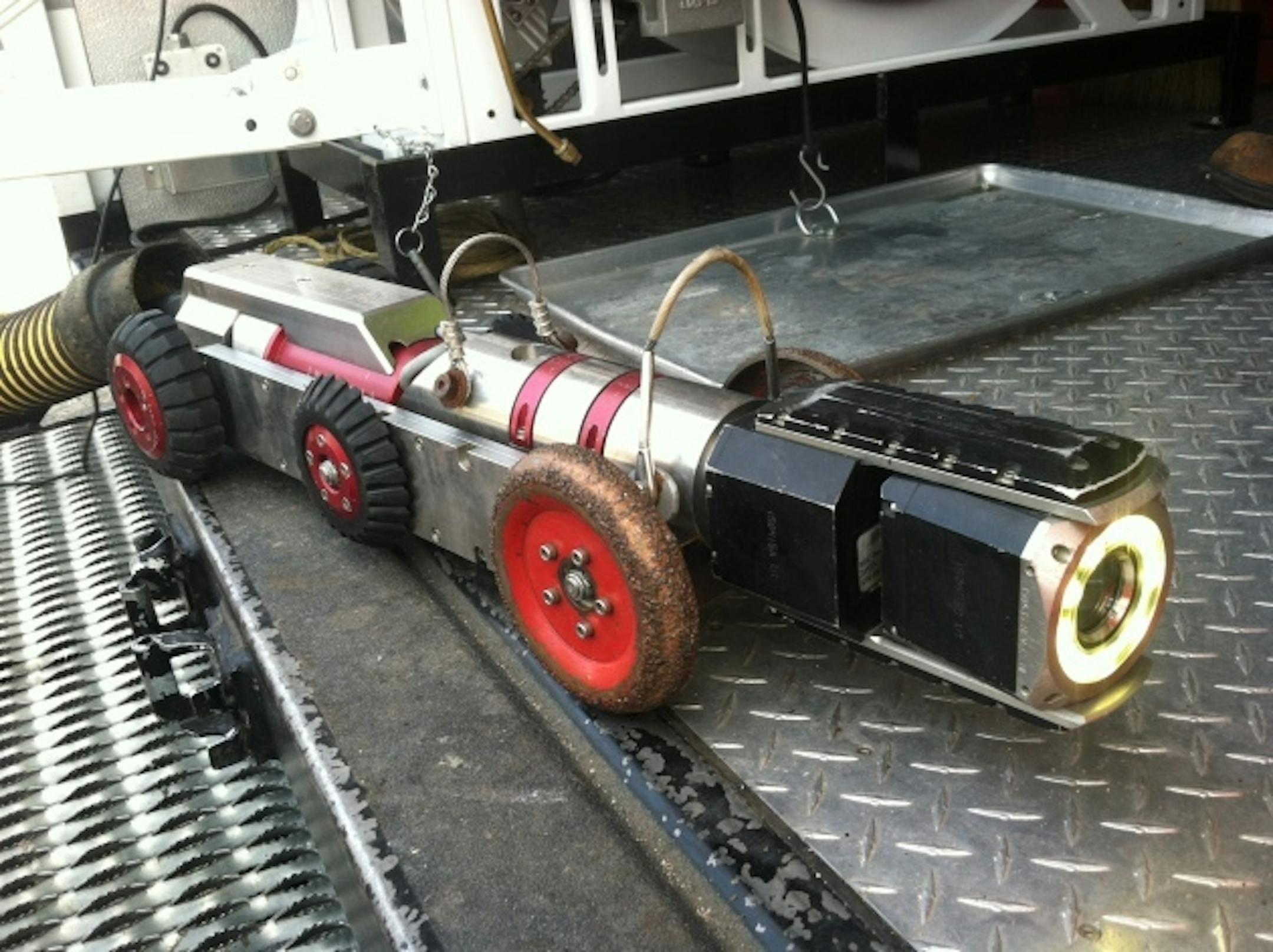
Beneath the streets of Minneapolis, a handful of tiny robots are on a mission to ensure the city's underground pipes remain intact.
City crews regularly dispatch the tube-shaped rovers, outfitted with video cameras, to check on the status of sanitary sewers, averting potentially disastrous problems. But the city is also pursuing a three-year, $7 million project to take a snapshot of its less messy cousin – the storm sewer.
The city's 560 miles of storm sewer collect precipitation from all corners of Minneapolis and funnel it to local bodies of water. The freeze-thaw cycles puts stress on the pipes, some of which date to the 1920s, causing cracks that can eventually create street-level problems.
A backup could cause a localized flood, for example, or a pipe crumbling can create a sinkhole in the road. It can even cause a mini-geyser under the right circumstances, as can be seen at startribune.com/a1965.
That's why the city is paying outside contractors to hunt for fractures and debris. It's the first comprehensive assessment of the storm sewer system in a long time.
"Without this data, we'd just go out and clean the whole system," said Kevin Danen, a public works engineer. "And that's not efficient. With this data, we can clean targeted areas."
Cleaning can involve plugging fractures with a tubular lining, or dislodging debris with giant corkscrew devices and jet-propelled hoses.
On a recent morning, public works staffers demonstrated the underground surveillance process at the city's Hiawatha Maintenance Facility on 26th Street.


