

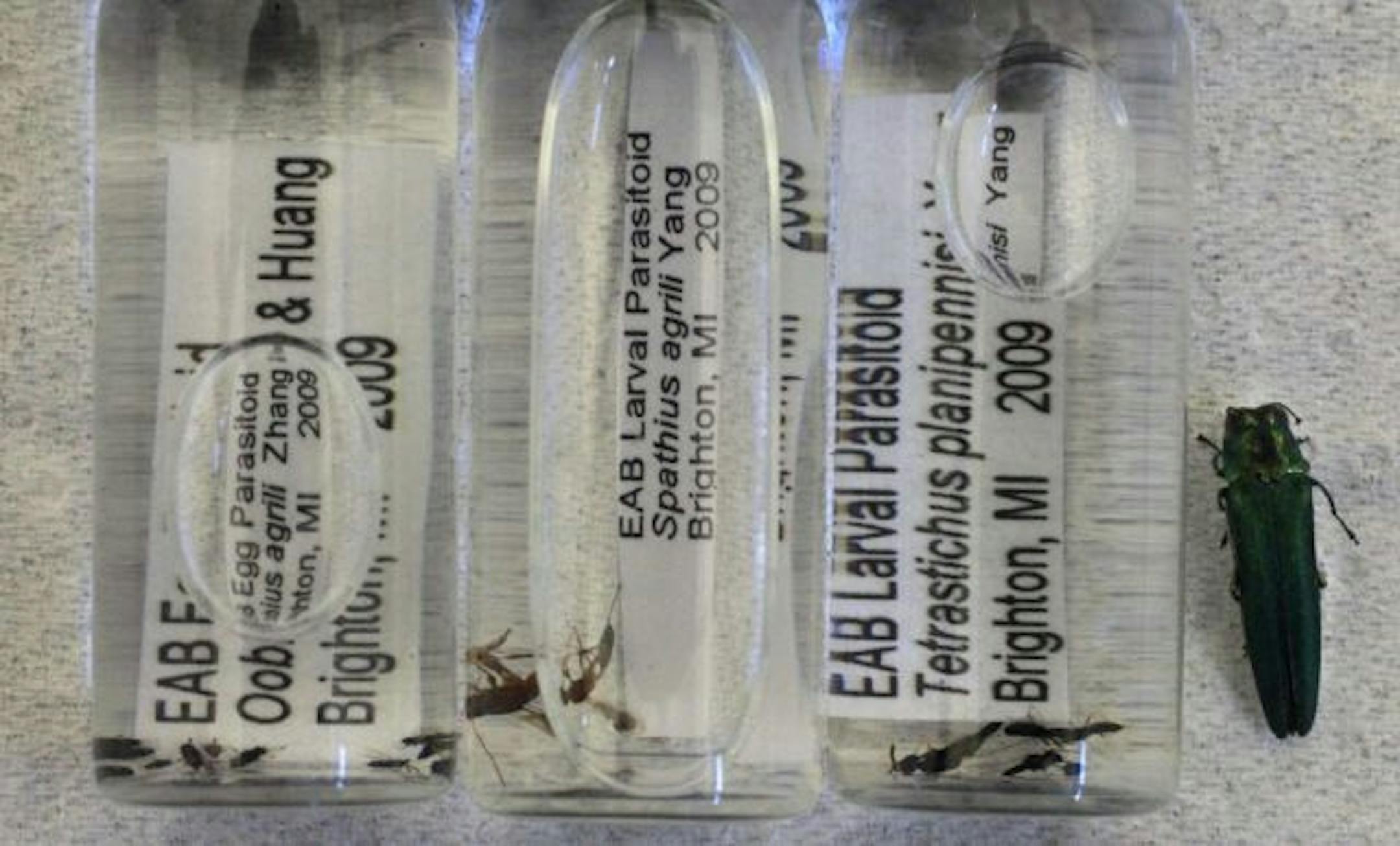
The next big things in the fight against the emerald ash borer are three tiny wasps that can't even sting.
Researchers expect to release several hundred of the three species of wasps in Minnesota within weeks as part of an experimental effort to combat the emerald ash borer, a pest that has no known natural foes and threatens Minnesota's 900 million ash trees. The hope is that the wasps will help foresters slow down the spread of the ash borer by killing them and will be more successful than tree removal, insecticides, quarantines and public service announcements.
"I would not use the words 'silver bullet' at all," said Paul Chaloux, coordinator of the U.S. Department of Agriculture's wasp program. "But it's the most promising tool we have right now."
Officials with the Minnesota Department of Agriculture, the lead agency in Minnesota's ash borer war, received a federal permit to release the wasps but are waiting to find a fresh emerald ash borer emergence in a choice location. Minnesota would be the sixth state to get the wasps, which like the ash borers are native to China. Scientists are rearing the wasps in a Michigan laboratory for eventual use against the ash borer, which has been detected in 14 states and two Canadian provinces.
Monika Chandler, a research scientist with the agriculture department, said the wasps -- which range from gnat- to ant-sized -- shouldn't alarm people.
"I don't think people understand wasps come in this size," she said. "If people saw them, I think they'd be quite reassured."
That they don't sting people (most wasps don't) is another plus, Chandler said. But what they do to ash borers is worthy of a horror film.
The three species use different approaches but basically infest ash borer eggs or larvae and feed off them, destroying them while developing into adult wasps.


