
Stillwater will narrow proposals for historic Shoddy Mill

The rag factory was part of the state's early Jewish history and now will be repurposed.

December 1, 2015 at 1:35AM
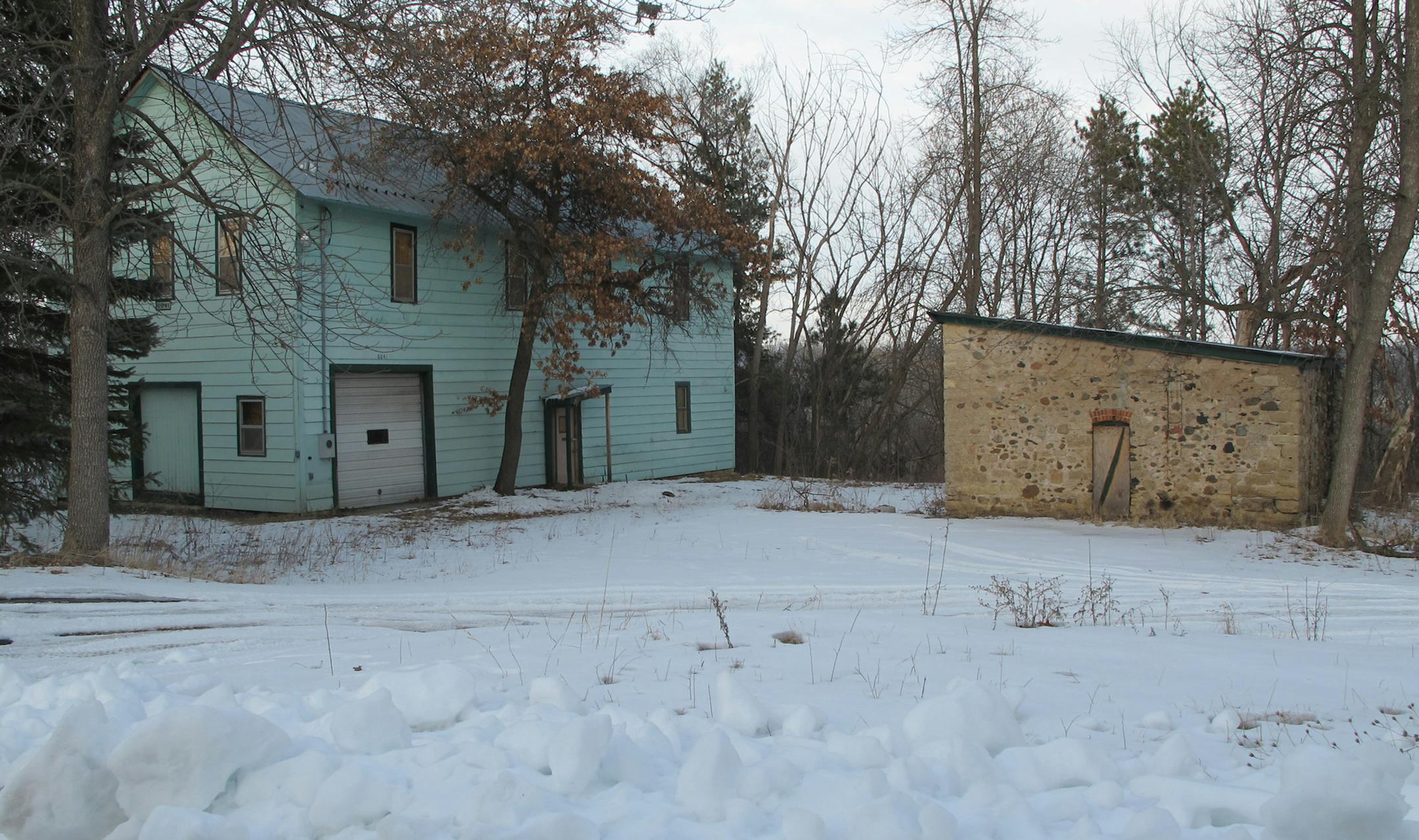
The Shoddy Mill and its stone warehouse are the last remaining structures in the abandoned Oak Park Heights neighborhood. They’re historic structures and, under the bridge plan, would be moved closer to Stillwater and preserved. Beginning in 1890 Jewish settlers Moritz and Bertha Bergstein operated a waste materials yard with the warehouse and “shoddy” mill, where waste fabric was recycled into stuffing for mattresses.
The Shoddy Mill and Warehouse, shown in their original Oak Park Heights neighborhood, were moved as part of the St. Croix River bridge project. (The Minnesota Star Tribune)

Three years after inheriting remnants of Minnesota's early European Jewish history, Stillwater is moving closer to finding a use for them along the St. Croix River.

About 1890, immigrant Moritz Bergstein built a stone building for a rag factory and a separate clapboard warehouse for mattress manufacturing in the woods of what eventually became Oak Park Heights. Bergstein was a German-speaking native of Hungary who was known for his rag picker's trade and his connections with Minnesota's early Jewish community.

In 2012, the Minnesota Department of Transportation moved the buildings — known as the Shoddy Mill and Warehouse — from the construction path of the new St. Croix River bridge to fulfill an agreement to preserve area history.

Since that time, the buildings have sat empty on the riverbank just south of downtown Stillwater, awaiting a plan for putting them to a new use.

On Tuesday, the Stillwater City Council will review the latest recommendations from a "reuse study" and provide guidance for narrowing its scope.

Proposed uses include restrooms for trail users, historic interpretation, community program and exhibit spaces, a National Park Service visitor contact station, and bike repair or rental services.

"Because of the buildings' simplicity and relative lack of character-defining original interior features, no extraordinary measures or artisanal skills will be required to return them to functional condition," the study concluded.

Relocating the Shoddy Mill and Warehouse cost $450,000 and was budgeted in the overall bridge project. Site preparation, including riverbank restoration, brought the total cost of the move to $1.2 million.

The Shoddy buildings are listed on the National Register of Historic Places, but a steam engine and other equipment that tore rags into "shoddy," used for mattress stuffing, disappeared years ago. So did the house that Bergstein and his wife, Bertha, owned across Stagecoach Trail from the Shoddy Mill.

At the time of his death in 1923, Bergstein owned 500 tons of iron — he was known as the "junk man" after the shoddy trade faded — and left an estate worth about $85,000.

The Shoddy Mill now stands on the site of an abandoned fertilizer warehouse, razed in recent years. The mill and warehouse are positioned in exact proximity to each other as they were in their original location.

Kevin Giles • 651-925-5037

about the writer

about the writer

Kevin Giles, Star Tribune

More from No Section

See More
FILE -- A rent deposit slot at an apartment complex in Tucker, Ga., on July 21, 2020. As an eviction crisis has seemed increasingly likely this summer, everyone in the housing market has made the same plea to Washington: Send money — lots of it — that would keep renters in their homes and landlords afloat. (Melissa Golden/The New York Times) ORG XMIT: XNYT58
Melissa Golden/The New York Times

It’s too soon to tell how much the immigration crackdown is to blame.