Twin Cities residents interested in the air quality of their neighborhoods can now find out with the click of a mouse on a state website.
The new mapping tool is part of an urban air-quality monitoring project at the Minnesota Pollution Control Agency (MPCA) aimed at understanding the relationship between common air contaminants and public health effects, such as asthma and early deaths, broadening the state's effort to tackle the issue known as health equity.
"We do understand that there is some kind of relation between air pollution and asthma," said MPCA environmental research scientist Monika Vadali. "The goal was to understand how air pollution varies from ZIP code to ZIP code because we don't have any data on that."
State health officials have already shown that hospitalization rates for asthma, for example, vary greatly by ZIP code in Minneapolis and St. Paul, with neighborhoods that are poorer and more heavily minority suffering significantly higher rates.
In fact, Minnesota "has some of the largest health disparities in the country," according to the state's second "Life and Breath" report released in June.
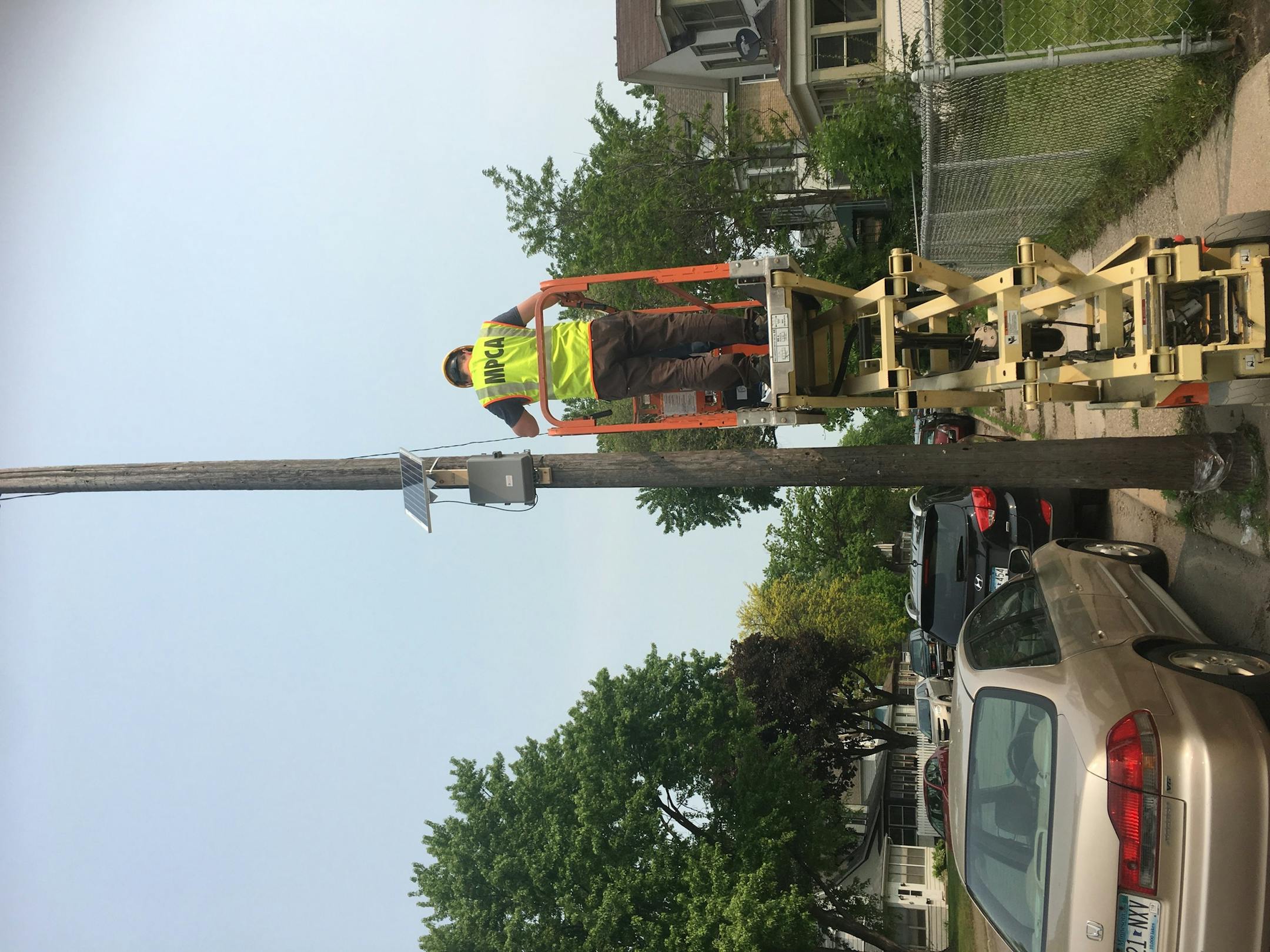
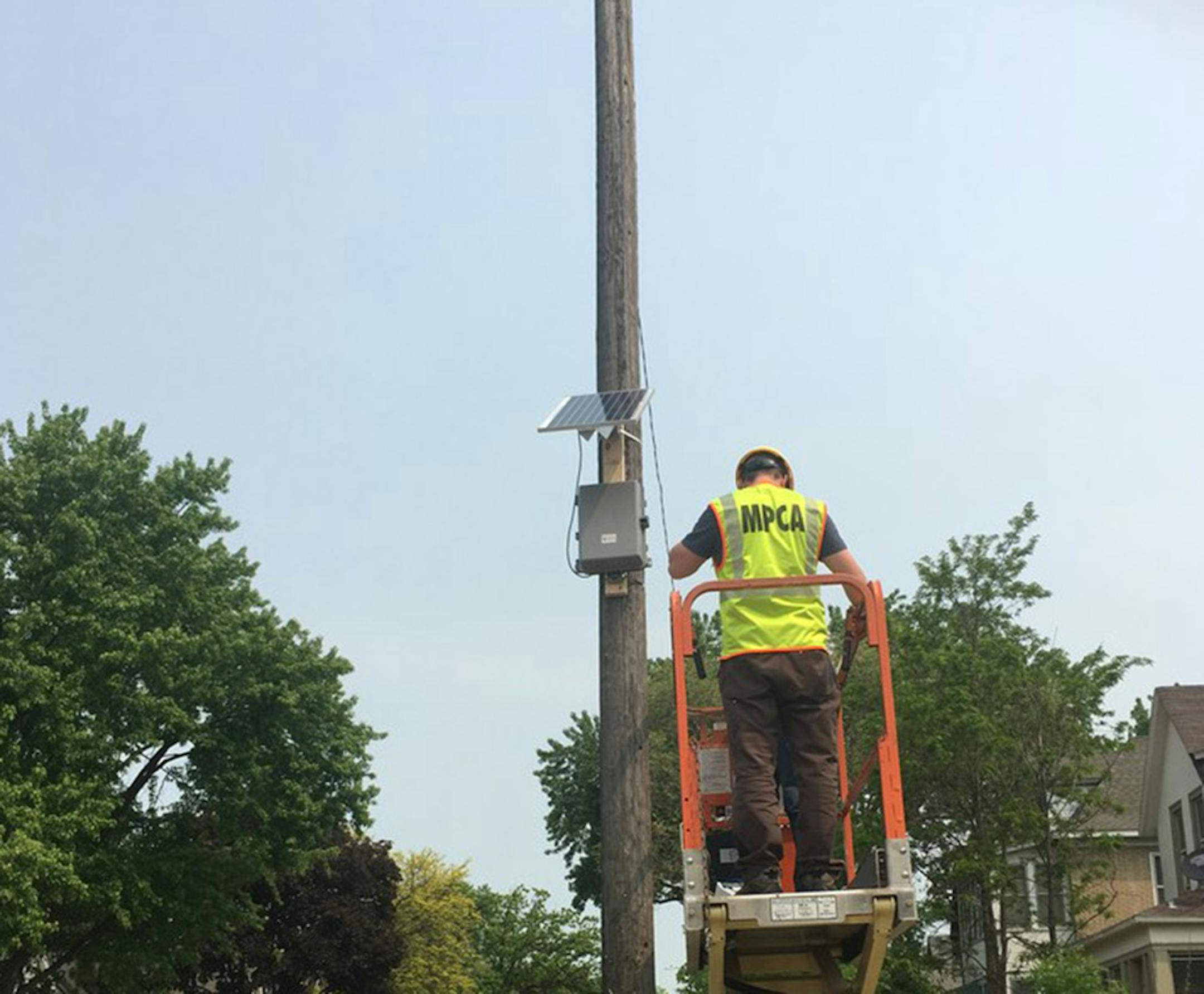
The agency is collecting local air pollution data through a network of 44 solar-powered air monitors mounted on streetlights, lamp posts and wooden posts around the two cities.
The monitors contain sensors and a laser device to measure the particles and transmit minute-by-minute readings to agency researchers. The air contaminants being measured include carbon monoxide, coarse and fine particles such as soot or dust, nitric oxide, nitrogen dioxide and ground-level ozone.
The online mapping tool — a work in progress — is updated weekly.