

 djoles@startribune.com One by one, the realities of an ove](https://arc.stimg.co/startribunemedia/KF7UABWZXF4D7YBPEP4VJMSPIQ.jpg?&w=1080)
The realities of an immigration system under siege came walking one by one, in handcuffs and prison flip-flops, into the Bloomington courtroom of Judge William J. Nickerson.
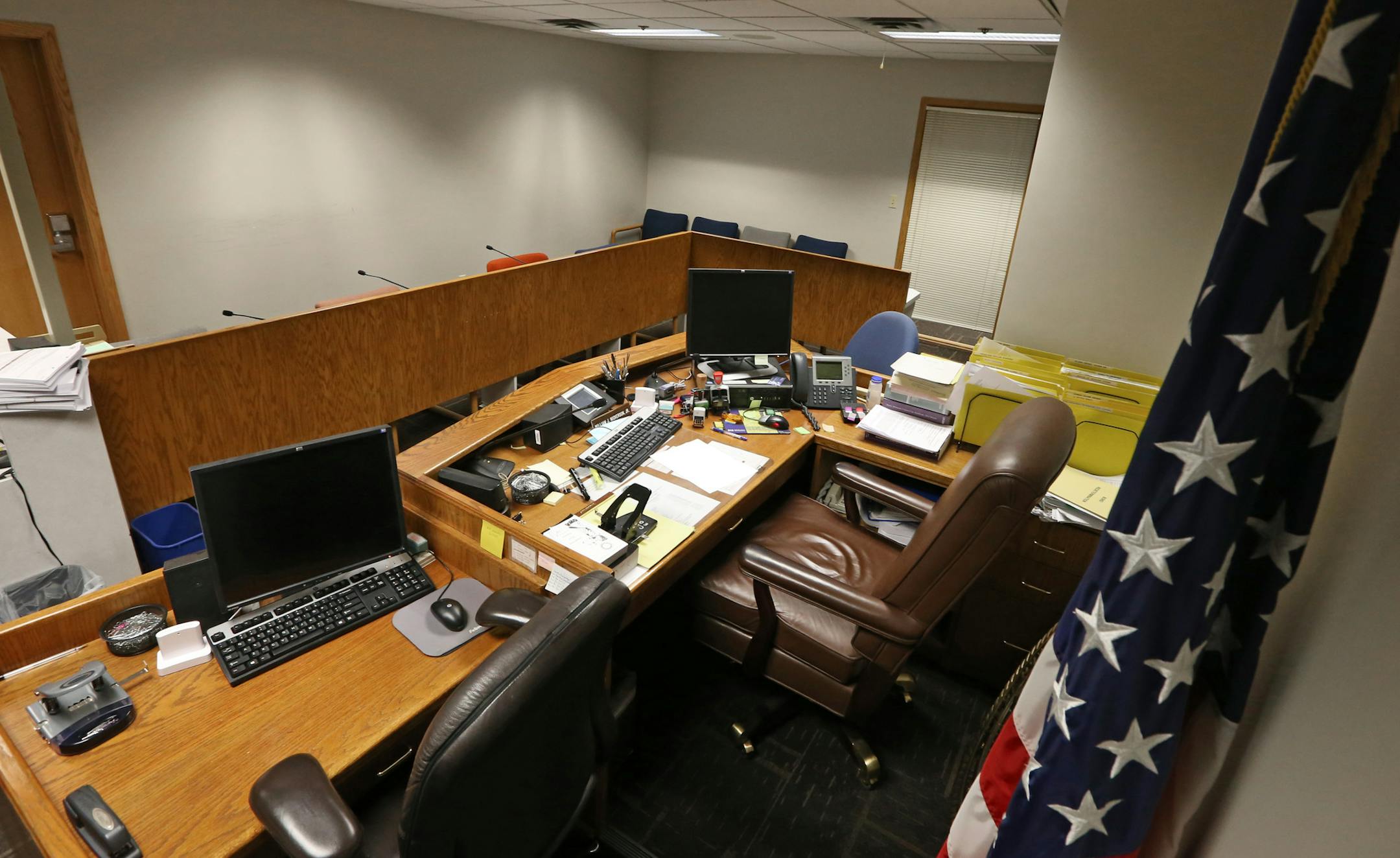
In a windowless chamber with mismatched chairs and worn wood paneling, Nickerson, one of three U.S. Immigration Court judges in Minnesota, heard case after case of people from Mexico to Micronesia detained for violating U.S. immigration laws. Their appearances put faces to lives caught up in one of the country's 59 overwhelmed immigration courts.
Intensifying enforcement has built such a backlog that an immigration case first heard in Minnesota today likely would take until next year or longer — an average of 400 days — to settle.
Even with regulations intended to speed justice, undocumented immigrants and asylum seekers wait in the community or languish in jail to find out if they will be deported.
The situation is similar across the country, where the immigration justice system is jammed with more than 350,000 cases.
Immigration attorneys and advocacy groups say the backlog is a consequence of the federal government's decision to increase enforcement without adding resources to the immigration courts. The end of a recent hiring freeze on immigration judges may ease the problem, but for now the price is being paid by taxpayers as well as by those whose lives are on hold.
"The cost of trying to remove these people through the legal process is just staggering," said Joe Dierkes, who recently retired as a judge from the Bloomington court after 11 years on the bench. "I laugh when people say, 'Just deport them.' I always ask, 'Are you willing to pay for it?' "
Beginnings of the backlog
Minnesota's backlog goes back to 2006, after President George W. Bush hired thousands of new immigration agents and stepped up raids in factories and communities. The Obama administration picked up the pace, deporting an estimated 1.9 million to date.
 djoles@start](https://arc.stimg.co/startribunemedia/3HFKJEBRWLHPKYU6FDRJEQIIZU.jpg?&w=1080)


