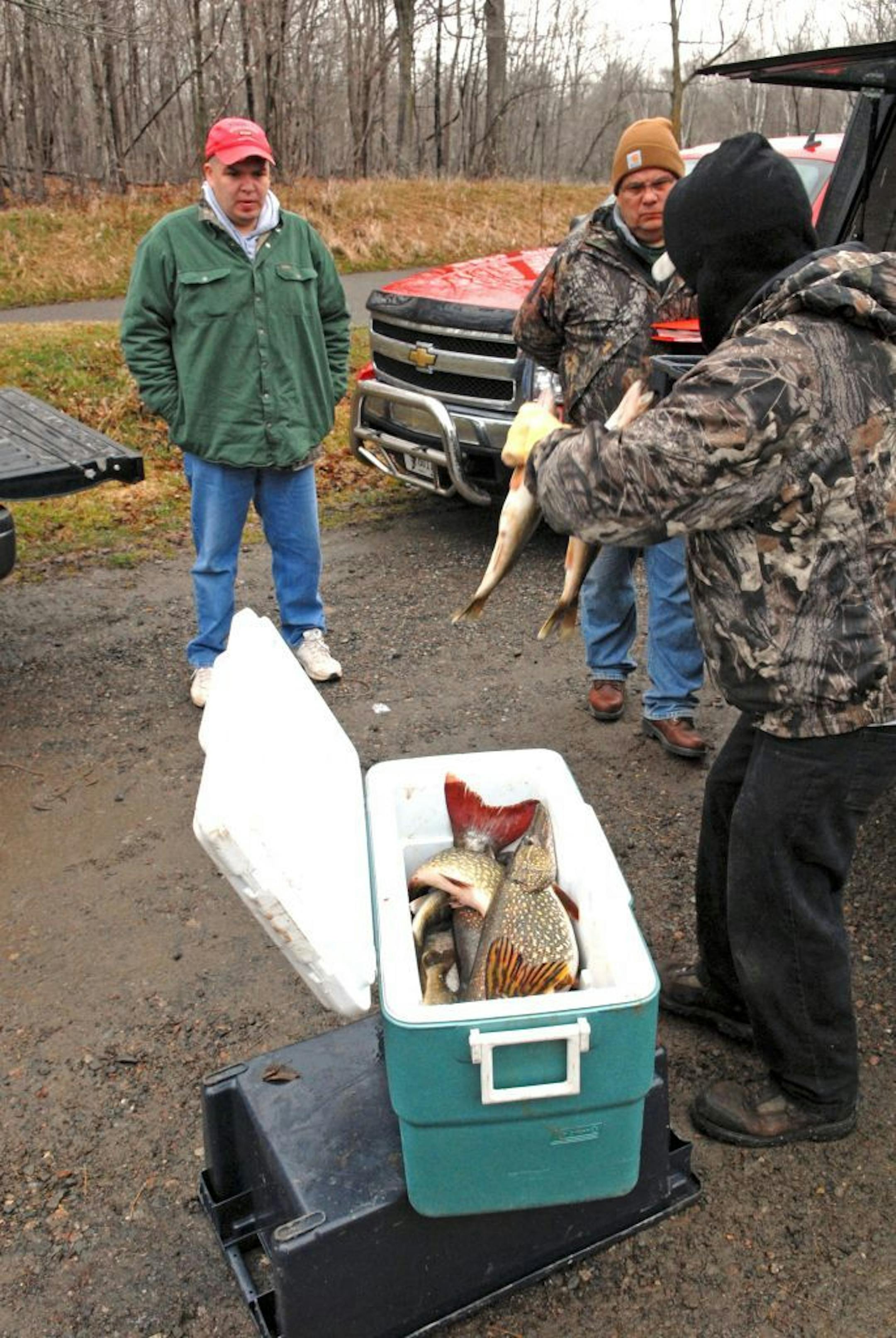
AT LAKE MILLE LACS - Wearing thick rubber gloves, Zach Grunst counted walleyes Thursday morning on the shores of this large lake. The fish had been caught in nets left in the chilled water overnight by Chippewa band members who had traveled from as near as the Mille Lacs Reservation just up the road, and as far away as Wisconsin. Most of Lake Mille Lacs still was covered with ice. But the edges were open, and netting Thursday morning not far from shore had been pretty good in those waters.
Though some northerns and perch were caught by the Chippewa, and one plump muskie was registered at the lake's Cedar Creek landing, most fish brought to shore were walleyes. Averaging about 2 pounds apiece, the fish were picked from the nets one by one before being tossed into large plastic pails and brought to Grunst to be counted, weighed and sexed.
Grunst isn't Chippewa. He's a temp working for the Great Lakes Indian Fish & Wildlife Commission (GLIFWC), headquartered in Odanah, Wis. GLIFWC oversees the Chippewa's annual spring netting of Mille Lacs, and Joe Dan Rose, one of that group's fisheries biologists, was at Cedar Creek on Thursday morning, directing Grunst and making sure each band member's catch was recorded.
The Chippewa quota this year for Mille Lacs walleyes is the highest ever, 142,500 pounds.
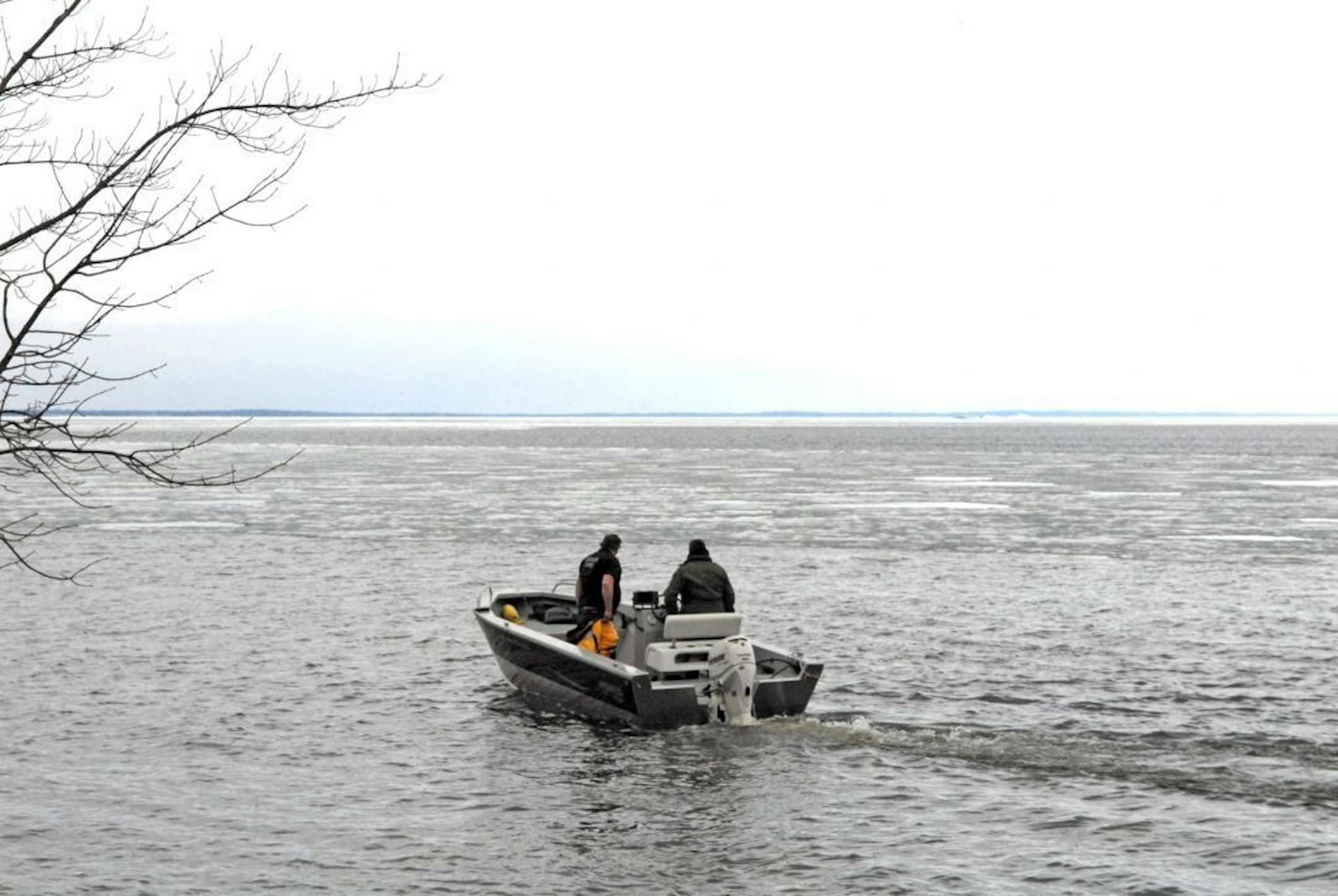
Also Thursday morning, two tribal conservation officers were on hand, and after all the Chippewa fishermen had returned to shore, the officers set onto the lake in a large center-console aluminum boat, looking to retrieve band members' nets that had been lost to the ice overnight.
Though still thick in the middle -- perhaps thick enough to support a pickup -- the miles-long ice sheet moves helter-skelter east and west, north and south, blown by the wind, and when it shifts positions, it can take nets with it.
"The nets can present a public safety hazard later in the year," said Steve Fellegy, who grew up on the lake. "If it's rough out there and you catch your prop in a net, you can be in trouble."
Fellegy, who is white, has long opposed the Chippewa's claim to off-reservation hunting and fishing rights that were affirmed by a 5-4 U.S. Supreme Court decision in 1999. A tournament angler and Mille Lacs guide, Fellegy, who observed the goings-on at Cedar Creek Thursday morning, argues that netting fish in spring, when they are near shore, preparing to spawn, is wrong. More importantly, he says all Americans should be treated equally, with no special rights accorded to one faction or another, especially when natural resources are involved.