

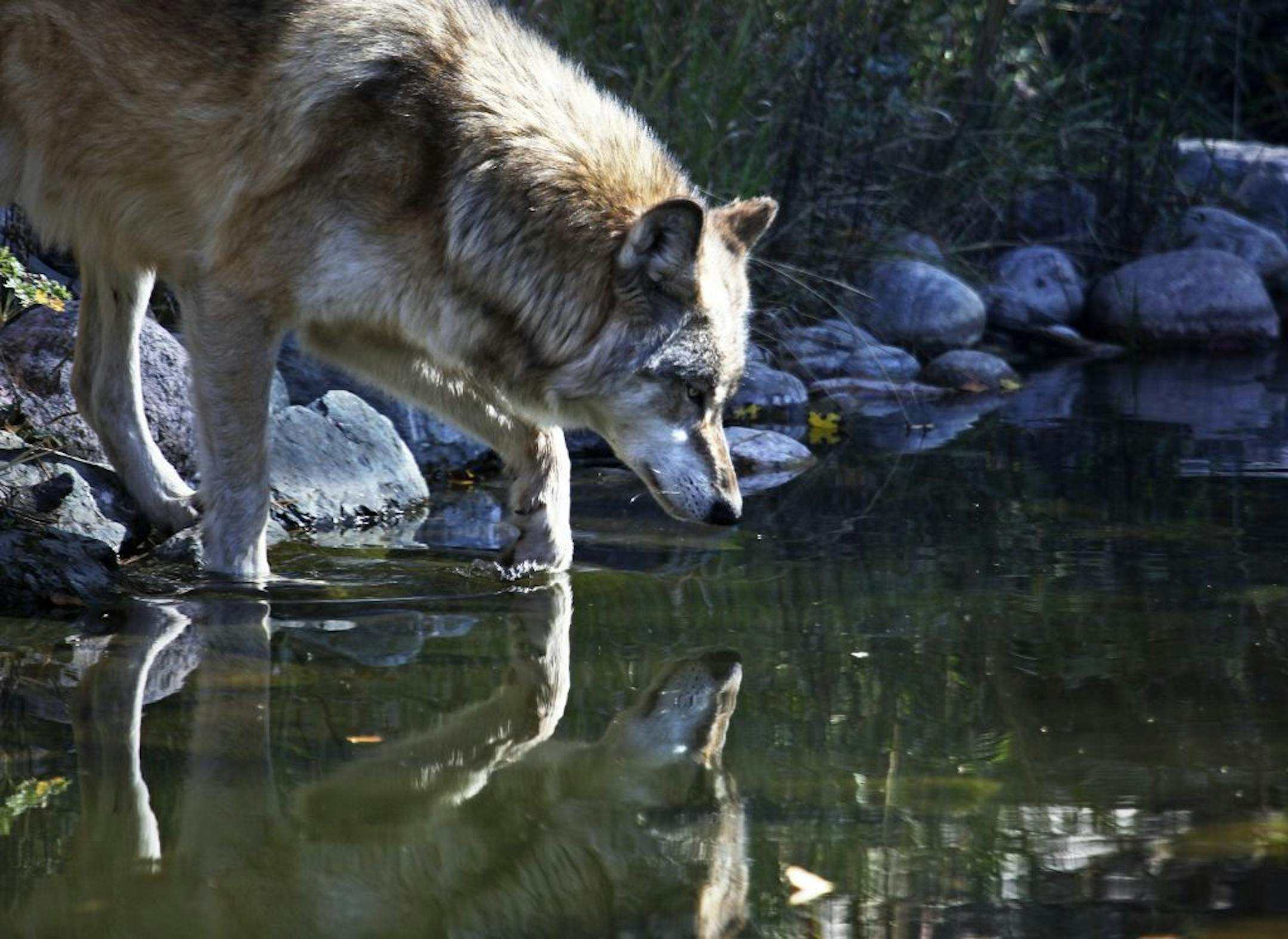
Minnesota's wolf population is robust enough to have another wolf hunting and trapping season this fall, despite a 24 percent decline since canis lupis was last surveyed in 2008, state officials said Tuesday.
Although opponents of the wolf hunt said the population drop is evidence that wolves are in peril and shouldn't be hunted or trapped for sport, state officials said the population, estimated at 2,211, is healthy and the largest in the lower forty-eight states.
"Minnesota's wolf population is fully recovered from its once threatened status,'' said Dan Stark, Department of Natural Resources (DNR)large carnivore specialist. He said the DNR will offer a wolf season next fall, although the quota will be reduced from the 400 allowed in last year's inaugural season.
The wolf survey has been highly anticipated by both supporters and opponents of th hunt, and state officials said it shows that Minnesota wolves, like all wildlife populations, are constantly in flux.
The survey was done in midwinter before wolf pups were born. Since then, Stark estimated about 2,600 pups have been born, and about 50 percent of those normally will survive at least until fall. That means the current wolf population this summer likely exceeds 3,000.
But hunt opponents note that the DNR's population estimate has a margin of error of about 500, meaning the population could range from a high of 2,641 to a low of 1,652 — very close to the state's minimum goal of 1,600.
"We see this as a significant decline," said Howard Goldman, Minnesota state director of the Humane Society of the United States. "The department should protect the wolf and close the season."
Said Collette Adkins Giese, a Minneapolis attorney with the Center for Biological Diversity, which unsuccessfully sued to stop the hunt: "Sport hunting and trapping strains a Minnesota wolf population that's already under dangerous pressure from a declining prey population, disease, depredation control and illegal killing."


