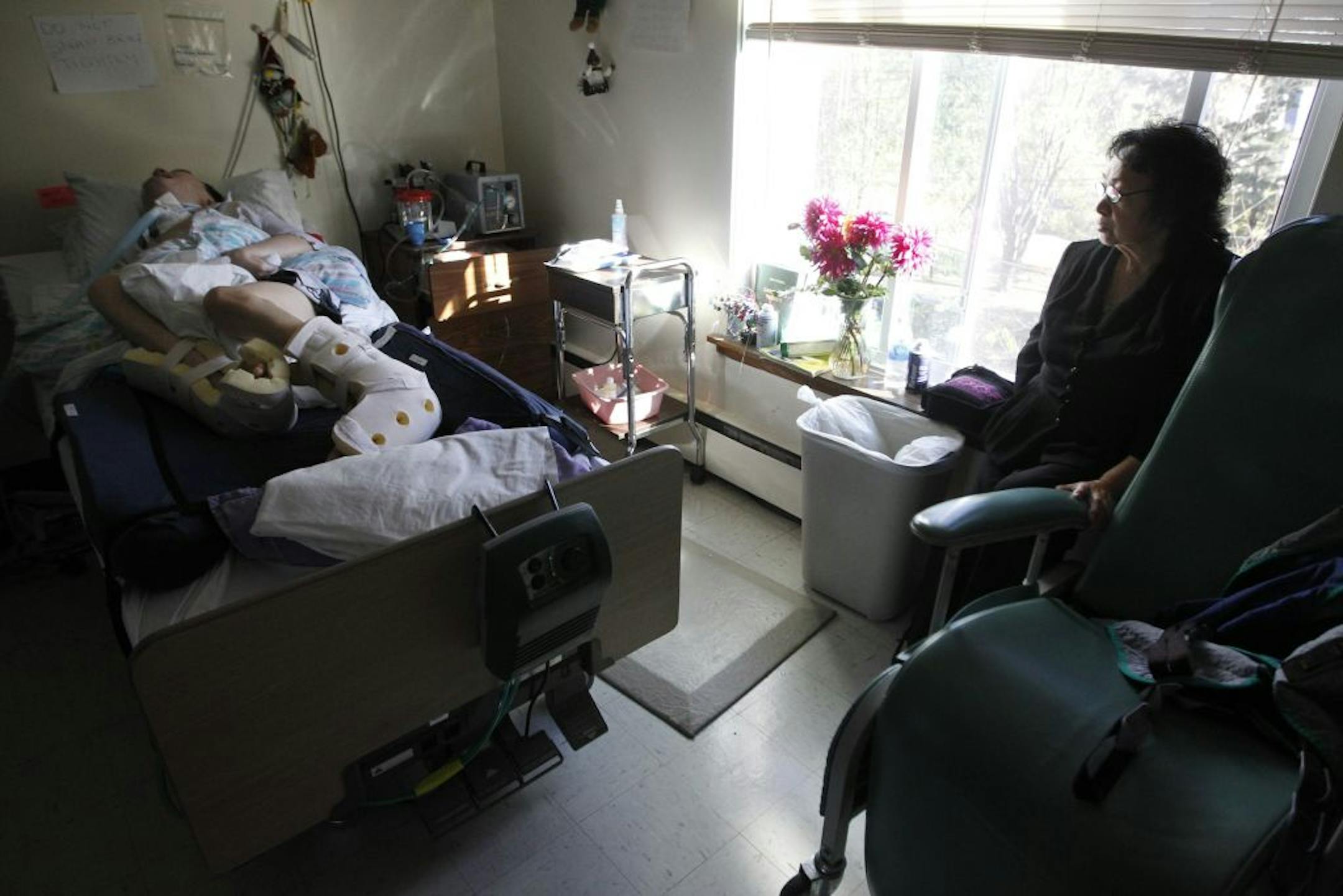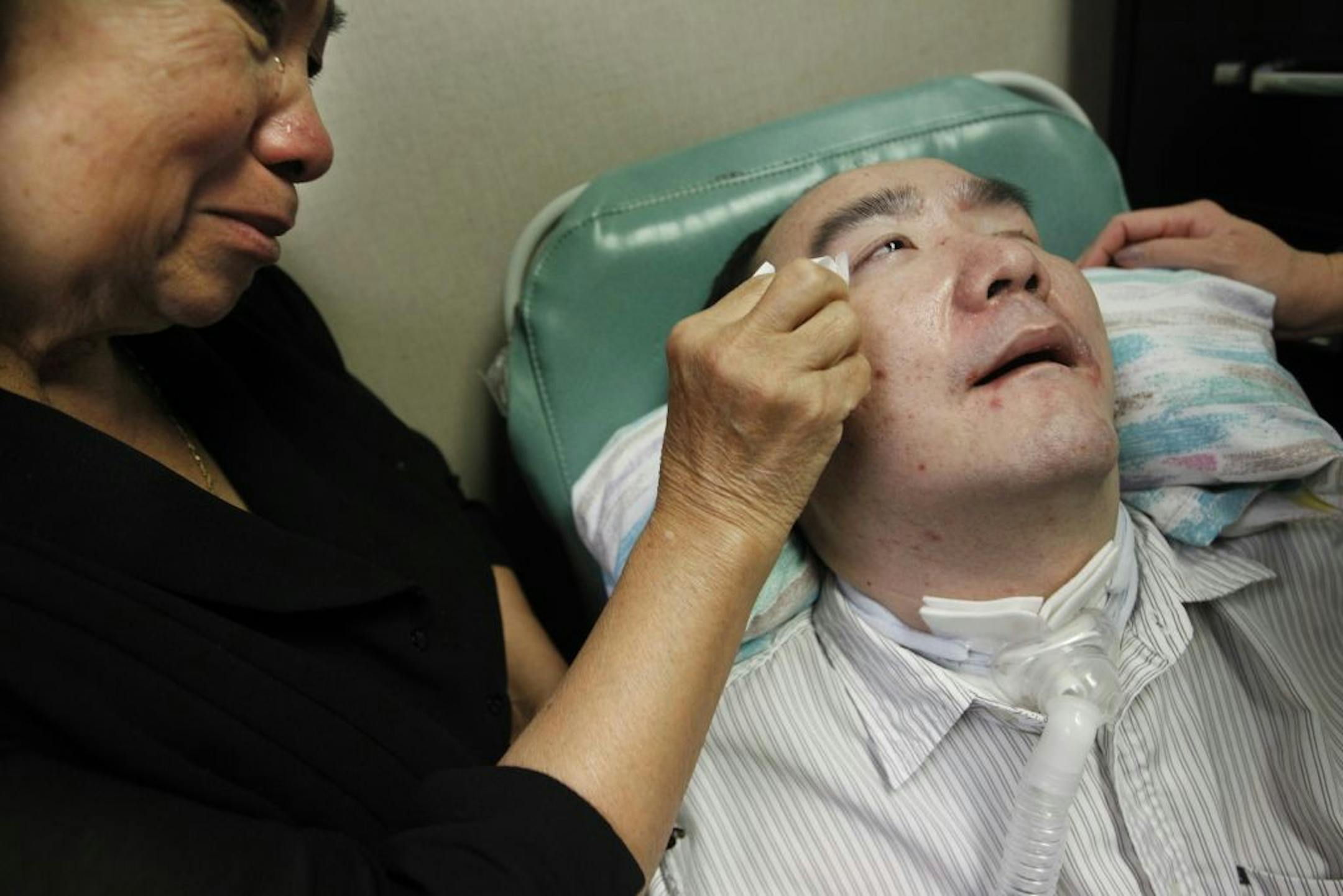
Ying Xiong dabbed the watering eyes of her comatose son, Kee Vang, 34, then her own tears, as she struggled to understand how his nursing home care might change because of state budget cuts.
"When the money for his care ends on Jan. 1, will they let my son die?" she asked in Hmong, translated by an older son. No, she was assured by a nursing home social worker. That would be illegal and wrong. The state will no longer pay Bethany Care Center $81,000 a year for his care, but he can stay where he is, the cost borne by the St. Paul home.
Vang and 59 other non-citizens in nursing homes across Minnesota are among those affected by unintended consequences that have bedeviled thousands of Minnesotans since the state's special-session budget scramble in July.
Struggling to erase a $5 billion deficit without raising taxes, lawmakers and Gov. Mark Dayton met privately and chiseled cuts from dozens of health and human services programs -- some of them small, many obscure -- without hearings or testimony.
Since then, state agencies have scurried to interpret and implement the numerous changes. Some have been delayed because they're so complicated; others have turned out to be oversights, lawmakers now admit.
Pay cuts blocked
On Wednesday, a Ramsey County judge temporarily forbade the state from enforcing one of the new provisions, siding with a group of home-care agencies that objected to a pay cut for about 6,950 people who give personal care to relatives who are frail and low-income.
"We miss some things, or find out things we wish we'd known earlier," said Rep. Jim Abeler, R-Anoka, chairman of the House Health and Human Services Finance Committee. "We're going to have to fix a few things" -- including, perhaps, the cut that affects Vang and 59 other non-citizens and possibly 250 others being care for in other long-term facilities.