

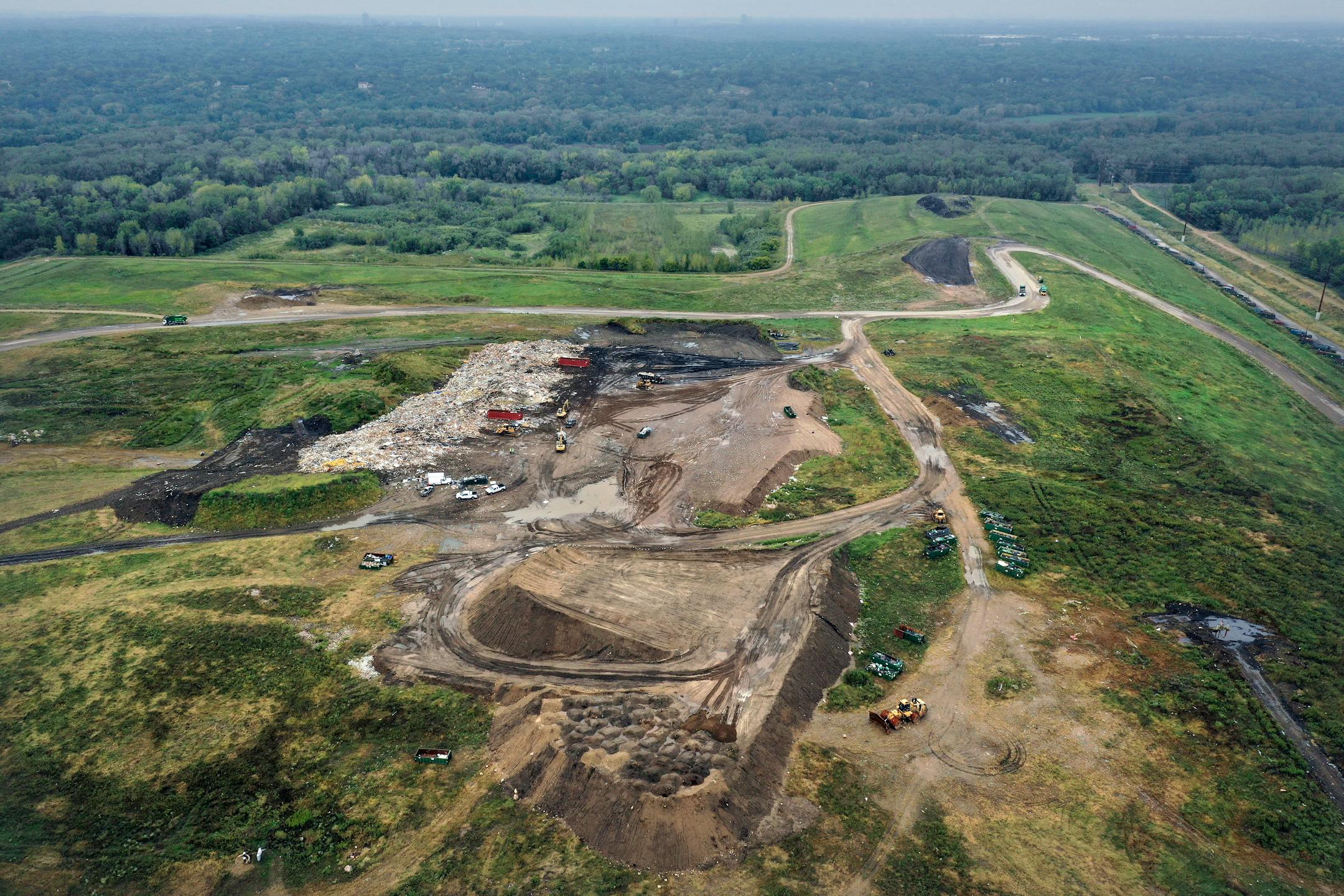
A controversial plan to expand the Burnsville Sanitary Landfill by millions of tons — creating a mountain of trash taller than U.S. Bank Stadium — is not expected to affect groundwater or air quality, the Minnesota Pollution Control Agency says.
The plan from Texas-based Waste Management, the nation's largest trash company, would raise the landfill's height by 262 feet and shrink its footprint from 216 acres to 204. The expansion would accommodate an additional 23 million cubic yards of household waste — about 22 million tons — and extend its life to 2062.
According to a recently released environmental review from the Minnesota Pollution Control Agency (MPCA), the agency does not anticipate the expansion to contaminate the groundwater or air. But the landfill is expected to produce 86,542 tons of new greenhouse gas emissions a year — the equivalent of 18,800 passenger vehicles.
The MPCA review also noted the project's appearance.
"Visual impacts, of course, were huge to people," said Steve Sommer, a principal planner with the MPCA. "People were very concerned about it."
Waste Management said in a statement that the company is "grateful for the work of the MPCA and the other environmental experts for their efforts on this project."
The MPCA's findings cleared the way for a final public comment period and coincide with the ongoing permitting process. The project requires about a dozen permits from the state, city and Department of Natural Resources (DNR), among others.
The Burnsville City Council approved the concept-stage landfill expansion plan more than two years ago. As long as Waste Management's final plan follows that one, the city will likely approve it, said Public Works Director Ryan Peterson.


