

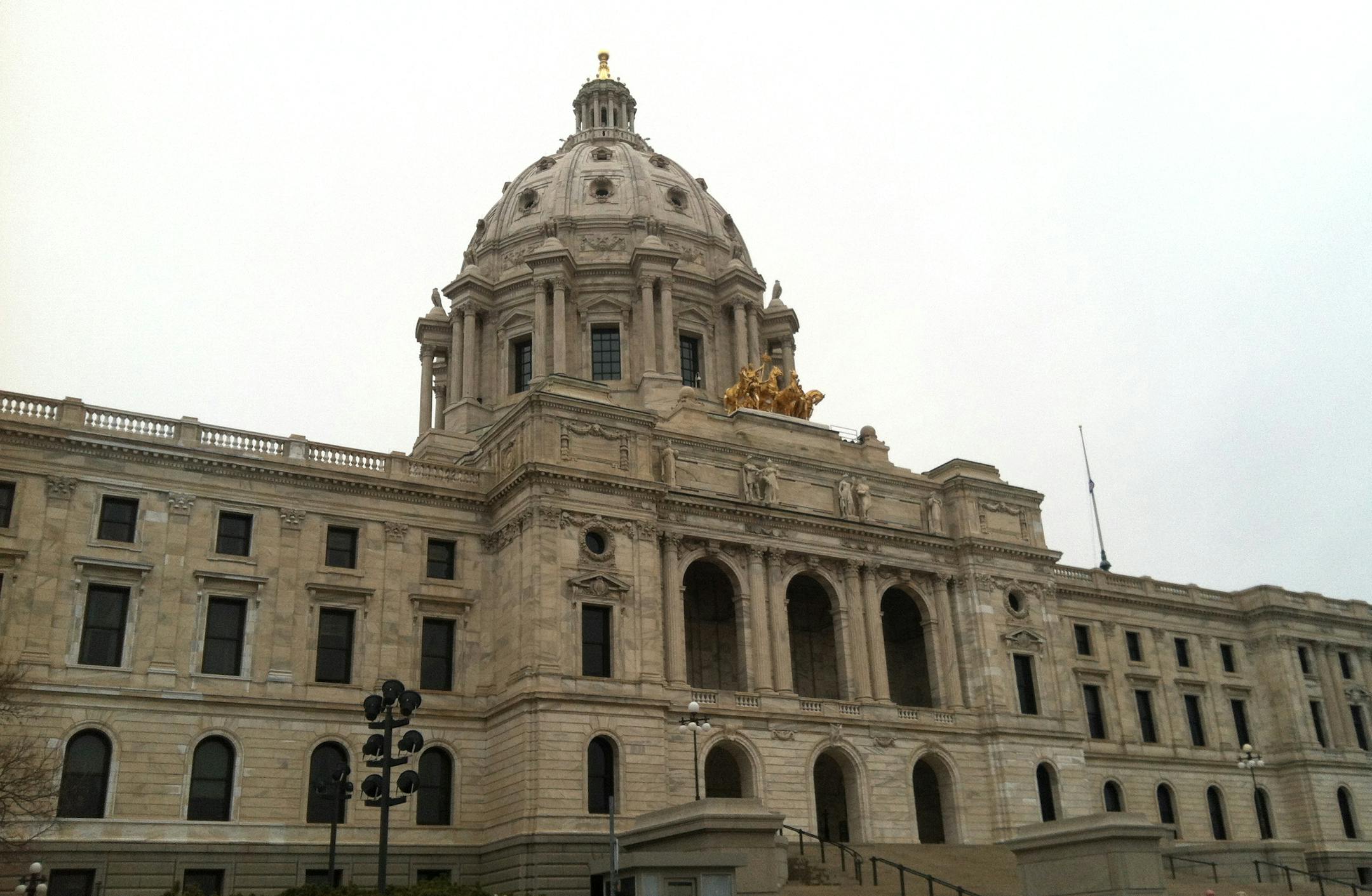
Senate DFLers caught the attention of State Capitol lovers like us last week. A provision to pay $30 million over the next two years to continue the restoration of Cass Gilbert's "people's palace" popped up in a legislatively odd place — the Senate tax bill.
Also in a bill that's otherwise laden with tax exemptions, deductions, refunds and rates is a directive to the commissioner of administration to commence design work on new "legislative office facilities," including more parking, in the Capitol complex.
The new facilities would be financed through a lease-purchase agreement with private investors, the same financing tool used to build both the Andersen and the Freeman office buildings in the Capitol complex — and one that does not require a 60-percent supermajority vote for the Legislature to authorize.
Senate DFL leaders justify these unusual moves as a "belt-and-suspenders" safeguard against the possibility that the House will be unable to secure the requisite 81-vote supermajority. Reaching that threshold in the DFL-controlled House takes eight minority Republican votes. They could be hard to come by for the $800 million bonding package that House DFLers favor.
It's hard to fault the Senate for looking out for one of our favorite Minnesota buildings. But it's fair to question whether it is offering a desirable alternative.
State government's elected stewards have been planning for years to repair the Capitol, which is literally crumbling after 108 years of heavy use. The 2012 Legislature moved beyond the planning stage. It launched a four-year reconstruction project with a $44 million down payment, financed with 20-year general obligation bonds.
That's state government's customary way of paying for durable public assets. Bonding spreads costs through 20 years rather than burdening today's taxpayers with the full cost of facilities that will serve several generations. With interest rates as low as they have been in recent years, bonding is also a financially smart approach.
Legislators knew last year, and know now, that keeping the Capitol project on its anticipated course will require providing about $200 million more over the next two years, including $109 million this year. That's the amount included in the House bonding bill.


