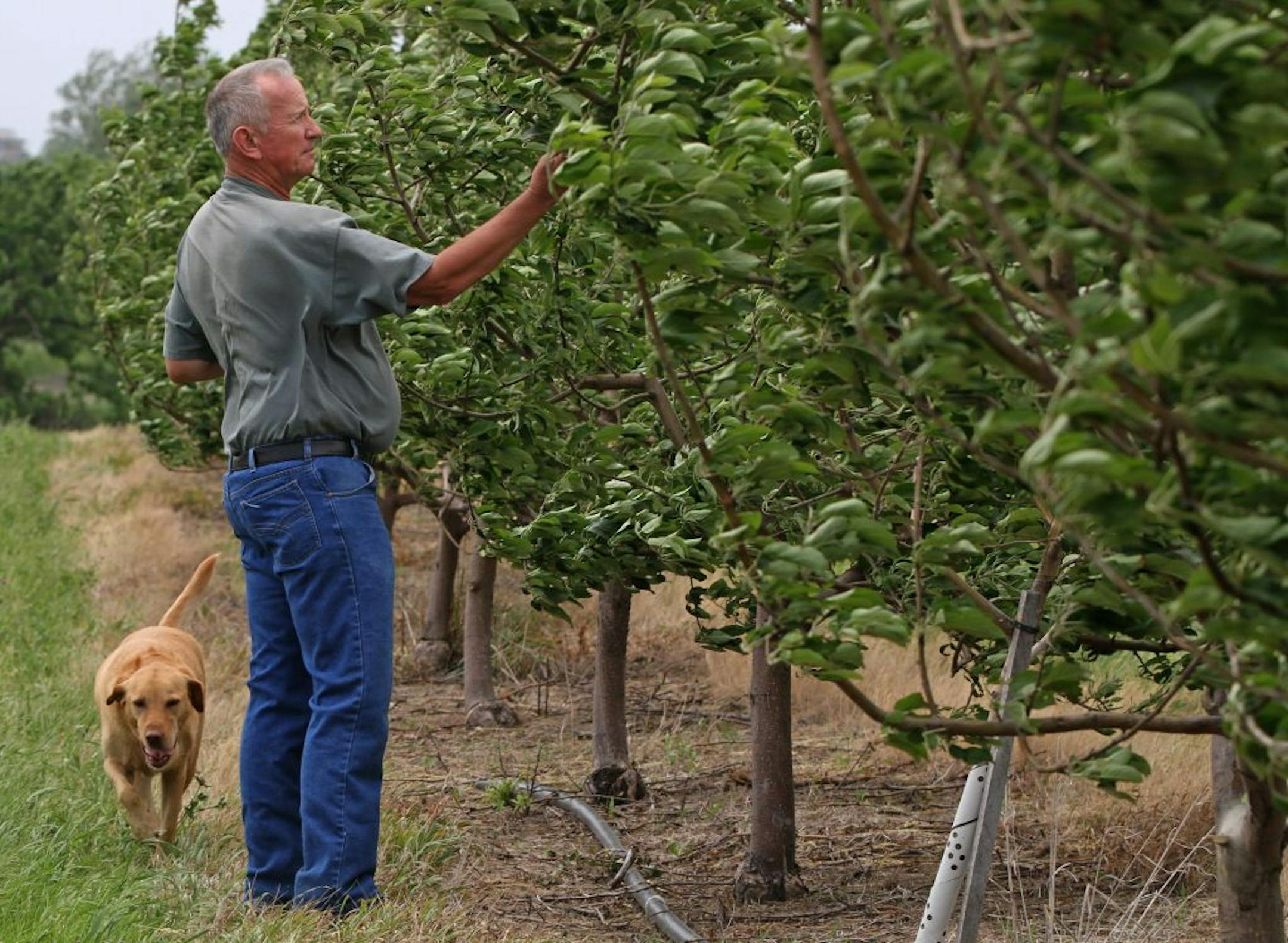
For the first time in more than three decades, visitors to Nelson's Apple Farm in Webster, Minn., won't be able to pick their own apples this fall. That's because the crop has been so decimated that owner Ross Nelson will have to save his surviving apples for the farmer's market.
Instead, he and a few other growers are arranging to ship in fruit to sell at their orchards. "We'll be upfront about it," he said. "We'll still have wagon rides and a corn maze. Hopefully, our customers will continue to come."
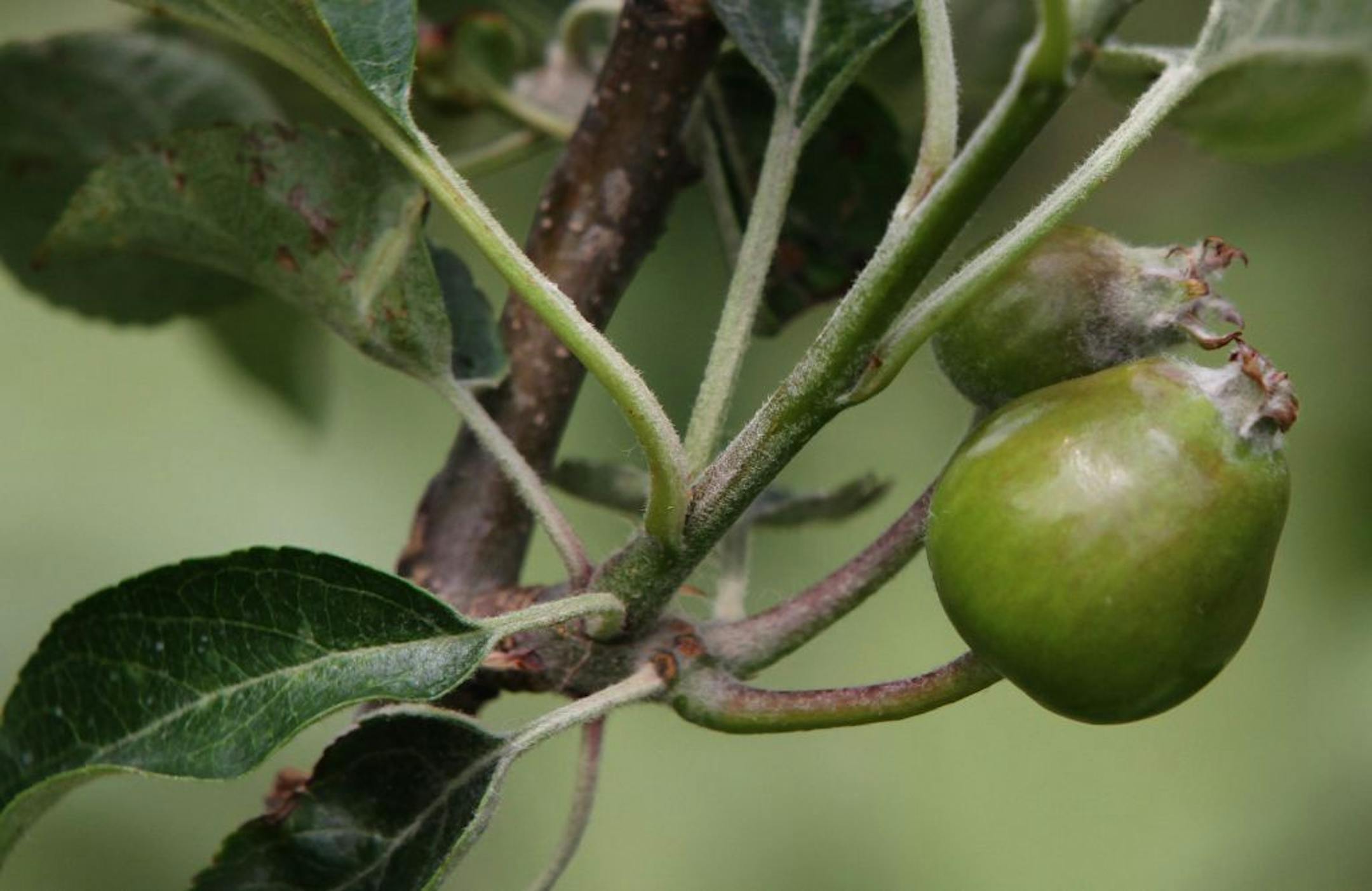
This year's apple crop suffered "major damage" according to an update from the Minnesota Department of Agriculture. The damage occurred after a balmy March jump-started the bloom cycle, then freezing temperatures in April nipped the delicate blossoms at a critical stage.
Growers have held their breath for the last month, waiting for pollination to reveal more about the fate of this year's apple crop. Many had guessed, based on early blossom damage, that losses would be severe. Now that fruit has formed, damage reports vary widely, with some growers reporting only minimal losses and others, like Nelson, anticipating they'll be able to produce only a small fraction of last year's yields.
Consumers won't face a shortage of apples, but they may have a harder time finding their favorite locally grown varieties at farmer's markets. And much of the fruit in grocery stores will have to be shipped in from other growing regions, according to David Bedford, research scientist and apple breeder at the University of Minnesota.
"There are pockets of disaster," he said, "but overall, the state was not hurt as badly as we were first afraid."
Growers in those pockets are facing a bleak fall, however. Sweetland Orchard in Webster lost 80 to 90 percent of its crop, according to owner Mike Perbix. "It's not a total bust," he said, although he expects to reduce his pick-your-own season to a few weekends, and won't have enough fruit to produce cider.
Shefelbine Orchard and Pumpkin Patch near Holmen, Wis., was almost completely wiped out, according to owner Doug Shefelbine. "We have 30 acres, and if we get a bushel, we'll be lucky," he said. "I've been growing apples for 60 years, and it's the first time this has happened. They say it's a once-in-100 years event."