
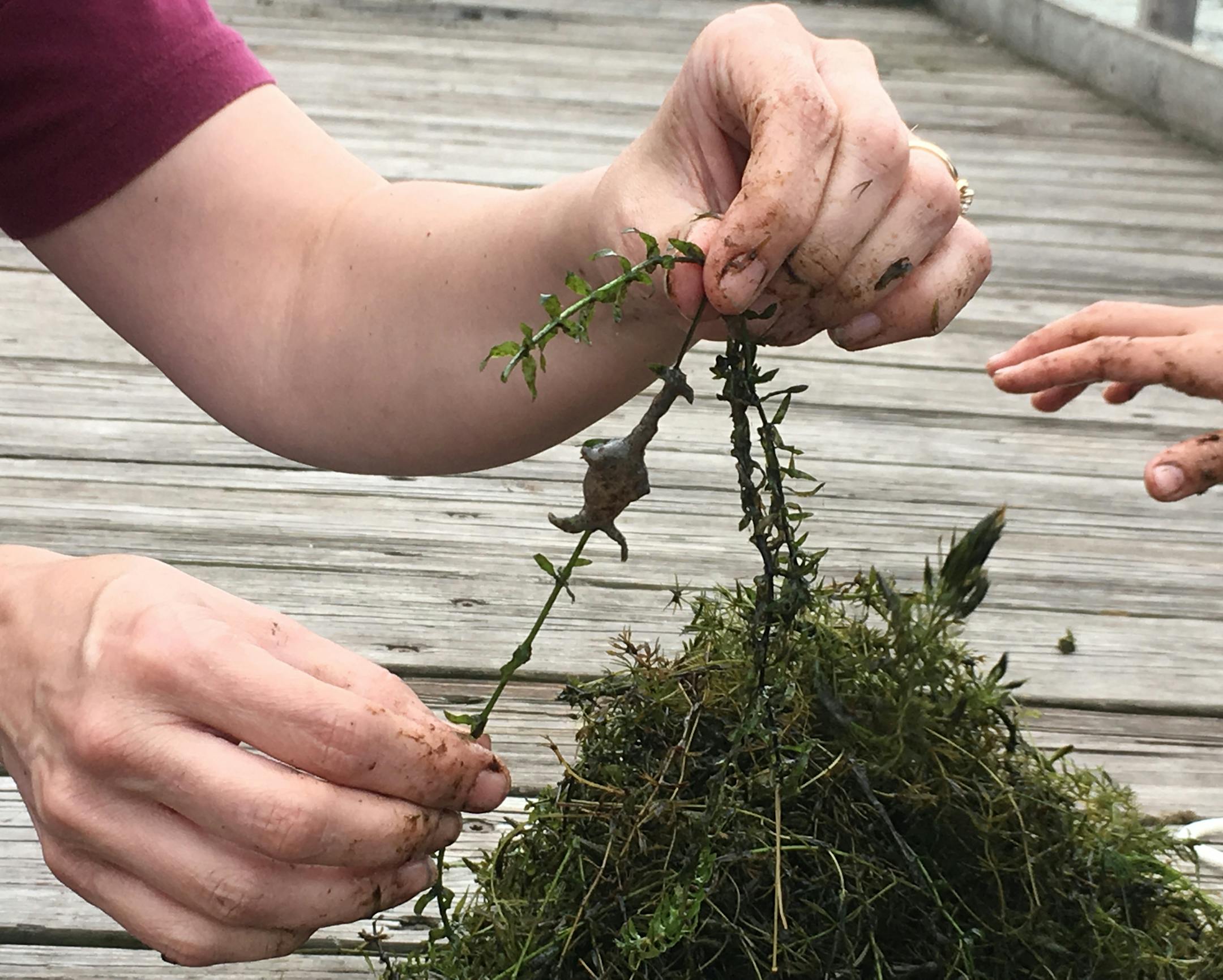
Starry stonewort infests Wright County lake

This is the second new infestation found this year. Earlier this month, the DNR identified the invasive algae in Medicine Lake in Plymouth.

August 11, 2018 at 10:52PM
Volunteers surveyed Dakota County lakes on Saturday, Aug. 5, 2017, for starry stonewort, Minnesotaís newest aquatic invasive species. The effort, coordinated through the Department of Natural Resources (DNR) and the University of Minnesota Extension, drew 220 citizen scientists across the state to help track the dense algaeís growth in area lakes.
Volunteers surveyed Dakota County lakes in August 2017 for starry stonewort. (The Minnesota Star Tribune)

Starry stonewort, an invasive algae, has claimed another Minnesota lake.

The Minnesota Department of Natural Resources recently identified two small patches of starry stonewort in Pleasant Lake near Annandale in Wright County. This is the second new infestation found this year. Earlier this month, the DNR identified the invasive algae in Medicine Lake in Plymouth — the first Twin Cities lake to be infested.

The plant, which can form dense mats that interfere with recreational use and compete with native plants, has now infested 13 lakes since it first invaded Minnesota in 2015. So far, starry stonewort has never been eradicated from a U.S. lake. Treatment, however, can reduce its spread.

The algae in Pleasant Lake was found near the public access on the northern shore in Clearwater/Pleasant Regional Park. It had grown 12 to 15 inches tall in about 8 to 10 feet of water. Because it's under the lake's surface, it was discovered only when a DNR invasive species specialist was diving in the area to investigate a report of zebra mussels, said Wendy Crowell, a consultant with the DNR's aquatic invasive species management program. No zebra mussels were found.

For now, the lake's north public access is closed, Crowell said.

Crews will go under water and remove the algae by hand. "It's the most effective treatment for small populations like that in deep water," Crowell said. Later, the area likely will be treated with an herbicide, she added.

Most new cases of starry stonewort have been found in August, when the tiny star-shaped bulbils are abundant and visible.

Volunteers throughout the state will gather Aug. 18 at various locations to learn how to identify starry stonewort and other invasive species before spreading out to investigate Minnesota's lakes. For more information on the Starry Trek event, go toextension.umn.edu/event/starry-trek-2018.

Last year, volunteers found an infestation in Stearns County's Grand Lake, Crowell said.

"Now that we have two new infestations within a couple weeks of each other, I hope the public will be on the lookout not just on the Starry Trek day but whenever they're out on the lake," Crowell said.

In addition, all aquatic plants and animals need to be cleaned from watercraft to prevent the spread of starry stonewort, she said.

Mary Lynn Smith • 612-673-4788

about the writer

about the writer

Mary Lynn Smith

Reporter

Mary Lynn Smith is a general assignment reporter for the Star Tribune. She previously covered St. Paul City Hall and Ramsey County. Before that, she worked in Duluth where she covered local and state government and business. She frequently has written about the outdoors.

See Moreicon

More from No Section

See More
FILE -- A rent deposit slot at an apartment complex in Tucker, Ga., on July 21, 2020. As an eviction crisis has seemed increasingly likely this summer, everyone in the housing market has made the same plea to Washington: Send money — lots of it — that would keep renters in their homes and landlords afloat. (Melissa Golden/The New York Times) ORG XMIT: XNYT58
Melissa Golden/The New York Times

It’s too soon to tell how much the immigration crackdown is to blame.