

LOS ANGELES – The crew aboard this sleek spaceship is on a mission: to prove that their commander, Seth MacFarlane, will steer viewers on a unique, out-of-this world journey in his new series, "The Orville."
Executive producer Jason Clark certainly makes an enthusiastic case as he leads visitors on a tour of the 20th Century Fox set, getting giddy over food synthesizers, plasma shotguns and mannequins sporting outfits straight out of Bjork's closet.
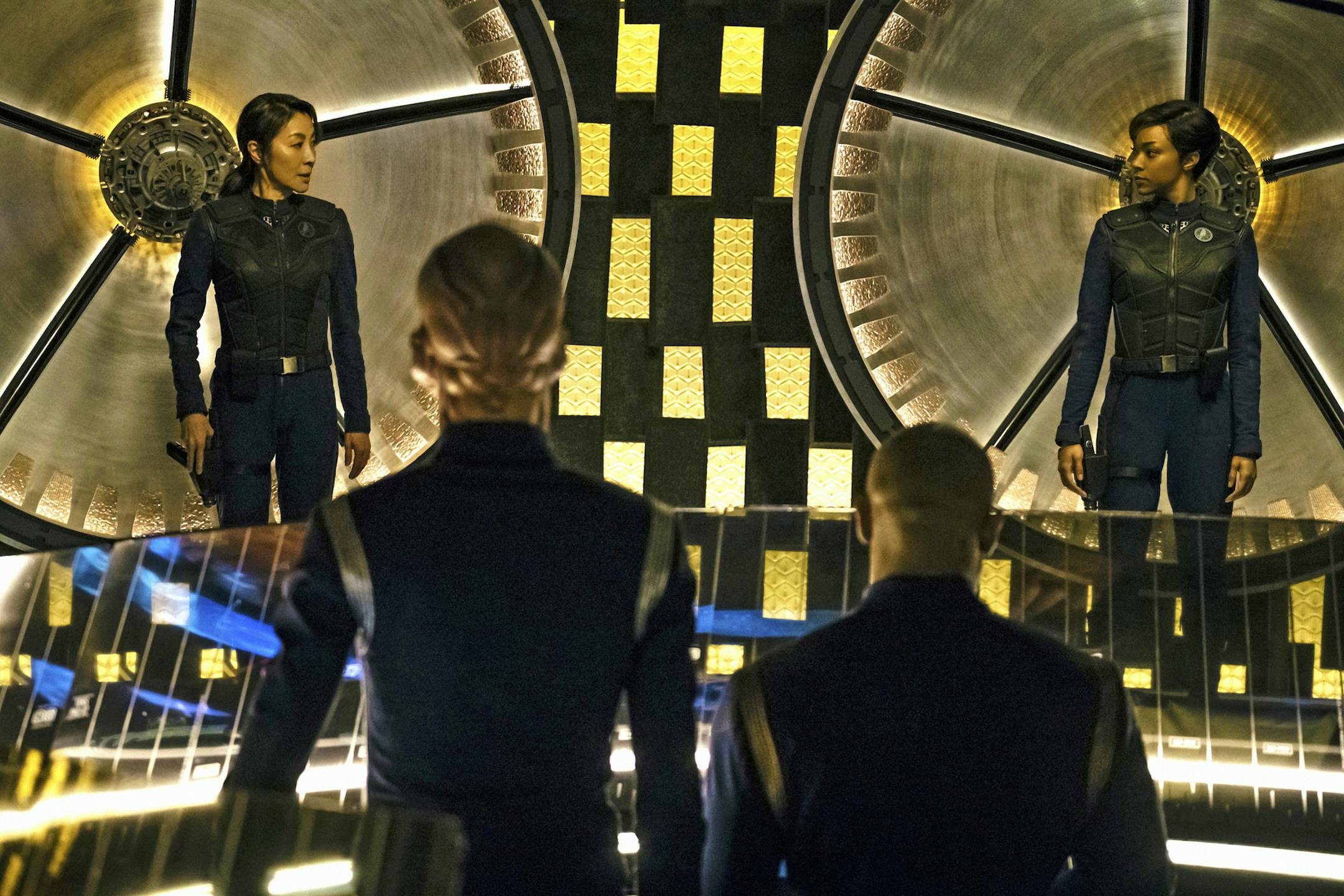
"Star Trek: Discovery," which launches Sunday, looks like it may boldly take Trekkies where they haven't been before, with a black woman in the central role.
But what's more compelling than toy weapons and progressive casting is this idea: Sci-fi series are trying to offer a reprieve from a 21st-century planet hurtling closer to, if not extinction, a black hole of cynicism.
"I'm tired of being told that everything is going to be grim and dystopian, and people are going to be murdering each other for food," MacFarlane said. In his new show, the "Family Guy" creator plays Ed Mercer, a captain less worried about the future of mankind than about sharing the control room with his ex-wife. "I miss the hopeful side of science fiction, which really goes back to the roots of the genre, and that is: What can we achieve if we put our minds to it?"
"Star Trek: Discovery" takes place 10 years before the original series, a time when the Federation is laying the groundwork to form a gentler, kinder universe. CBS hopes the show will attract subscribers to its fledgling new digital channel, where it will fly after Sunday's premiere on the mother ship.
"I think the defining characteristic of Gene Roddenberry's work is its optimism," said the new show's co-creator, Alex Kurtzman, referring to the "Star Trek" creator. "It's the belief that we can connect, that species and people around the entire galaxy can figure out a way to exist and that wars, if they have to be fought, can be stopped."
It may not be a coincidence that the sci-fi genre exploded in the 1960s, a time when civil rights, distrust of Russians and political bickering dominated the headlines. Sound familiar?


