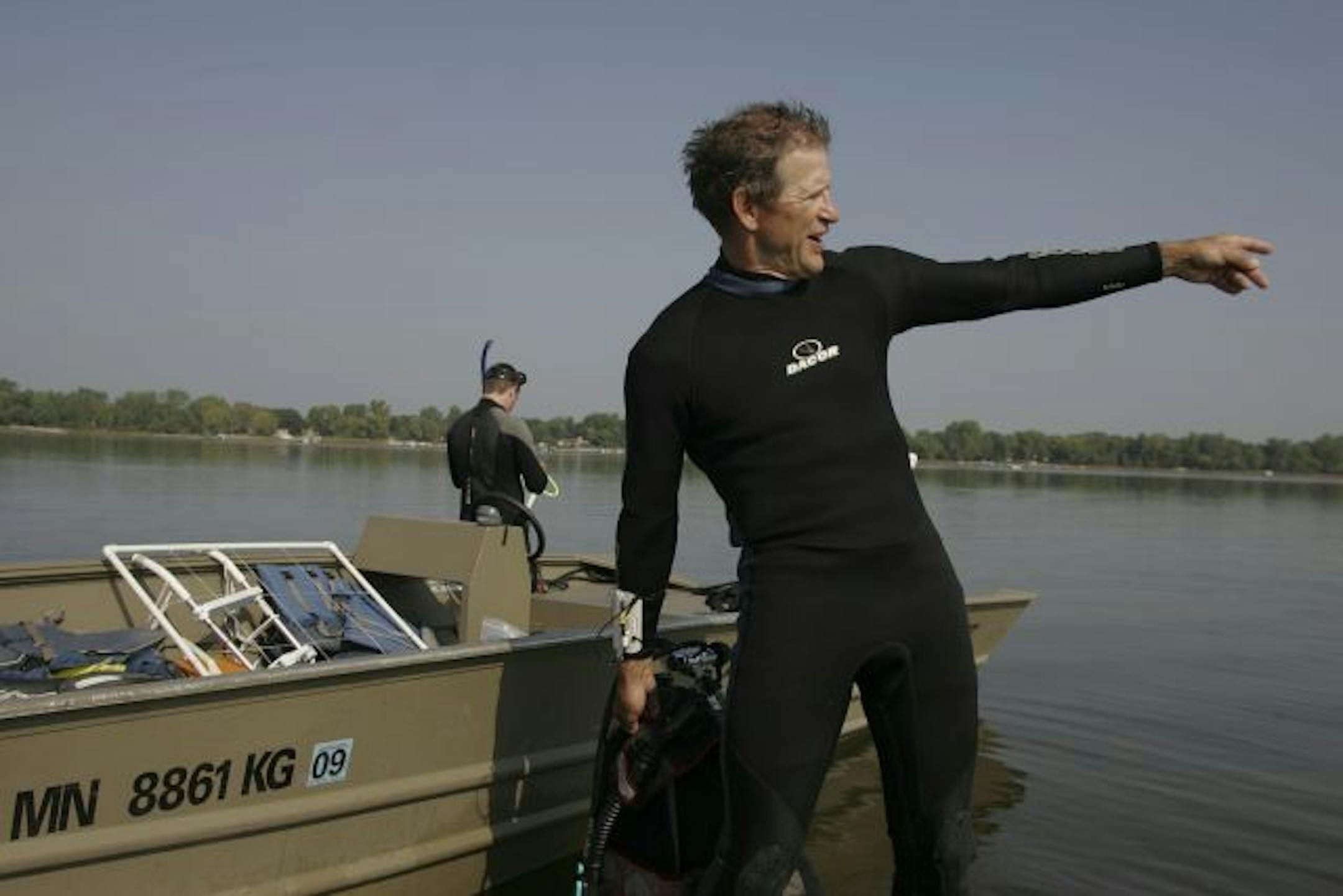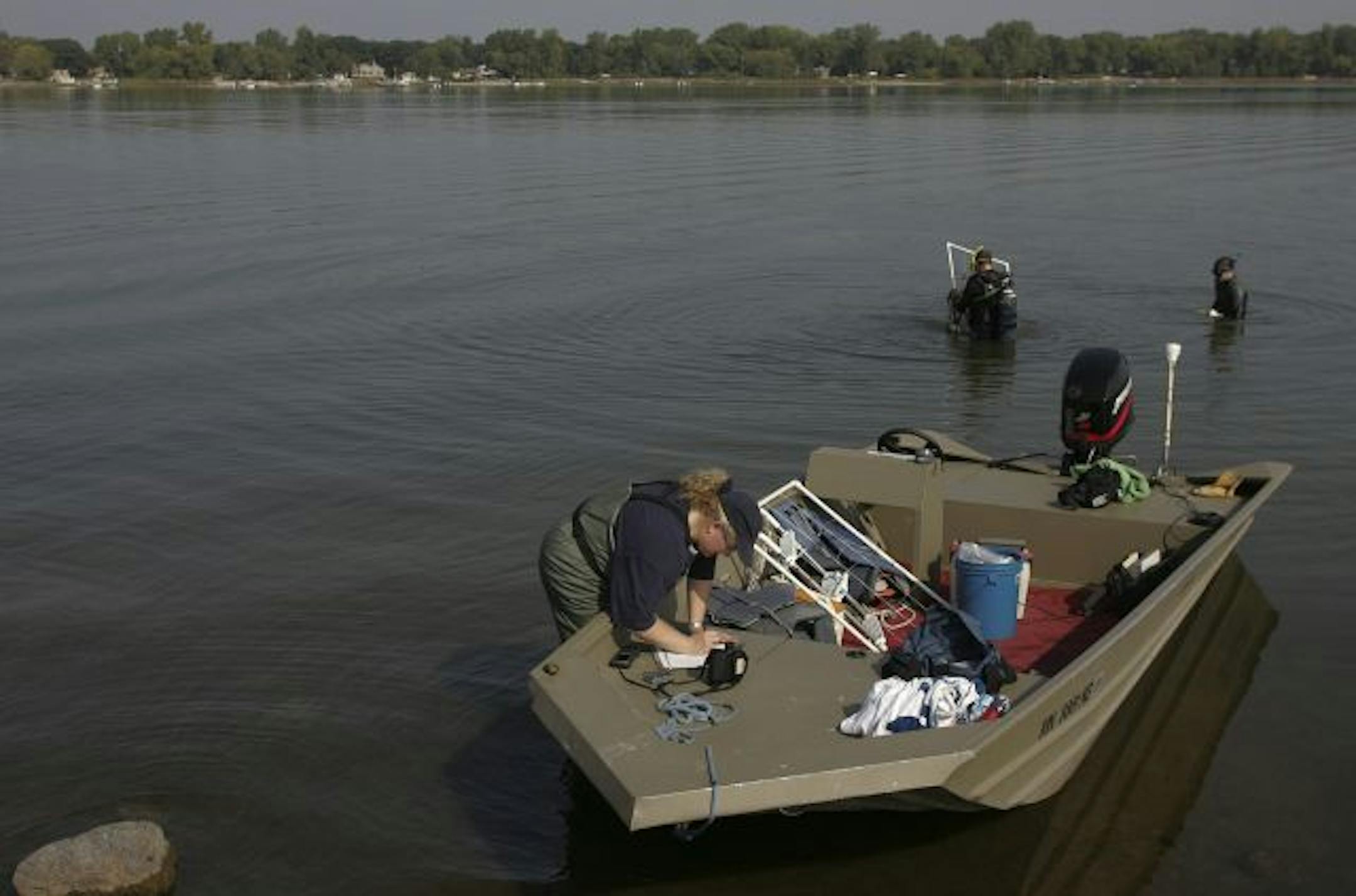
A day after zebra mussels were found in a northwestern Minnesota lake, divers combed through White Bear Lake on Friday to see if it might be susceptible to the invasive species -- even though the creatures have never been seen there.
Zebra mussels, which threaten to alter the ecosystems of Minnesota's 12,000 lakes, have been discovered in at least 30 bodies of water in the state. But when aquatic scientist Steve McComas and his crew spent five hours studying the depths of White Bear Lake in Ramsey County, it is believed to be the first time a government agency in Minnesota has taken the proactive step of examining a lake where there hasn't been a problem.
"By doing this habitat suitability assessment, we want to see if White Bear Lake has the right chemistry that zebra mussels need to colonize," said McComas, who was hired by the White Bear Lake Conservation District. "In some lakes, zebra mussels don't do much. In other lakes, they cause serious long-term impacts on recreation, water quality and fisheries.
"Unfortunately," McComas, owner of Blue Water Science in St. Paul, said after exploring the lake on a picture-perfect day, "there's a lot of very suitable habitat for zebra mussels here. This could be a potential problem."
That another lake in the Twin Cities metro area might soon throw in a line in the war against zebra mussels isn't surprising, said Gary Montz, research scientist with the Minnesota Department of Natural Resources (DNR). He noted that Prior Lake is among five Minnesota lakes identified this year as being infested with zebra mussels.
The latest, Pelican Lake in Otter Tail County, was added to the list Thursday after a resident found a zebra mussel attached to a native mussel. DNR biologists then searched the lake and concluded zebra mussels have been in the lake for more than a year.
"I've seen zebra mussels on rocks, on logs, on garbage dumped in lakes," Montz said. "In Rice Lake, north of Brainerd, plants are thick with zebra mussels.
"But when you have a government agency like the White Bear Lake Conservation District hiring a guy like Steve McComas, who is highly skilled and very intelligent, before anybody has seen zebra muscles in that lake, you begin to understand how seriously our conservationists are taking this threat."