How to boost student attendance has been a hot topic for state lawmakers and community advocates — and beginning this school year, for 244 high school sophomores at Washington Technology Magnet School in St. Paul, too.
The students surveyed classmates, and researched attendance improvement strategies, and came up with a range of ideas that include offering more field trips and artist or author visits, as well as $25 gift card incentives — and boldly enough — a shift to a four-day week.
The brainstorming came about as part of a national learning model, 3DE by Junior Achievement, which calls for students to work as teams to tackle real-world challenges posed by businesses, nonprofits and government institutions — including St. Paul Public Schools itself.
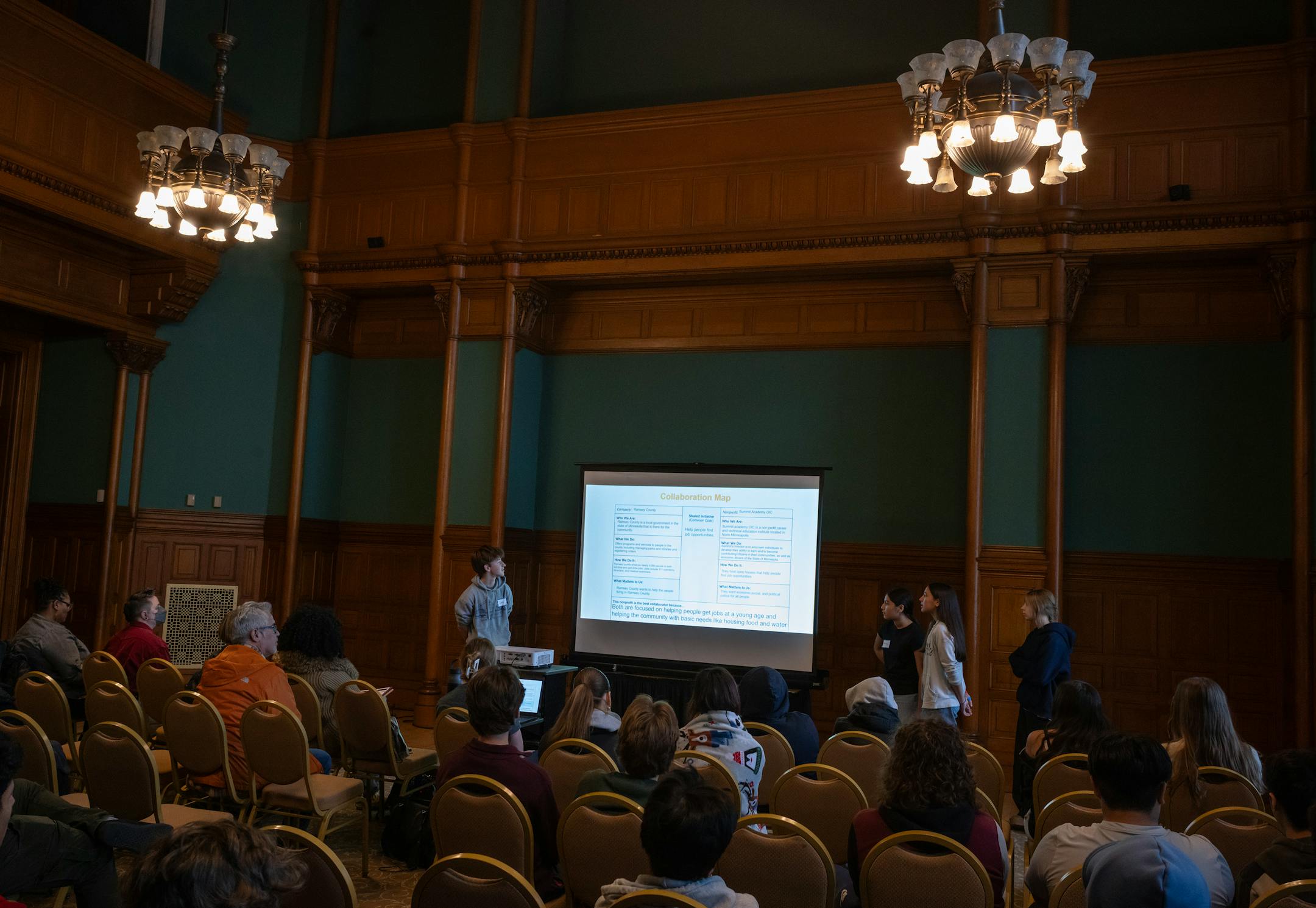
The program, now operating in three high schools in the state’s second-largest district — the only school system in Minnesota with the program — is a partnership with Junior Achievement North. Six times a year, students take on a case, and at its conclusion, present their findings, most recently at the Landmark Center downtown.
“They’re working with their peers and they’re working with professionals,” said Diana Brown, principal of Como Park Senior High, where the project-based challenges are in their second year. “I don’t know of any other program that does that for that amount of time and that consistently.”
The case studies are conducted and graded as part of the Freshman Focus and AVID electives — college and career readiness classes — for ninth-graders, and the Career Seminar and AVID electives for 10th-graders. The plan is to add a grade per year so students will have access to the coursework throughout high school.
“It’s not just about getting students to go out and work with any one particular place,” said Leah Van der Sluis, director of 3DE school partnerships. “It’s getting them to see the range of different opportunities that are out there.”
Junior Achievement North is covering the full cost of the $1 million-plus program through private donations. It also is in talks with other Twin Cities-area districts in hopes of expanding to about 10 schools by 2030, said Sarah Trenda Martin, the nonprofit’s vice president of development.