
St. Paul school district leaders aim to rebuild trust, respect

Superintendent joins board in discussing goals — and how to get there amid changing times.

August 8, 2016 at 12:42AM
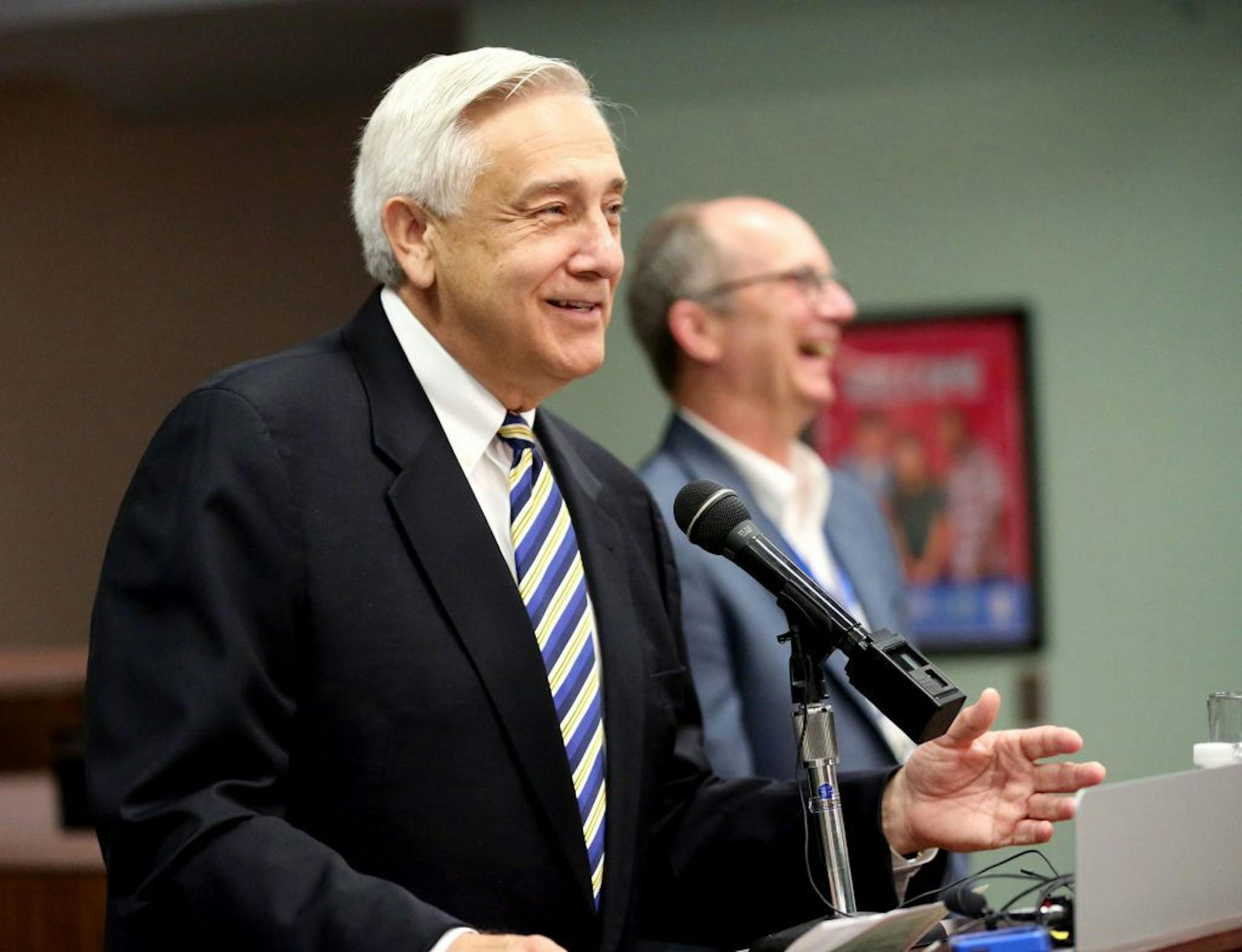
John Thein, interim superintendent of the St. Paul Public Schools, was introduced by school board Chairman Jon Schumacher on June 22 in St. Paul.
John Thein, interim superintendent of the St. Paul Public Schools, was introduced by school board Chairman Jon Schumacher on June 22 in St. Paul. (Star Tribune/The Minnesota Star Tribune)

Emotions ran high in May as the St. Paul Public Schools wrestled with a $15 million funding gap — so high, in fact, that when Superintendent Valeria Silva said she wasn't targeting schools for cuts, some in the audience openly scoffed.

She stopped, eyed the crowd and said: "I would like people to be respectful."

Two months later, Silva no longer occupies the superintendent's chair, but issues of respect and trust remain within the state's second-largest district.

The good news is people appear eager to turn things around.

Last week, the board appointed an interim member to fill a seat vacated by a chairwoman who accused the group of being "disrespectful, destructive and cynical." Members then adjourned for a retreat during which they identified essential values to guide their work ahead.

Among them: transparency, respect and trust between the board, the administration and the community.

This year, a new board majority took office emboldened by a Caucus for Change movement powered by the district's teachers union. Silva, in turn, found herself challenged like never before. One view held that it was about time that her bosses asked tough questions. The other, voiced by former member Jean O'Connell, was that they had overstepped their bounds.

"None of my colleagues sitting at this table hold a superintendent or principal license," O'Connell said in announcing her resignation when Silva was ousted. "But, regularly, the people who have the experience and knowledge to give us recommendations have been ignored, aggressively questioned or assumed to be wrong by this board."

John Thein, who began work last month as interim superintendent, said recently he came aboard dedicated to helping the district heal.

At the board retreat, Thein spoke in greater detail about how he operates and offered a glimpse at how board and administrative relations could improve.

He values one-on-one meetings, he said, not to "divide and conquer," but to raise the comfort level.

His door is always open, and "if it's shut, I'm taking a nap."

He wants to be called "John," not "Dr. Thein," saying the latter only looks good on a résumé.

He believes that "nervous boards ask more questions than confident boards," and that is because they need more information. He will push to give them the best, he said, and will not take it personally if a recommendation is rejected.

"You will have confidence in the votes," he said. "That doesn't mean the votes will be easy. But it'll be built on something rather than what voice you heard last."

In a reference to Philando Castile, the J.J. Hill Montessori Magnet School cafeteria supervisor who was shot to death by police in Falcon Heights last month, Thein said the grief within the school community showed cafeteria workers and custodians "touch kids every day — we can't forget them."

Board members reacted positively.

John Brodrick, a retired teacher and coach, said he often tells people that the most important person in a school's main office is the secretary, and that once that introduction is made, visitors can go ahead and meet the principal.

Along with colleague Steve Marchese, Brodrick said the board and the administration must work hard on community engagement and be willing to "go into the lion's den and seek out the folks with ideas that might make us uneasy."

Board Member Mary Vanderwert said she looked forward to her monthly meetings with Thein.

Zuki Ellis confessed to having been reluctant to set aside that time, saying she wanted to devote it to visiting schools instead, to which Thein replied: "I want to go to schools, too. Why don't we go together?"

Helping serve lunch together could be a way to learn, he said, and to show schools that their leaders are unified.

Unity, indeed, would be welcome in light of the challenges ahead: Next year, the district could be facing an even larger $24 million deficit for 2017-18.

Anthony Lonetree • 612-673-4109

John Thein, the interim superintendent of St. Paul Public Schools, said his door will always be open.
John Thein, the interim superintendent of St. Paul Public Schools, said his door will always be open. (Star Tribune/The Minnesota Star Tribune)
about the writer

about the writer

Anthony Lonetree

Reporter

Anthony Lonetree has been covering St. Paul Public Schools and general K-12 issues for the Star Tribune since 2012-13. He began work in the paper's St. Paul bureau in 1987 and was the City Hall reporter for five years before moving to various education, public safety and suburban beats.

See Moreicon

More from No Section

See More
FILE -- A rent deposit slot at an apartment complex in Tucker, Ga., on July 21, 2020. As an eviction crisis has seemed increasingly likely this summer, everyone in the housing market has made the same plea to Washington: Send money — lots of it — that would keep renters in their homes and landlords afloat. (Melissa Golden/The New York Times) ORG XMIT: XNYT58
Melissa Golden/The New York Times

It’s too soon to tell how much the immigration crackdown is to blame.