

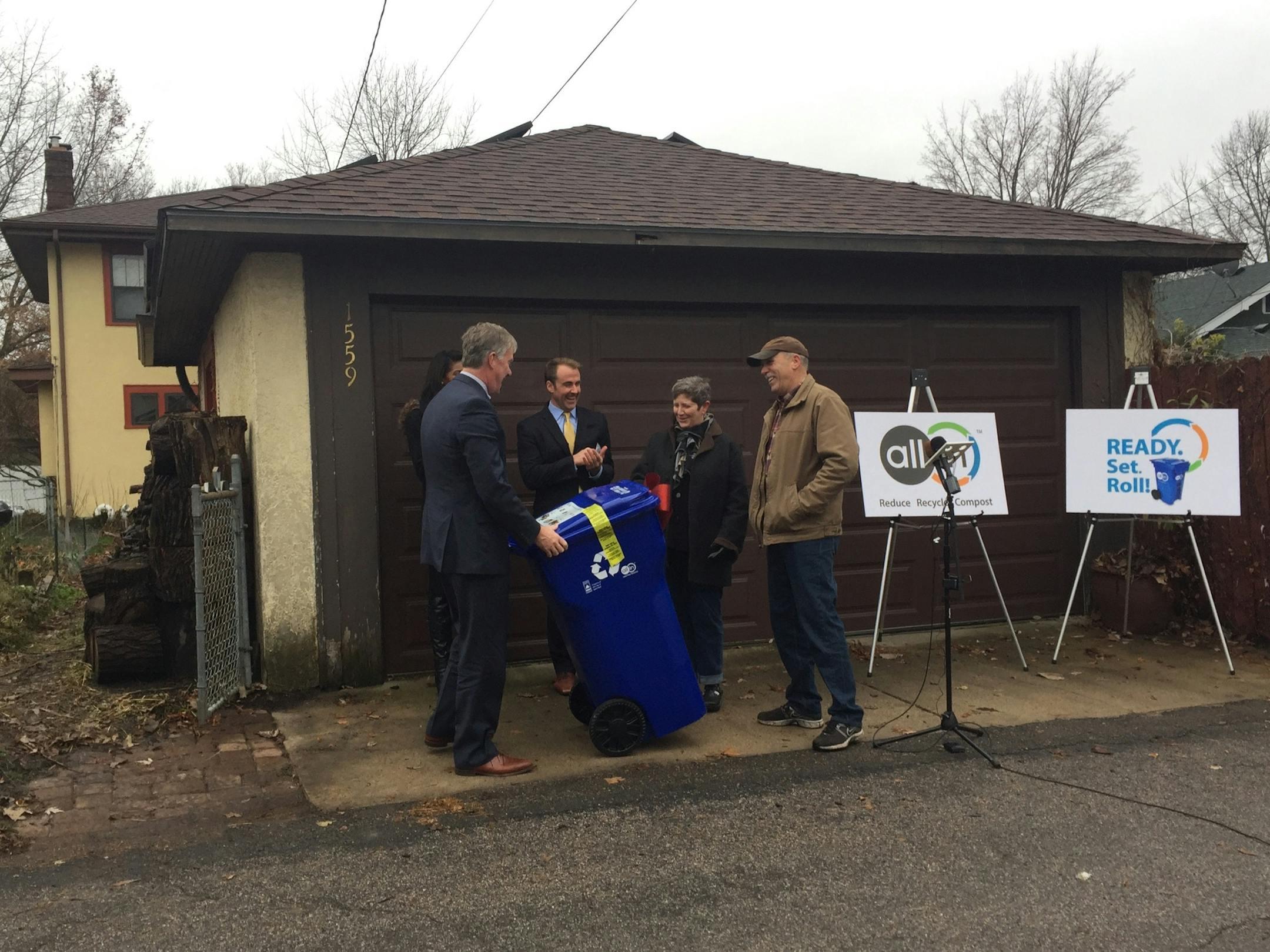
The wait is over. On Monday, St. Paul residents can start filling their new, blue-lidded recycling carts for weekly pickup.
City officials have rolled out the 64-gallon carts as part of a five-year waste initiative through a contract with Eureka Recycling, a local nonprofit.
Kris Hageman, recycling and solid waste program manager for the city, said St. Paul anticipates the change will result in a 15 percent increase in participation and a 35 percent increase in tons of material collected. Most single-family homeowners should expect to see a $4 increase in their annual recycling fee.
"We have been hearing the last few weeks from folks that haven't been recycling in the past," Hageman said. "They said the cart is something that's really going to help them start to try. We are really happy about that."
Residents can recycle food containers, paper, boxes, cardboard tubes and plastic bottles. Plastic bags, needles, plastic toys, organic food scraps, Styrofoam and containers larger than 3 gallons are not recyclable.
Collection days for neighborhoods vary, and the Martin Luther King Jr. Day holiday will not affect when carts will be emptied this week. St. Paul will send out maps to residents showing their pickup dates in English, Hmong, Somali and Karen. Residents are expected to put out their recycling carts by 7 a.m. on their pickup day.
For more details about the recycling program go online to www.stpaul.gov/recycle.
Faiza Mahamud • 612-673-4203


