

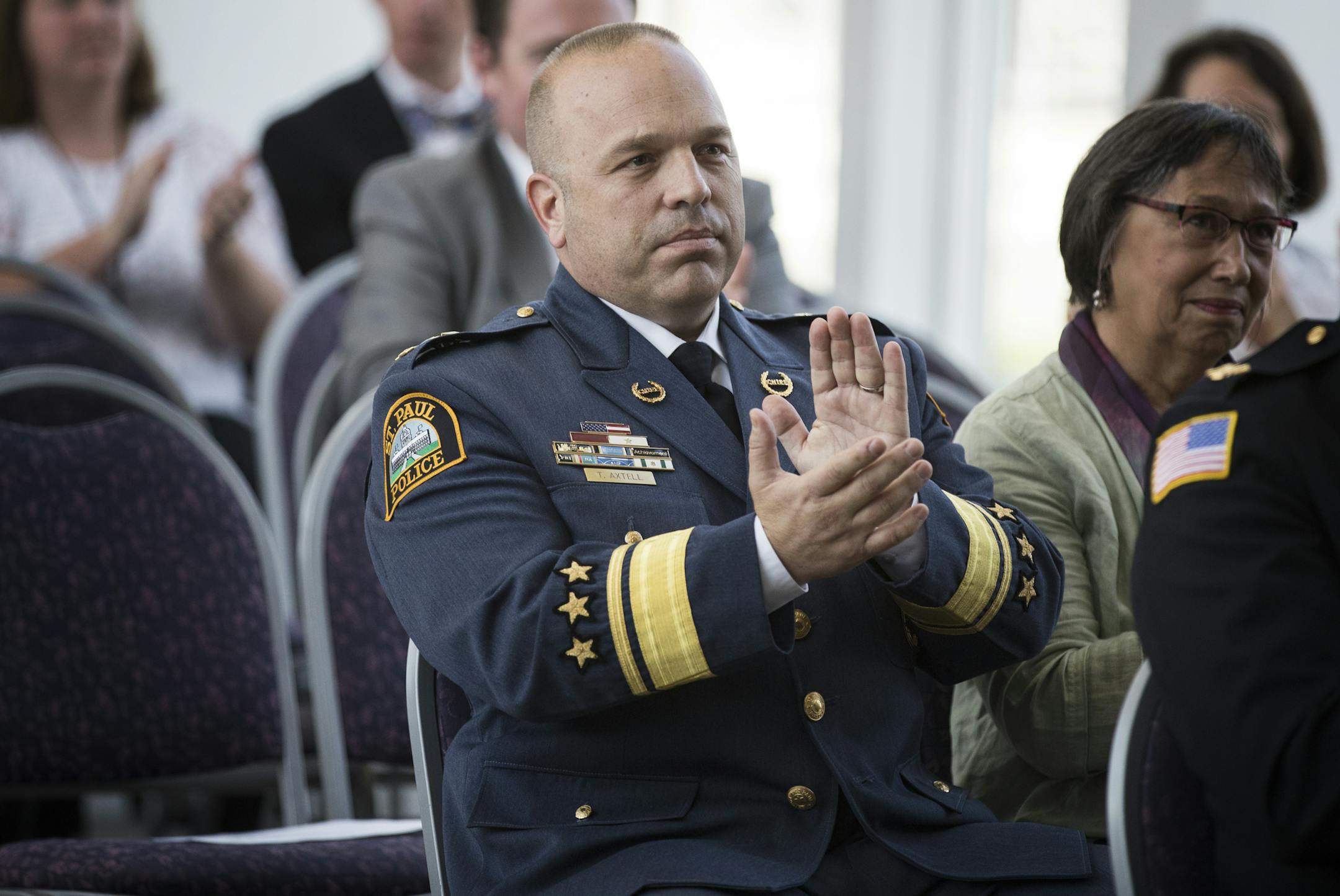
Two weeks into his first 100 days as St. Paul police chief, Todd Axtell was met with an unexpected firestorm as protesters took to the streets to express concern over the killing of a black man by a police officer from a nearby suburb.
After Philando Castile was fatally shot in Falcon Heights on July 6 by St. Anthony police officer Jeronimo Yanez, St. Paul became ground zero for reaction to the case. Demonstrators camped outside the governor's residence on Summit Avenue, marched on Interstate 94, rallied outside the Ramsey County courthouse downtown, protested outside Ramsey County Attorney John Choi's office and attempted to occupy a city park. Dozens were arrested and cited.
"It was an incredibly challenging time to become police chief," Axtell said in an interview Tuesday before he addressed the City Council about his first 100 days in office and goals for the future. "It really changed the trajectory of the department at that time."
Demonstrators criticized Axtell's officers for cracking down unfairly on them and targeting key organizers. Police Federation President Dave Titus said some demonstrators were aggressive with police. The turmoil has marked Axtell's short time as chief.
"Some believe we were too quick to act," he said in the interview. "Some believe we didn't act quick enough. They're not easy decisions, but they always have to be based on what's in the best interest of our entire community, what's in the best interest of public safety."
Axtell told the City Council that he wanted his officers to take actions that are "reasonable, necessary and done with respect." The department will begin gathering more feedback from residents about their interactions with police, he told council members.
Axtell said in the interview that the department is still developing a system to gather input from both suspects and victims of crimes, in addition to the community at large, that will roll out in 2017.
In response to a question from Council President Russ Stark, Axtell said an area that could improve is transparency with the department's data. Axtell pledged to start posting data about the department's traffic stops by the end of the year, which will include information about race.


