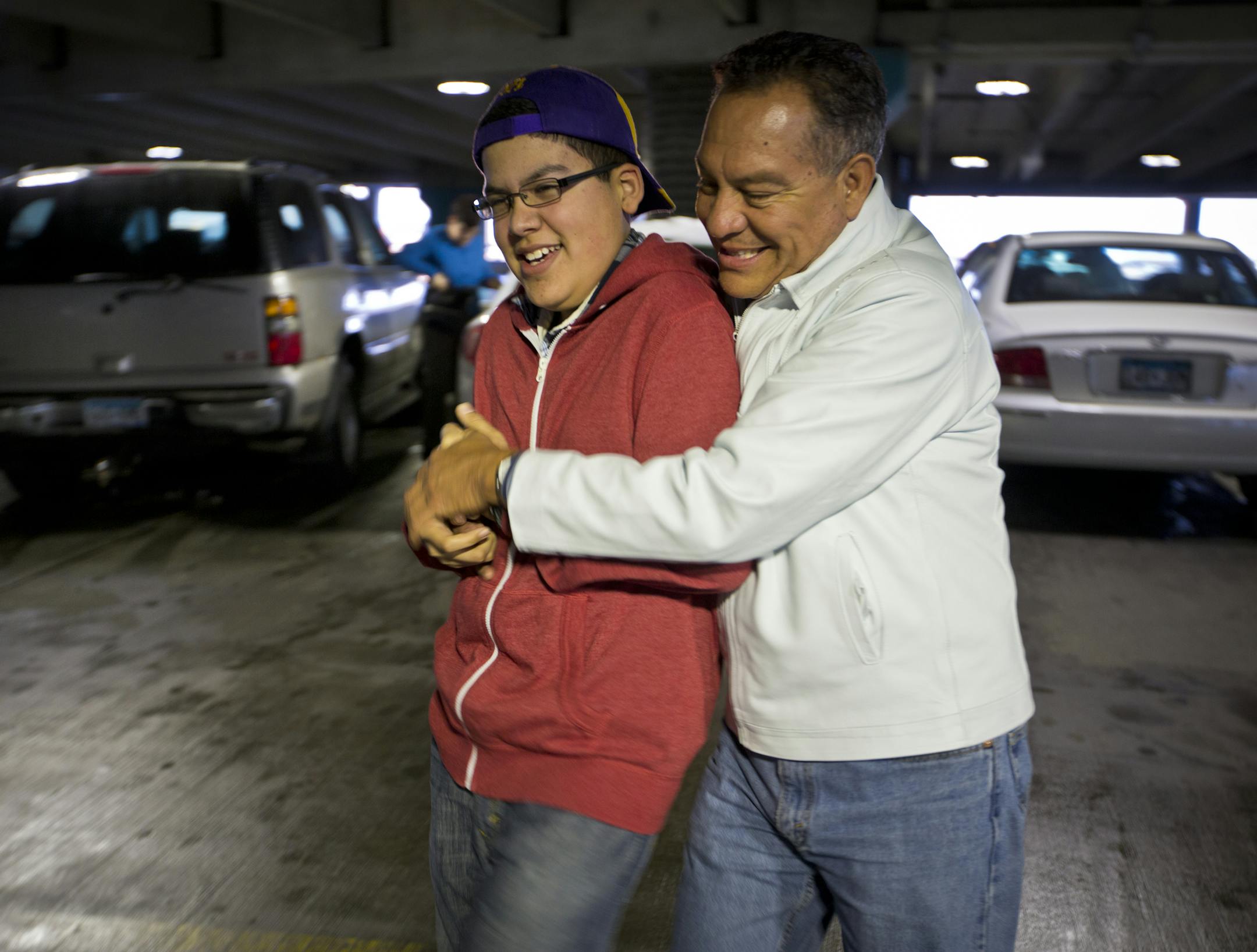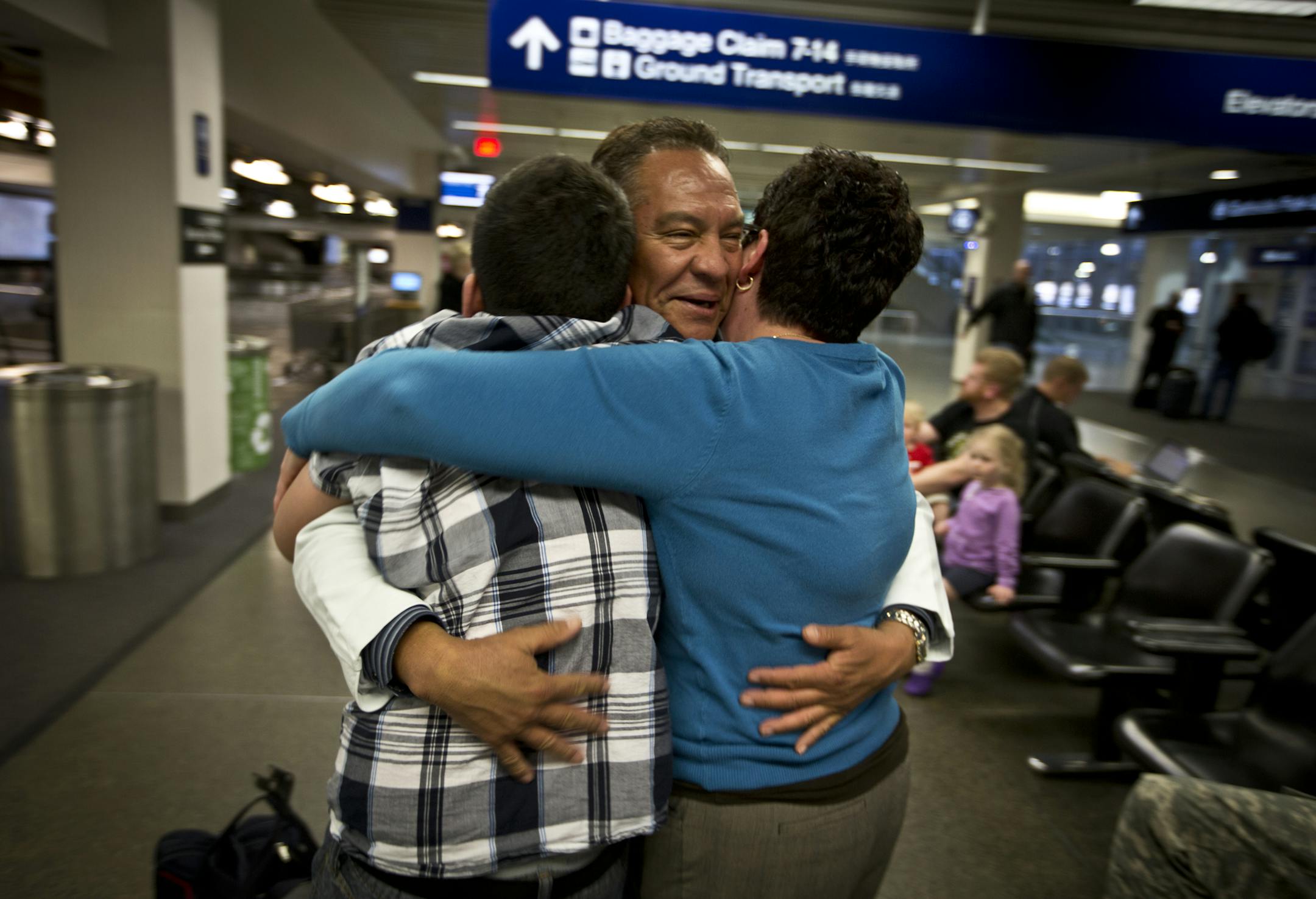
More than 10 years after he was deported to Mexico, Miguel Vazquez was reunited at the Minneapolis-St. Paul International Airport in April with his American-born wife, Sophia, and their 13-year-old son, Miguelito.
"I remember thinking, I don't want to let myself be happy yet," Sophia Vazquez said, "until I'm actually touching him."
Their reunion ended a journey that began in 1989 when Miguel Vazquez, now 54, first came to the United States legally on a tourist visa. Like so many others he knew, Vazquez faded into the immigrant underground to look for work. When his visa expired, he became one of the nation's estimated 11 million immigrants living here illegally, many of whom now anxiously await action on a congressional immigration reform that could create a path to citizenship.
Vazquez took the more difficult route. Unwilling to live in the shadows of the law during the heightened security climate of the Sept. 1, 2001, terrorist attacks, the newly married father of a 2-year-old son in St. Paul voluntarily came forward to immigration authorities in 2002.
He was arrested on the spot.
Deported, Vazquez returned to his hometown in the state of Guanajuato, where he spent years trying to eke out a living reselling clothing he bought in Mexico City, sometimes with Sophia's help.
That decadelong exile embodies the flip side to a bipartisan plan approved by the U.S. Senate last week that would allow unauthorized immigrants like Vazquez, who have broken no other laws, to stay in the country if they are willing to pay fines and meet other conditions.
The plan, which faces shaky prospects in the House, would require background checks, fingerprints, payment of back taxes and proof of gainful employment, among other things. It is paired with a massive enhancement of border security, including a doubling of the U.S. Border Patrol, a 700-mile fence, and a surveillance system of radar, ground sensors, radiation detectors and aerial drones.