
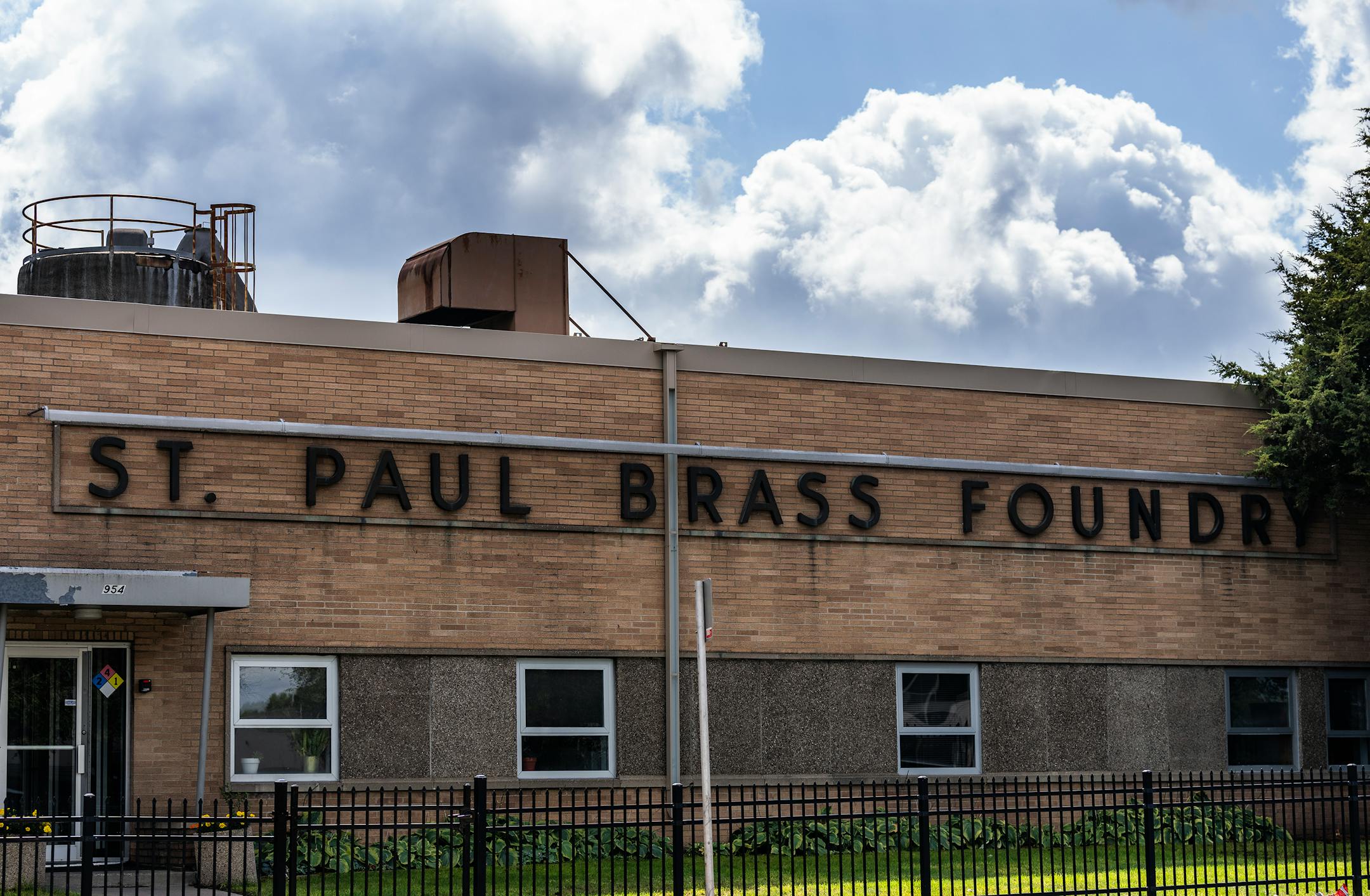
St. Paul foundry will install new equipment to settle pollution case

The enforcement against St. Paul Brass and Aluminum Foundry began with a surprise inspection in 2022 and did not involve a fine.

The Minnesota Star Tribune
September 11, 2025 at 7:46PM
The St. Paul Brass and Aluminum foundry is in the Frogtown neighborhood. (Richard Tsong-Taatarii/The Minnesota Star Tribune)

A St. Paul foundry will install new pollution filters to settle an enforcement case with the Environmental Protection Agency.

St. Paul Brass and Aluminum Foundry, at 954 Minnehaha Av. in the Frogtown neighborhood, makes castings for the defense industry using several metal alloys, including some that contain lead. The foundry will face a limit on how much lead it can include in those castings as part of the settlement.

“This settlement will significantly reduce emissions and the Minnesota Pollution Control Agency will monitor air quality in the area going forward,” EPA Region 5 Administrator Anne Vogel said in a statement.

David Hartigan, the manager of the foundry, wrote in an email that the company spent $65,000 to install new filters.

“The company is pleased to move beyond the EPA’s enforcement action. This settlement will allow St. Paul Foundry to continue focusing on delivering for our customers and providing well-paying jobs in Frogtown,” he wrote.

Neighbors who live near the site said they have long had concerns about pollution from the foundry, which is adjacent to homes and sits at the edge of the Frogtown Park and Farm.

Nura Ahmed has lived in a house directly south of the foundry since 2014. She said she frequently finds a gray dust on her property and worries about eating the produce she grows there. She said she wished the foundry were not so close to homes.

“I love to farm,” she said, but “I can’t eat my stuff because I don’t know what’s in it.”

EPA inspectors paid a surprise visit to the site in 2022, according to an inspection report. Agency staff spotted a baghouse, or air filtering device, with no pressure gauge. These industrial filters have to run in a specific pressure range to ensure they’re working. If the pressure is too low, the filter might have a hole. If it’s too high, the filter could be caked with pollutants.

By March 2023, the EPA alleged in a notice of violation that the foundry had not been properly operating that filter and other pollution control equipment. Three months later, the agency issued another violation notice, claiming that the company had failed to show it was complying with specific rules for foundries.

Danielle Swift, who has been monitoring the pollution case for the Frogtown Neighborhood Association, questioned why a fine had not been applied when the EPA fined another metals site, Smith Foundry, $80,000 in the East Phillips neighborhood of Minneapolis last year.

“If it weren’t for them having a surprise inspection, they wouldn’t have taken it upon themselves to make these upgrades they are required to do,” Swift said.

At Smith, the EPA alleged the foundry was releasing excessive pollution — an allegation that was never part of the St. Paul case. The EPA said it did not find excessive pollution around the St. Paul site after monitoring in 2024, and the MPCA will now operate a permanent monitor next to the foundry.

The EPA has broad discretion to decide whether to impose a fine in its enforcement cases. For example, they did not impose fines in many situations during the COVID-19 pandemic.

The EPA did not immediately respond to a question about why a fine was not applied in this case.

about the writer

about the writer

Chloe Johnson

Environmental Reporter

Chloe Johnson covers climate change and environmental health issues for the Minnesota Star Tribune.

See Moreicon

More from Environment

See More
Rising above the treeline (Top of this photo), on the shore of Birch Lake, the Twin Metals Copper Nickel Mine Plant site and Tailings Management site is part of the proposed plan. ] In theory, the copper-nickel mine Twin Metals wants to build in the headwaters of the Boundary Waters Canoe Area Wilderness is a zero-discharge mine — a closed loop that will endlessly recycle millions of gallons of water, including rainwater and the polluted process water it uses to extract ore and
Brian Peterson/The Minnesota Star Tribune

The copper-nickel mine is controversial for its proximity to the Boundary Waters Canoe Area Wilderness, and the Biden Administration had canceled its leases.

card image
card image