

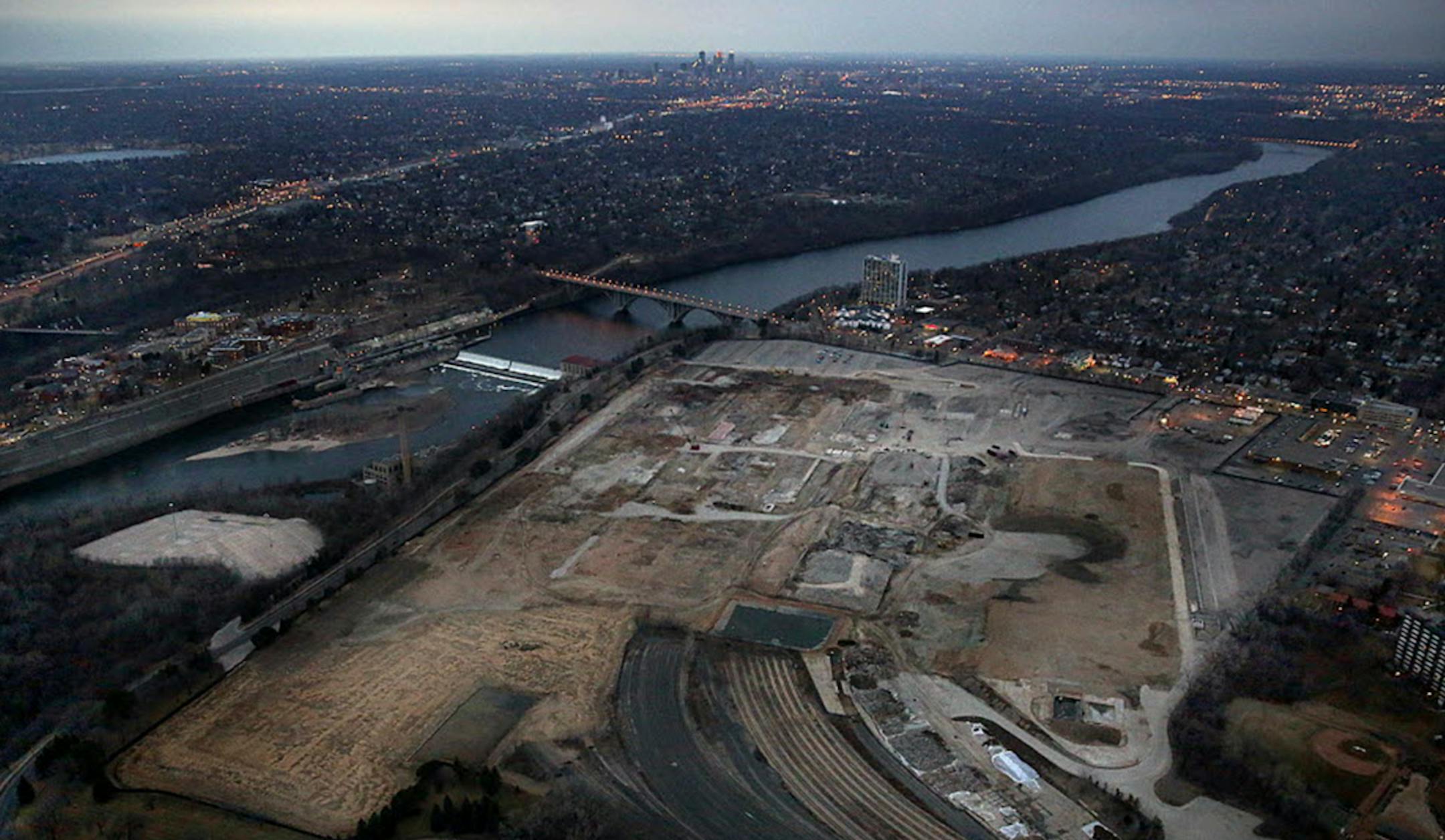
Several hundred residents and planning officials gathered Monday evening to learn how cars, mass transit, bikes and pedestrians will fit in with the ambitious redevelopment of the former Ford plant site in St. Paul.
The results of a recent transportation study are highly preliminary for the 122-acre site where Ford once produced cars and trucks on the shores of the Mississippi River. Opened in 1926, the plant was closed in 2011.
The city plans to build multifamily housing, a park and green space, and a busy commercial district.
The Ford Motor Co. plant site long has "been a barrier to movement," said City Planner Merritt Clapp-Smith. Traffic in the neighborhood essentially stops at the site, which was closed to non-plant traffic.
This has created a serious traffic bottleneck at the intersection of Cleveland Av. and Ford Parkway in the Highland Park neighborhood, also a popular area for pedestrians.
Broadly speaking, streets that now dead-end on Ford Parkway would connect through the new development, dispersing traffic throughout the area.
Cretin Av. and Montreal Av. would serve as primary streets. And the inactive Canadian Pacific Railway spur likely would become some type of thoroughfare for bikes and pedestrians.
While the site already is well-served by several Metro Transit bus routes, including the new A-line rapid bus, it's unclear how the proposed Riverview Corridor transit project along West 7th Street would connect with the Ford site. The Riverview project involves transit, possibly bus, bus-rapid transit or light rail, that would connect Union Depot in downtown St. Paul to the Minneapolis-St. Paul International Airport.


