

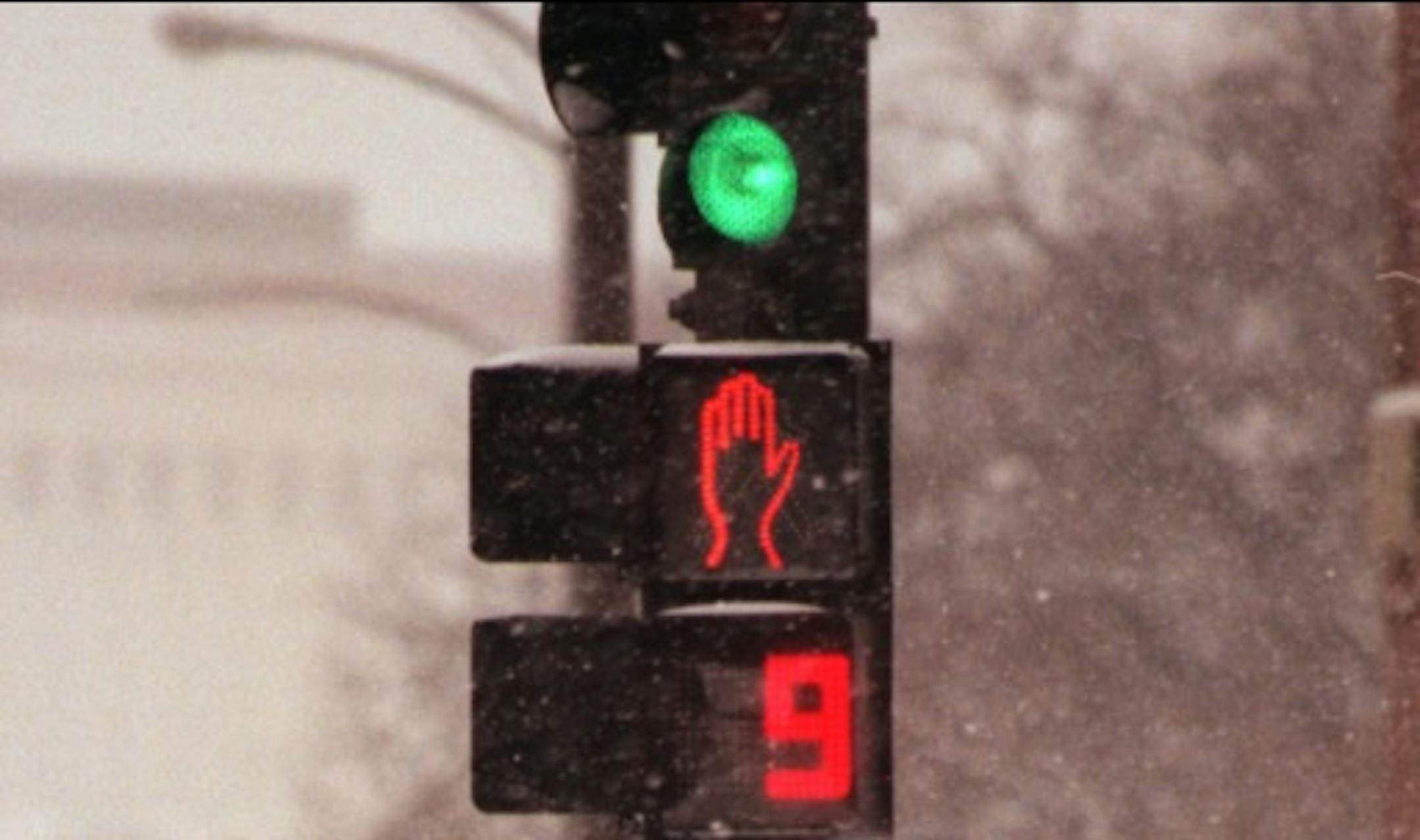
Darlene Blossom had to look twice when she saw the walk sign come on at the intersection of Rice Street and Maryland Avenue in St. Paul's North End while the stop light for through traffic stayed red.
"I saw it and I thought I was crazy," she said while crossing at the intersection on a recent Friday morning. "Then I started paying attention."
Time after time on her weekly walks to Tin Cup to play Bingo, Blossom noticed that she got a walk sign while the traffic light stayed red. She wondered if the signal was wrong or if that really meant she was supposed to start crossing before the green light comes on.
"Am I correct in crossing on the walk sign prior to the light turning green?" she asked. "I would rather wait than risk my life to prove a point."
Crossing when the walk sign came on and before the light turned green is exactly what she was supposed to do.
The intersection is equipped with a traffic signalization strategy called a Leading Pedestrian Interval (LPI). LPI gives a pedestrian the walk signal and three to seven seconds to cross before motorists get a green light and are allowed to proceed through the intersection. The idea is to minimize conflicts between pedestrians crossing a roadway and left- or right-turning vehicles, said city engineer Mike Klobucar.
St. Paul has had LPI since 2015 when it was introduced as a pilot project at four intersections. Since then, LPI has been slowly expanded to about 100 intersections across the city, and the treatment may be added to even more of the 386 signals that the city operates, Klobucar said.
LPI allows walkers more time to get from one corner to the other and more importantly, by having them start their journey before a car gets a green light, makes them more visible, Klobucar said.


