

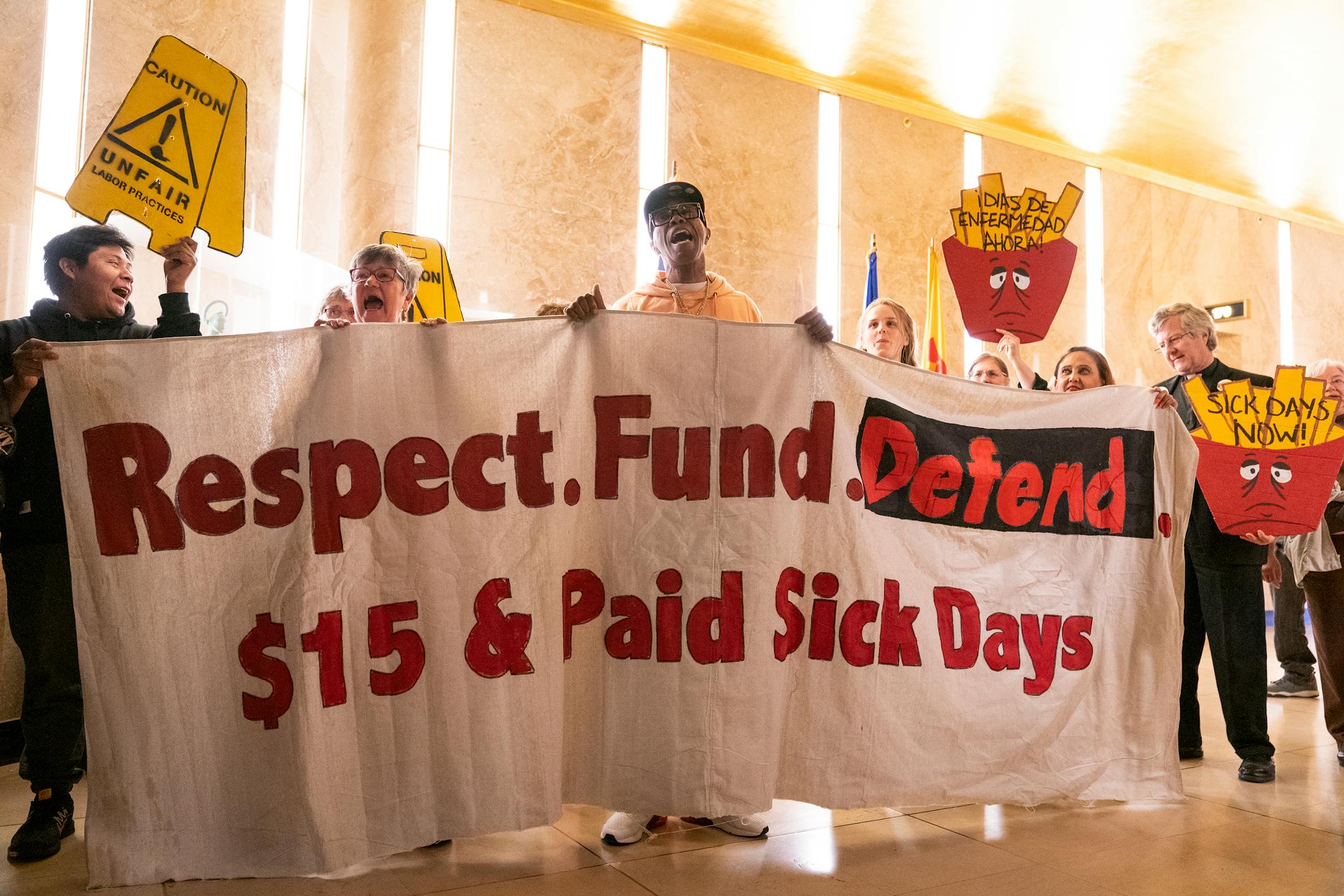
Businesses with employees in St. Paul may soon be required to offer those workers paid sick leave, even if their company isn't headquartered in the city.
The City Council is poised to amend its earned sick and safe time ordinance to align with a 2020 Minnesota Supreme Court ruling that upheld Minneapolis' policy, which was challenged by opponents who argued the city could not regulate businesses based outside its limits. St. Paul initially limited its law to businesses based in the capital city while awaiting the outcome of the lawsuit.
"Every worker who comes in our city should have the benefit of earned sick and safe time," Beth Commers, deputy director of St. Paul's Human Rights and Equal Economic Opportunity (HREEO) Department, told the council last week.
Amendments would add definitions to the ordinance and tweak processes so the law is administered in the same way as St. Paul's minimum wage requirement.
Minneapolis passed its paid sick leave ordinance in May 2016, and St. Paul followed suit four months later. The cities' regulations differed slightly, but their goals were the same: to allow workers to stay home if they are ill or must care for a sick family member.
The policies created controversy at the time. Supporters said the regulations prevent the spread of illness and ensure fair treatment of workers; opponents argued the change was an administrative burden that could push businesses out of the metro.
"The bottom line is that the Supreme Court is allowing this action," B Kyle, president and CEO of the St. Paul Area Chamber of Commerce, said of the proposed amendments. "These changes will align more closely with the Minneapolis policy, making it easier for large companies. But for smaller companies that want to expand some operations into St. Paul, [earned sick and safe time] is just another reason not to."
During a public hearing Wednesday, Rick Varco, political director for the roughly 50,000-member SEIU Healthcare Minnesota union, urged the council to approve the changes. Doing so would honor the recommendations of the task force that helped develop the ordinance, he said.


