

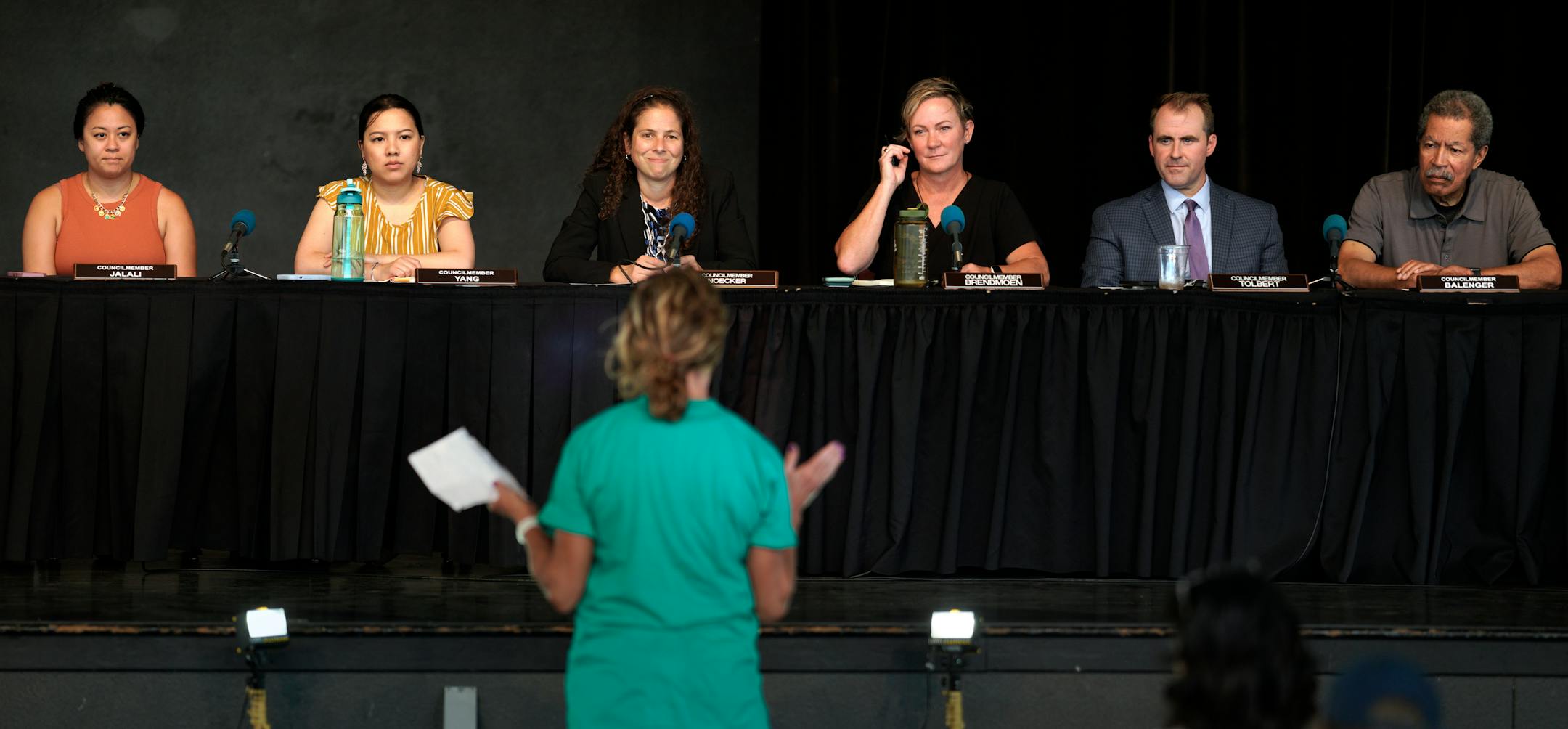
St. Paul could raise its property tax levy by up to 15.34% next year, but the hike would be partly offset by a decrease in residents' street maintenance bills.
The City Council on Wednesday unanimously voted to approve a maximum property tax levy of $202.3 million, an increase officials say is fueled by a change in how the city pays for services, inflation and new operating expenses.
Council members will approve a final 2023 budget in December and said they plan to work in the coming months to cut down the increase as residents face their own financial challenges, including rising inflation and residual economic impacts from the pandemic.
"I'm going to be supporting the levy limit today, but I consider a 15% levy increase … to be absolutely unacceptable when people are struggling so much, especially when we know that those tax increases hit our lowest-income communities the hardest year after year," Council Member Rebecca Noecker said.
Last month, Mayor Melvin Carter proposed a $782 million 2023 budget, which he called a "nuts-and-bolts" fiscal plan. His proposed property tax levy would amount to a $231 property tax increase for the owner of a median-value St. Paul home, which is $261,800.
The property tax levy is the amount of money the city collects in property taxes, not the amount that individual property owners pay. Property owners could see additional increases to their tax bills from Ramsey County, which has already proposed a 4.5% levy increase, or from the St. Paul school board.
Half of the proposed levy increase is a response to a May court ruling that ordered St. Paul to stop assessing individual property owners for routine maintenance of streets abutting their property.
Previously, about $15 million in assessments helped pay for street lighting, sweeping, seal coating and mill and overlay. Now most of those costs are being moved to St. Paul's general fund, which is financed primarily by property taxes.


