

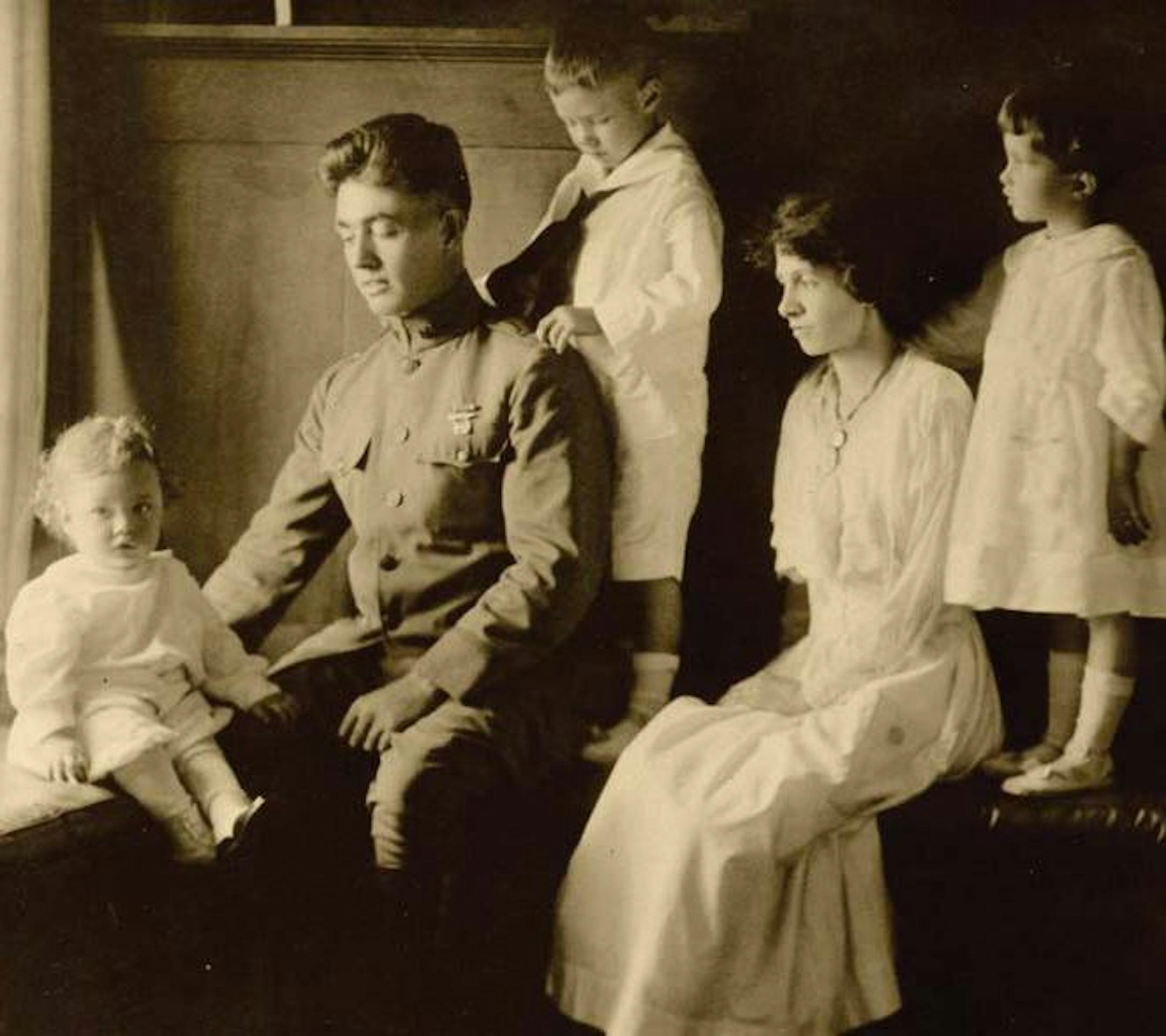
Al Cassidy, a St. Paul candy salesman in the 1920s, played a sweet but little-known role in world history.
An Army motorcycle courier, Cassidy delivered the ultimatum papers demanding Germany's surrender that ended World War I on Nov. 11, 1918 — 100 years ago today.
Born in Philadelphia in 1883, Cassidy joined the Army in the early 1900s, was stationed at Fort Snelling by 1911 and became a captain and trusted confidential courier for Gen. John J. "Black Jack" Pershing — commander of U.S. forces on WWI's Western Front. Cassidy and Pershing first crossed paths along the Mexican border where the U.S. Army was chasing Mexican revolutionary Pancho Villa before the U.S. entered WWI in 1917.
"In all my time in the Army, General John J. Pershing was the only man to ask me if I was tired," Cassidy told the St. Paul Pioneer Press when Pershing died in 1948. "He was the greatest man in the world."
Cassidy was among only a handful of military personnel who carried a pass allowing him to go anywhere behind Allied lines during WWI — ultimately delivering armistice papers between the Allies' Supreme Commander, French Gen. Ferdinand Foch, and the Germans.
"He carried dispatches that changed battlefronts and affected the entire course of the World war — dispatches whose acquisition by the enemy would have meant disaster," the 1948 newspaper article said.
Cassidy didn't say much about his WWI days. So his role was largely forgotten as he settled in St. Paul, raising five kids with his wife, Marie — whom he met while playing baseball at Fort Snelling in 1912.
"He was a confidential courier," his son, Albert, recalled at age 97, "and he never spoke of his time in the military."


