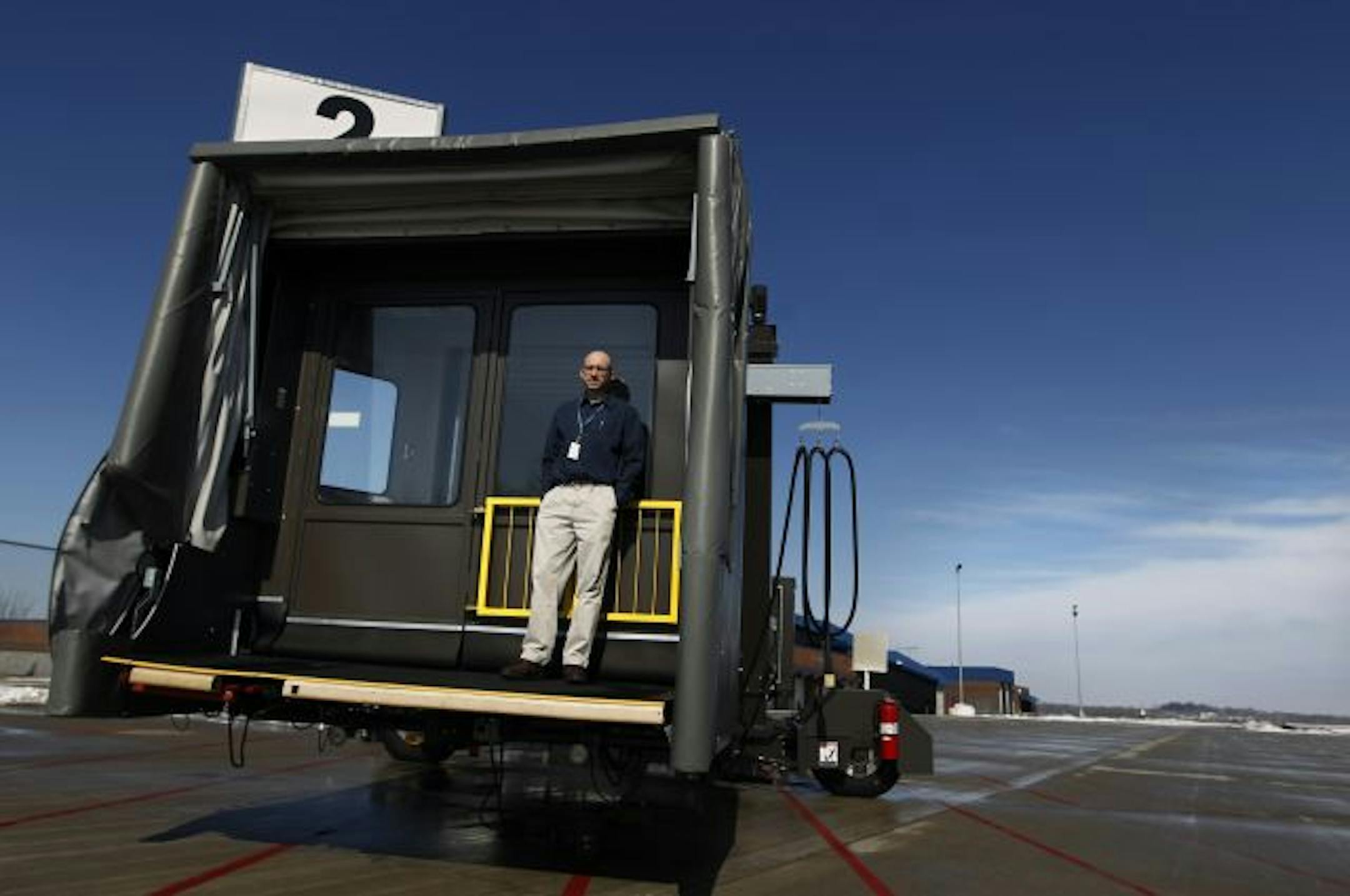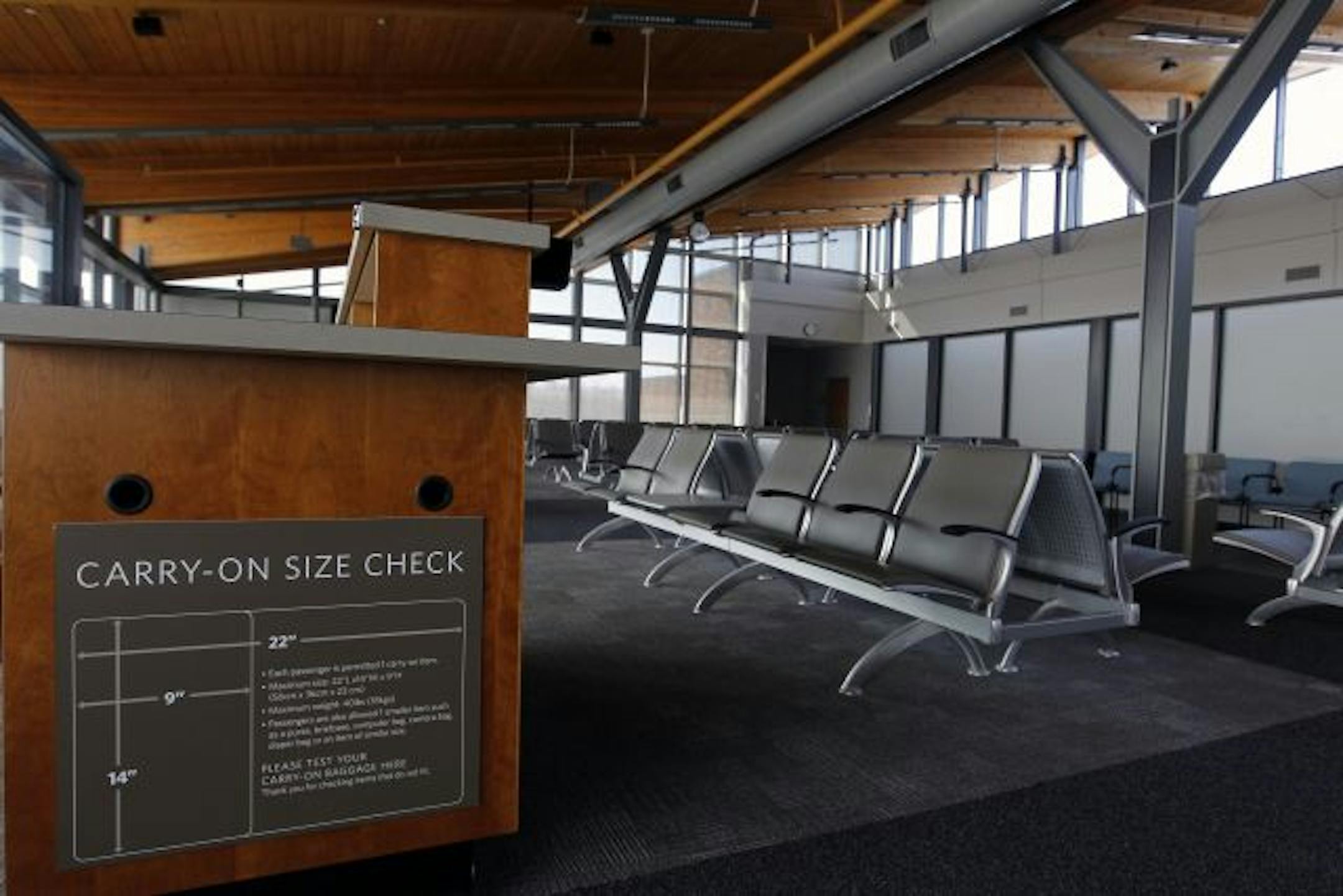
Darkened flight schedule monitors hang above a motionless baggage carousel across from an abandoned rental car counter. A vacant 200-seat terminal leads to a gate where a new jetway faces an empty tarmac.
Not long ago, Boeing 737s landed on the 7,000-foot runway at St. Cloud Regional Airport. These days it serves private planes and corporate jets.
But population growth north of the Twin Cities, and expectations of more airplane noise in the south metro, have now spurred calls to use St. Cloud as an alternative to Minneapolis-St. Paul International Airport for some nonstop commercial flights to Chicago or other cities.
"I see no reason at all not to do this," said Mike Landy, a member of the Metropolitan Airports Commission (MAC). "The dollars have been spent on this airport already."
The idea is being proposed as the Minneapolis-St. Paul Airport embarks on a $2 billion, 20-year expansion expected to increase its air traffic by nearly 200,000 flights a year. Half of the increased flights will be over south Minneapolis, Richfield, Burnsville and other southern or southeastern suburbs -- places already bearing the brunt of airport noise.
"This is the time to stand back," said Minneapolis Mayor R.T. Rybak, who launched his political career as an airport noise opponent. "We should be asking the big questions now about whether there isn't another strategy ... a multiple airport strategy for this state that can diffuse traffic but also increase capacity and lift economic development outside the metro."
The call for a new approach comes as DFL Gov. Mark Dayton is reshaping the MAC. He picked attorney Daniel Boivin, Rybak's former delegate on the commission, as chairman.
"It's a tragedy that we have an empty airport up in St. Cloud," Boivin said recently. He stopped short of endorsing it as a viable alternative to MSP for some commercial flights.